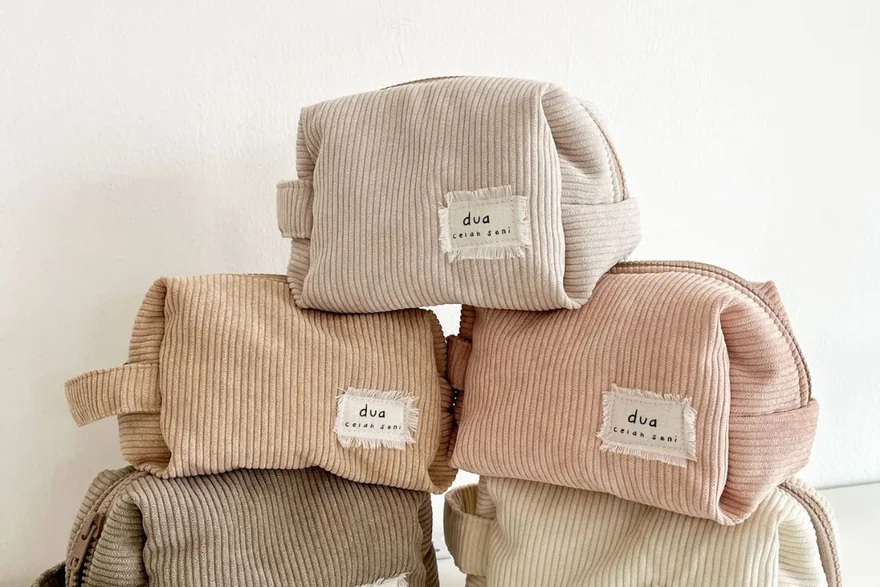
Custom Cosmetic Bags, Makeup Bags and Toiletry Bags Built to Your Specification
MOQ 500 pcs per style and colourway · sampling 6–10 working days · bulk 35–50 days · AQL 2.5 under ISO 2859-1 · FOB Xiamen
2014Programmes coordinated since
4,950m² SGS-verified production floor
200kPieces monthly output capacity
7 / 149Production lines / machines
Summary
Cosmetic bag, makeup bag and toiletry bag programmes start at 500 pieces per style and
colourway. A physical sample is built in 6–10 working days; bulk runs 35–50 days after sample
approval; every shipment is inspected to AQL 2.5 under ISO 2859-1 before loading, and ships FOB Xiamen
on T/T 30/70.
This site documents how those programmes are specified, sampled, inspected and shipped. Every guide
is written for brand owners, retailers, gift buyers and e-commerce sellers who need a repeatable
specification rather than a catalogue listing. The thirty-odd decisions that sit between a sketch and a
loaded container — substrate weight, zip chain type, lining, branding method, carton count —
are each covered in their own guide, with the parameter ranges that actually get quoted.
Programme coordination is handled by QUANZHOU JUNYUAN BAGS, a sourcing and programme-management company
that has coordinated bag programmes since 2014, working with SGS-verified production floor space of
4,950 m² across 7 production lines and 149 machines, with a monthly output capacity of 200,000 pieces.
QUANZHOU JUNYUAN BAGS main site
Product Range
Nine constructions cover the great majority of cosmetic bag, makeup bag and toiletry bag
briefs. Each one can be built in any substrate listed below, and each can be re-scaled: the 22 cm
pouch produced for a gift-with-purchase and the 30 cm version sold on a retail shelf come off the
same pattern with a different cutting marker, so a second size rarely doubles the development cost.
| Construction | Typical size (W × H × D) |
Closure | Where it is used |
|---|
| Flat cosmetic pouch | 22 × 14 × 1 cm | Single top zip |
Gift-with-purchase, subscription boxes, event giveaways |
| Structured makeup bag | 24 × 16 × 9 cm | Double zip, piped base |
Retail shelves, brand-owned colour collections |
| Hanging toiletry bag | 26 × 20 × 10 cm folded |
Double zip, swivel hook | Travel retail, hotel amenity, outdoor ranges |
| Clear cosmetics bag | 20 × 15 × 7 cm | Welded or stitched zip |
Airport liquids bags, venue clear-bag policies |
| Vanity and train case | 28 × 20 × 20 cm |
Frame clasp, structured handle | Professional makeup kits, premium gifting |
| Brush roll | 44 × 24 cm open | Tie, snap or elastic loop |
Brush sets, artist kits, beauty subscription tiers |
| Modular organiser set | Three pieces, 25 × 18 × 8 cm | Zip on each piece |
Nested sets built from one shell material |
| Travel set and packing cubes | Four pieces, mixed | Zip, mesh or solid |
Cabin-sized sets for airline and rail travel |
| Recycled RPET range | Any of the above | Any of the above |
Programmes that need GRS scope documentation |
Airport and venue size rules are set by the operator, not by the bag. The dimensions above
are the common starting points and are adjusted to whichever rule the buyer supplies in writing. Where a
clear bag has to work as a liquids bag, the one-quart capacity under the
TSA
3-1-1 liquids rule is the binding limit and the bag is cut to it; stadium and arena policies use their
own dimensions and vary by venue.
Materials and Construction
Substrate choice drives unit cost, hand feel and the compliance route more than any other single
decision, and it is the decision most often made too early. A brief that asks for “nylon” has
usually specified a look rather than a fabric: 210D and 840D differ in abrasion behaviour, in print
receptivity and in price by a margin that is plainly visible on a 500-piece quotation. The table below
sets out what each substrate does well and what tends to cause trouble once a run is underway.
| Substrate | Common specification | Character | Watch point |
|---|
| Nylon | 210D, 420D, 840D |
Highest tear strength per gram; smooth hand; takes a light sheen |
Dyelot variation between rolls; sublimation needs a coating |
| Polyester | 300D, 600D |
Lowest cost; stable dyelot; reliable print base |
Abrades faster than nylon; pilling at friction points |
| Recycled polyester (RPET) | 300D, 600D |
Same hand as virgin polyester; carries a recycled claim |
Transaction certificate must cover the exact lot |
| Cotton canvas | 8 oz, 12 oz, 16 oz |
Natural hand; embroidery and screen print take well |
Weight raises freight cost; shrinks without pre-wash |
| Cotton sheeting | 6 oz | Soft, washable, unlined look |
Needs a lining or interlining to hold shape |
| Polyurethane (PU) | 0.6–1.0 mm |
Leather look at a fraction of the cost |
Hydrolysis in humid storage; specify the resistance grade |
| PVC | 0.3–0.5 mm | Clear, wipe-clean, low cost |
Plasticiser content drives REACH and Prop 65 review |
| TPU | 0.4–0.6 mm |
Clear with a softer hand; better cold-crack behaviour |
Higher unit cost than PVC |
| EVA | Moulded shell | Holds shape without an internal frame |
Tooling is required, so the MOQ conversation happens early |
| Neoprene | 3–5 mm | Cushioned, water-resistant, sport-led hand |
Thickness tolerance is wide and affects insert fit |
Linings follow the same logic rather than being an afterthought. A 210D polyester lining is the default;
a wipe-clean TPU laminate is used wherever the bag will carry opened liquids; an RPET lining is used when
the recycled claim has to run through the whole construction instead of the shell alone. Colour fastness
of dyed and printed panels is checked against
ISO 105
and, for laundering behaviour,
AATCC TM61;
coated fabrics are assessed under
ASTM D751.
Branding and Decoration
The logo method is chosen from the substrate and the run length, not the other way round. At 500 pieces
a woven label is usually the cheapest durable option; a full-colour printed panel costs more per piece but
carries a design that no label can reproduce. Every method below is applied to a sample before bulk, and
the approved sample becomes the reference that the bulk run is checked against.
| Method | Best on | Durability | Set-up required |
|---|
| Screen print | Canvas, flat nylon and polyester panels | High |
One screen per colour |
| Heat transfer | PU, small logos, curved panels | Medium |
Film per colour |
| Digital print | Full-colour artwork on prepared panels | Medium to high |
None |
| Dye sublimation | White or light polyester only |
Very high — colour sits in the fibre | None |
| Embroidery | Canvas and structured panels | Very high |
Digitised file |
| Deboss or emboss | PU, EVA, leather-look materials | High |
Metal die |
| Woven label | Any construction | High | Loom set-up |
| Metal badge or zip pull | Structured bags and vanity cases | High |
Tooling |
Artwork is accepted as vector (AI, EPS or SVG) for print, embroidery and deboss, and as
300 dpi raster at final print size for digital print and sublimation. Where a brand colour has to
match across a printed panel and a dyed body, the Pantone reference is matched twice — once as a
print ink and once as a lab dip — because the same reference reads differently on the two.
How a Programme Runs
Six stages sit between a first brief and a loaded container. The dates below are working
days and assume a confirmed specification. Two things account for most of the delay seen on a first
programme: artwork that arrives as a photograph rather than a vector file, and a brand colour requested
without a Pantone reference.
- 1
Brief and written specification
Silhouette, dimensions, substrate, hardware, branding method, quantity per colourway and destination
market are written into one document. That document is what the sample is built against and what the
bulk run is inspected against, so the effort spent here is what allows a repeat order twelve months
later to come out the same as the first one.
Days 1–2
- 2
Material, hardware and colourway confirmation
Zips are selected by chain type and puller rather than by appearance: a #5 nylon coil zip behaves
differently from a #5 metal zip on a curved panel, and the puller is usually the first part to fail in
the field. Hardware finish, lining colour and stitch count are confirmed at this stage, along with any
documentation the destination market requires. A lab dip or printed swatch is returned for brand
colours.
Days 2–4
- 3
Sample build
The sample is cut and sewn from the confirmed specification on the same pattern and machine set-up
that bulk will use, so what arrives is representative rather than a showroom piece. Constructions that
need a new metal die, a moulded EVA panel or a custom woven label take 12–15 working days instead
of 6–10, and that difference is stated on the quotation rather than discovered later.
6–10 working days
- 4
Sample review and correction
The buyer tests the zip, the lining, the print adhesion and the packed dimensions. Where a correction
is needed the specification is amended in writing and a second sample is built before any bulk deposit
falls due. A correction at this stage costs a sample; the same correction found in bulk costs a run.
3–5 days
- 5
Bulk production
Material is booked against the confirmed specification and the run is scheduled on a named line.
Cutting, printing or embroidery, sewing, trimming and packing each carry an in-process check, and a
piece from the first units off the line is held as the bulk reference. The completion date is the one
stated on the quotation: 35–50 days from sample approval.
35–50 days
- 6
Inspection, packing and shipment
Final random inspection runs to AQL 2.5 under ISO 2859-1 and the report is issued before the
container is loaded. Where the buyer appoints an inspector, the same sampling plan is followed so both
sides read the same numbers. Packing follows the buyer's carton specification, and shipment is FOB
Xiamen unless another Incoterm has been quoted.
3–5 days
Programme Parameters
Commercial terms
- Minimum order quantity
- 500 pieces per style and colourway
- Sampling
- 6–10 working days (12–15 for complex builds)
- Bulk production
- 35–50 days after sample approval
- Inspection
- AQL 2.5 under ISO 2859-1
- Shipment terms
- FOB Xiamen
- Payment
- T/T 30 deposit, 70 against bill of lading
Product scope
- Core categories
- Cosmetic bags, makeup bags, toiletry bags, cosmetic pouches, vanity cases
- Material range
- Nylon, polyester, RPET, canvas, cotton, PU, PVC, TPU, EVA, neoprene, leather-look
- Branding methods
- Screen print, heat transfer, digital print, sublimation, embroidery, deboss, woven label
- Compliance support
- CPSIA, REACH, RoHS, Prop 65, UKCA, OEKO-TEX, GRS documentation
Why Buyers Work With This Programme
A written specification, not a catalogue listing
Every brief is turned into a documented specification: silhouette, dimensions, material
weight and coating, hardware, stitch count, branding method and packing. That specification is
what the sample is built against and what the bulk run is inspected against, so a repeat order
twelve months later comes out the same as the first one.
Sampling before commitment
A physical sample is produced in 6–10 working days before any bulk deposit is due, or
12–15 days for constructions that need new tooling. Buyers can test the zip, the lining
and the print adhesion before committing to 500 pieces.
Inspection reported before loading
Final random inspection runs to AQL 2.5 under ISO 2859-1 and the report is issued before the
container is loaded. Where a buyer's own inspector is used, the same sampling plan is followed
so both sides read the same numbers.
Compliance documentation for the destination market
Documentation for CPSIA, REACH, RoHS, Prop 65, UKCA, OEKO-TEX and GRS can be assembled for
the market the goods are shipped to, rather than after a retailer asks for it.
Who This Programme Serves
The same specification discipline is applied whether a buyer is ordering 500 pouches for a
launch gift or 20,000 hanging bags across four colourways for a retail chain. What changes is which
parameters matter most.
Brand owners building or extending a range
Usually working from a mood board rather than a tech pack. The first deliverable is a written
specification that turns the reference images into dimensions, substrate weights and hardware
references, so the second season can be ordered without a fresh development round.
Retailers and importers with a compliance file
Need documentation aligned to the market the goods land in — CPSIA, REACH, RoHS, Prop 65, UKCA,
OEKO-TEX or GRS — and need it assembled before a retailer's own compliance team asks, not after.
Test reports from recognised laboratories are arranged where the retailer requires them.
Gift, promotional and subscription buyers
Working to a fixed date and a fixed unit cost. The binding constraints are the artwork deadline, the
carton configuration and the packing-out requirement, so those three are confirmed first and the rest of
the specification is built around them.
E-commerce and marketplace sellers
Need a listing-ready product: barcode, care label, hangtag, polybag warning text and carton marks
supplied to the marketplace's own template. Photographed samples can be supplied ahead of bulk so the
listing is built while the run is in progress.
Hotel, spa, airline and amenity programmes
Repeat on a calendar rather than on demand. The priority is consistency across reorders, so the
approved sample, the specification document and the carton specification are all retained against the
programme reference and reused at each reorder.
Pillar Guides
Fifteen pillar guides organise the full article library by category, material, construction
and buying stage. Start with the pillar that matches the decision in front of you, then use the articles
underneath it for the specific parameter.
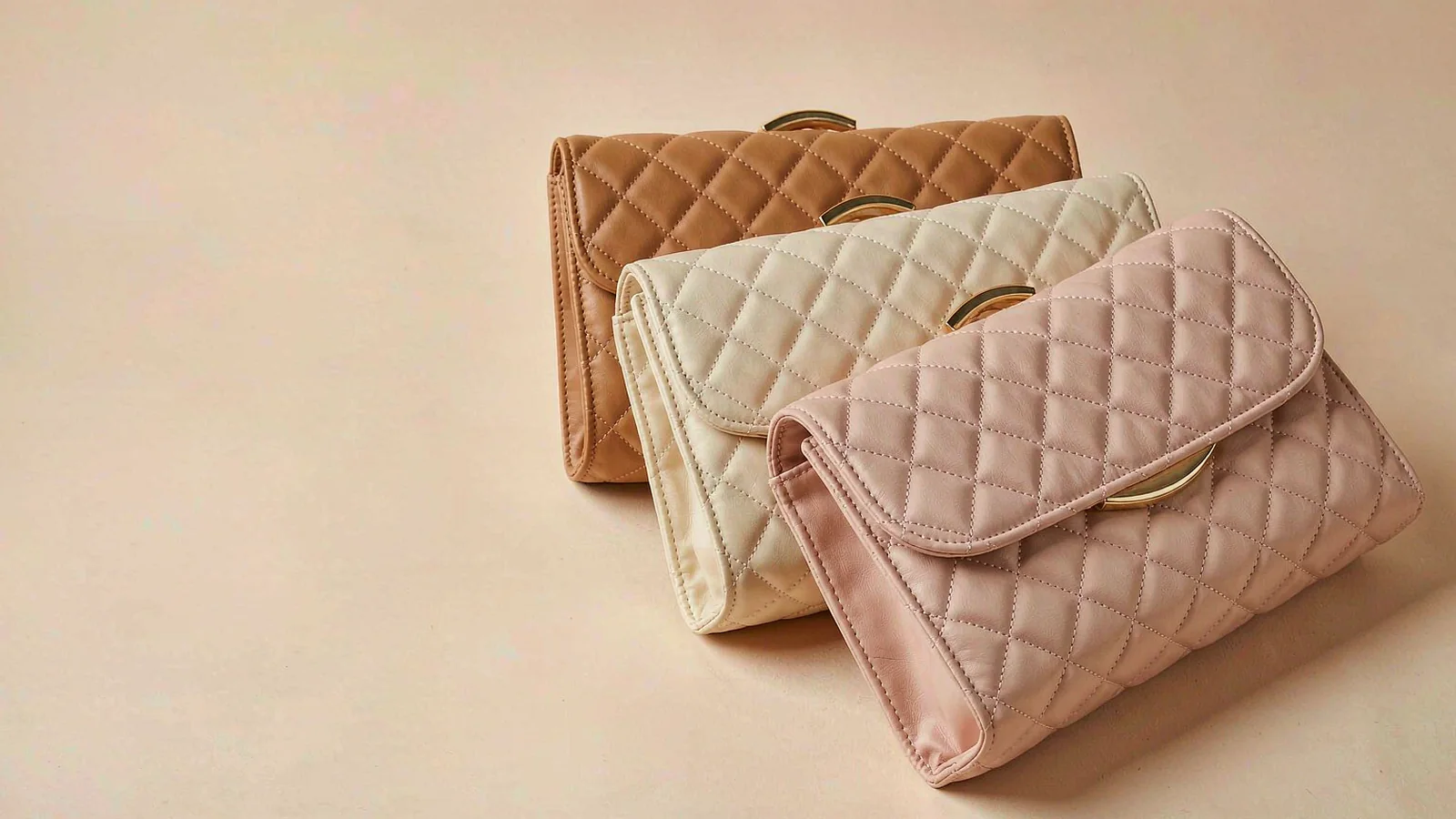 P0 · 34 articles
custom cosmetic bag, custom logo cosmetic bag, branded cosmetic bags
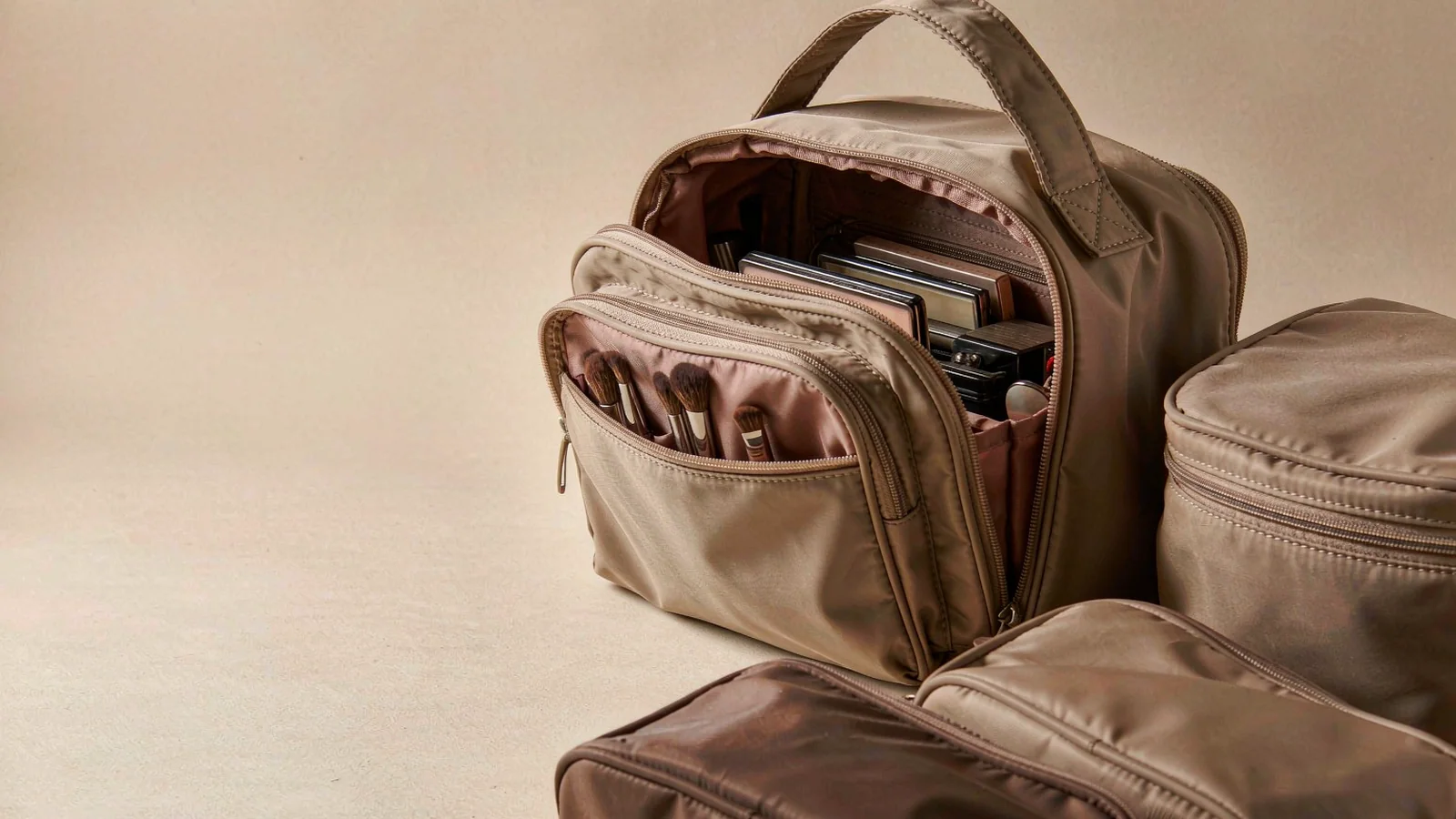 P0 · 34 articles
makeup bag, best makeup bag, makeup organizer bag
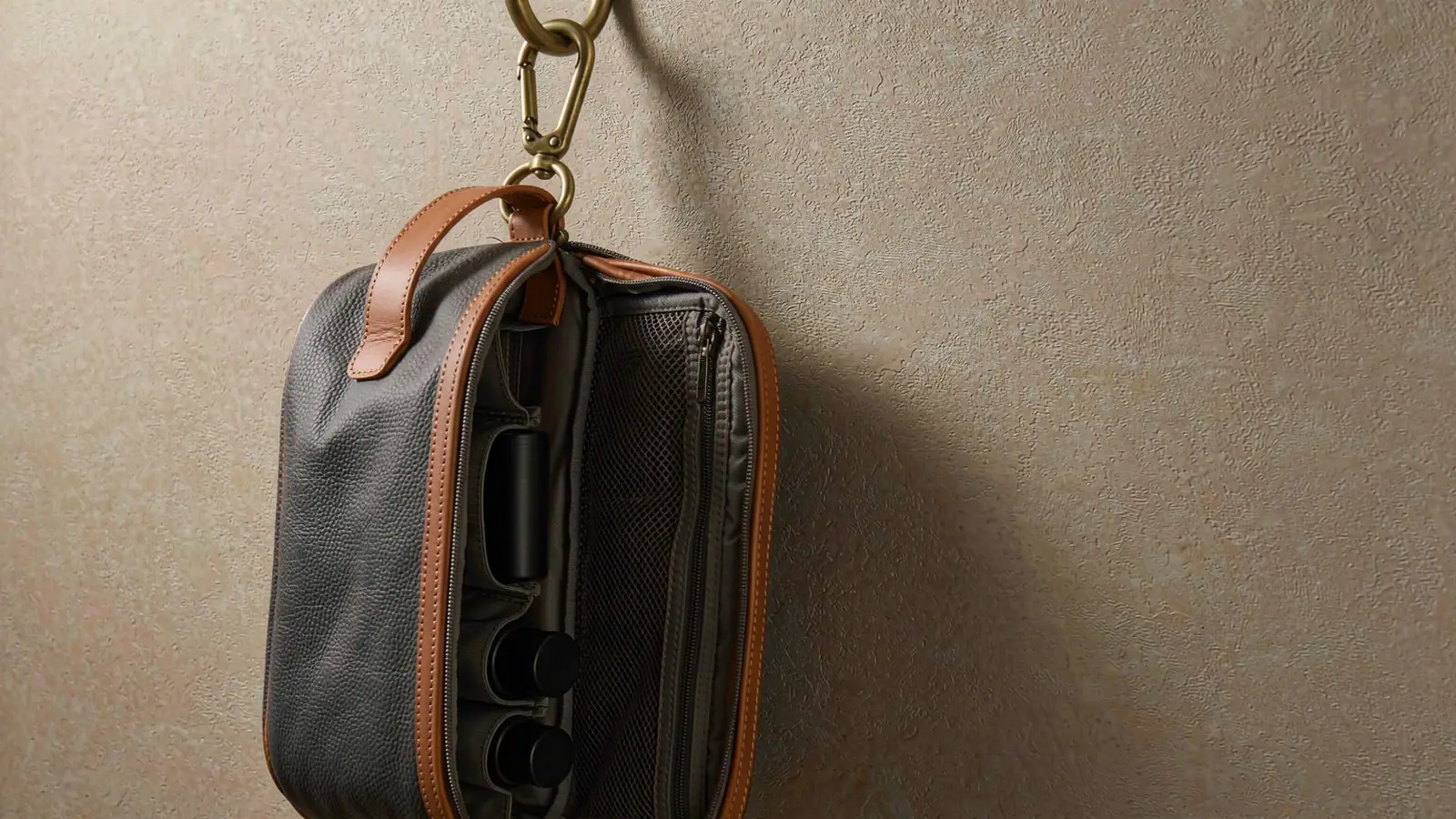 P0 · 28 articles
toiletry bag, hanging toiletry bag, travel toiletry bag
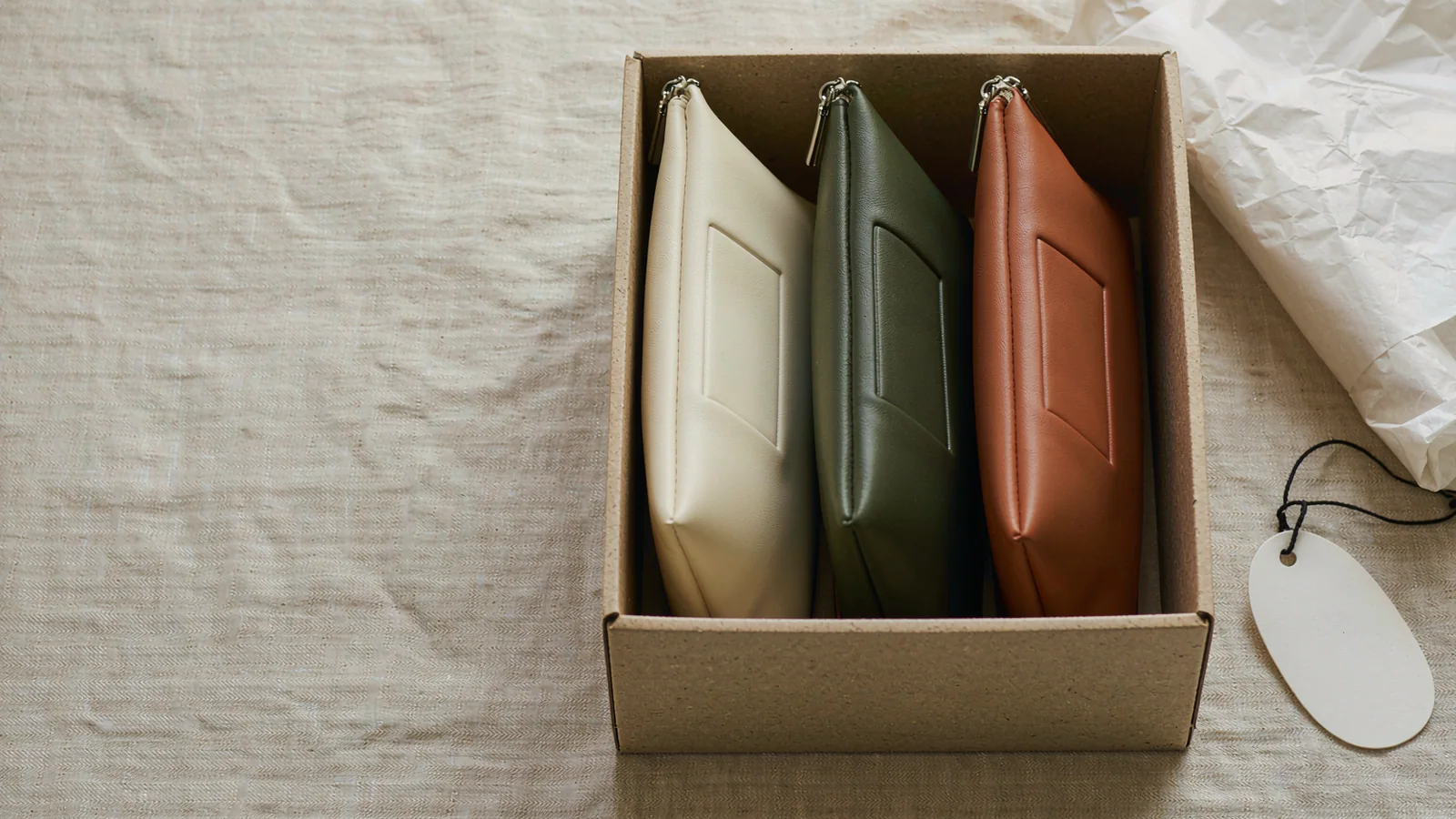 P0 · 23 articles
private label cosmetic bags, white label makeup bags
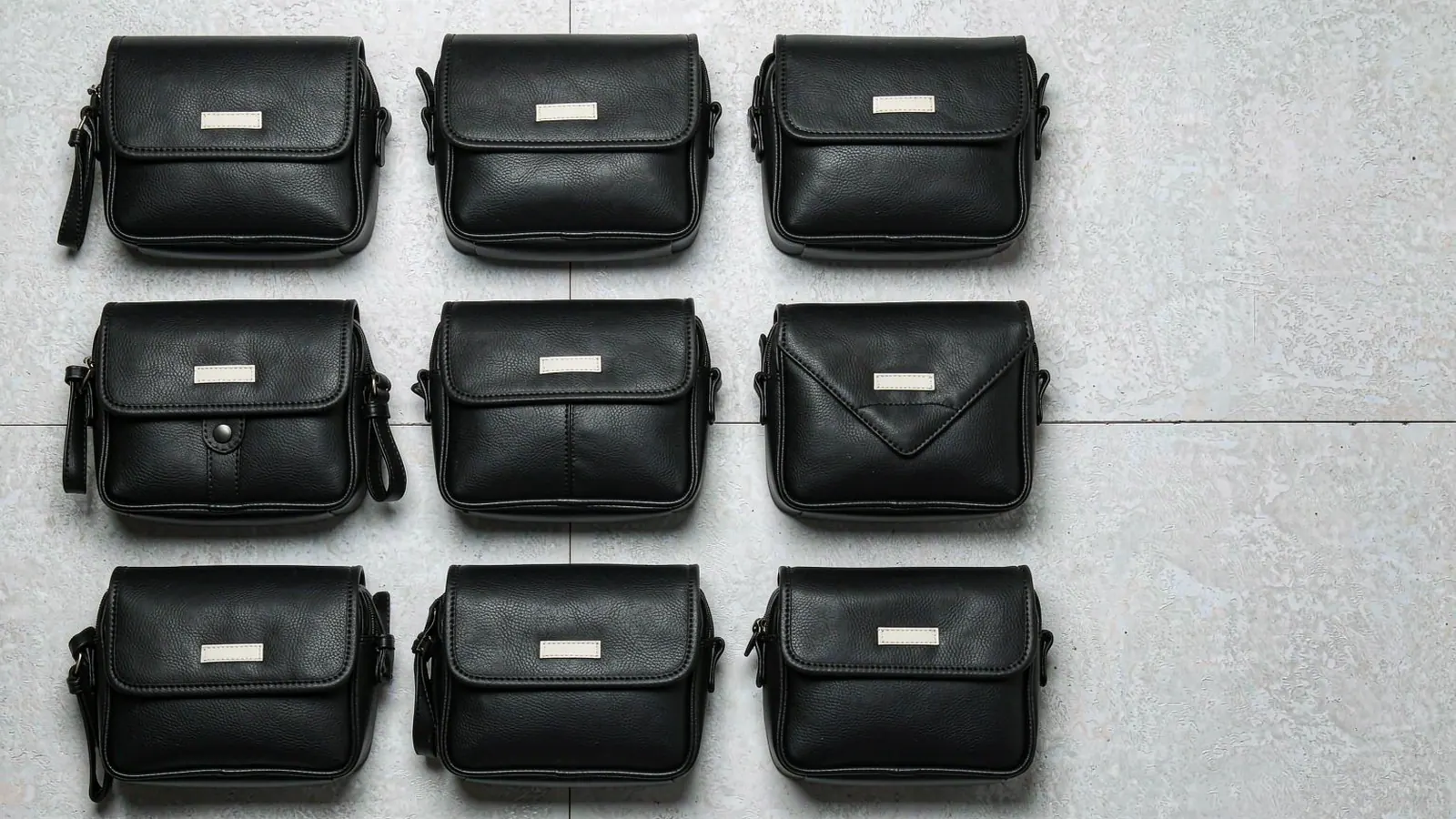 P0 · 23 articles
wholesale makeup bags, bulk cosmetic bags, wholesale toiletry bags
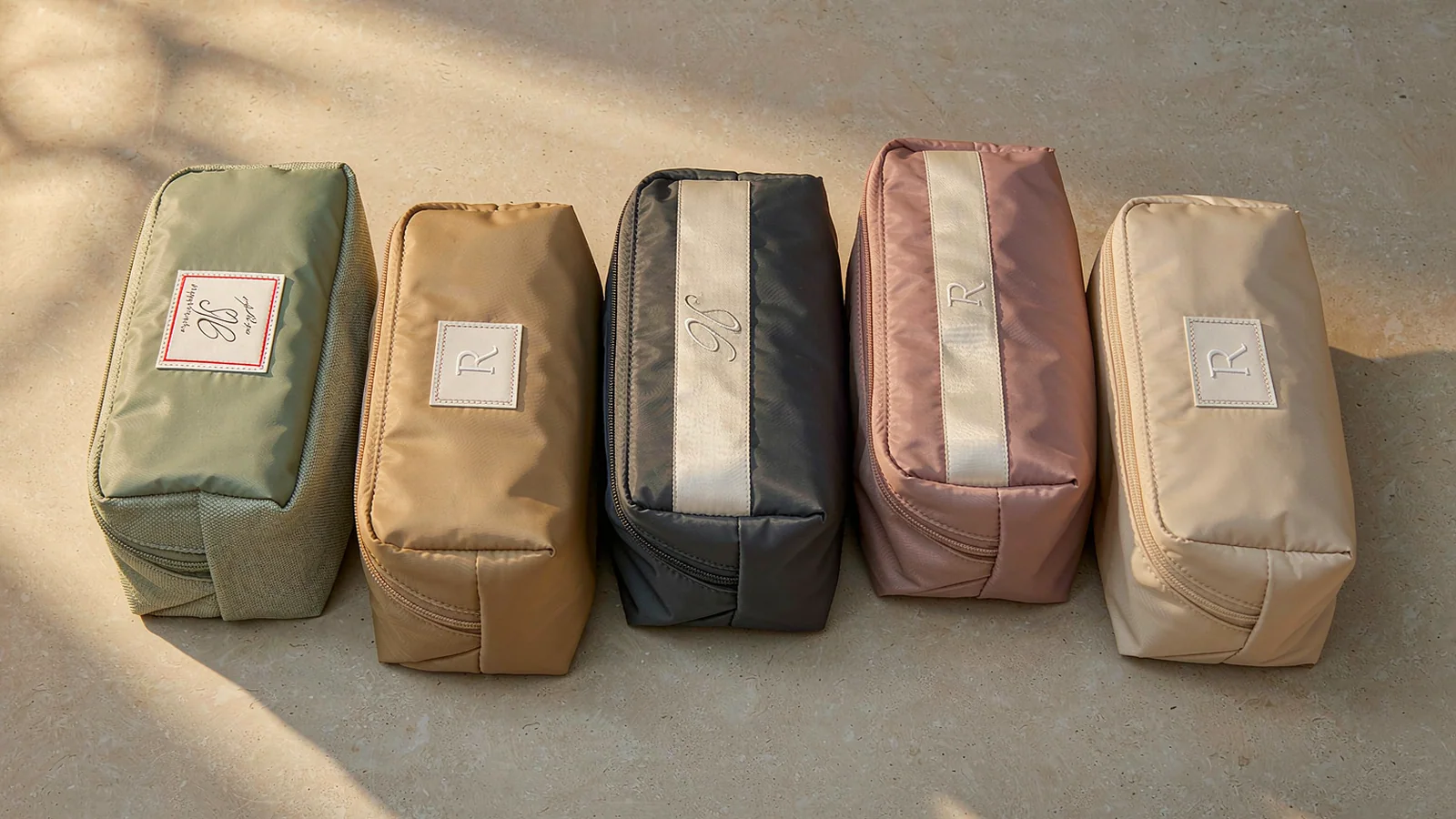 P0 · 19 articles
custom logo makeup bag, custom printed cosmetic bags, personalized makeup bags
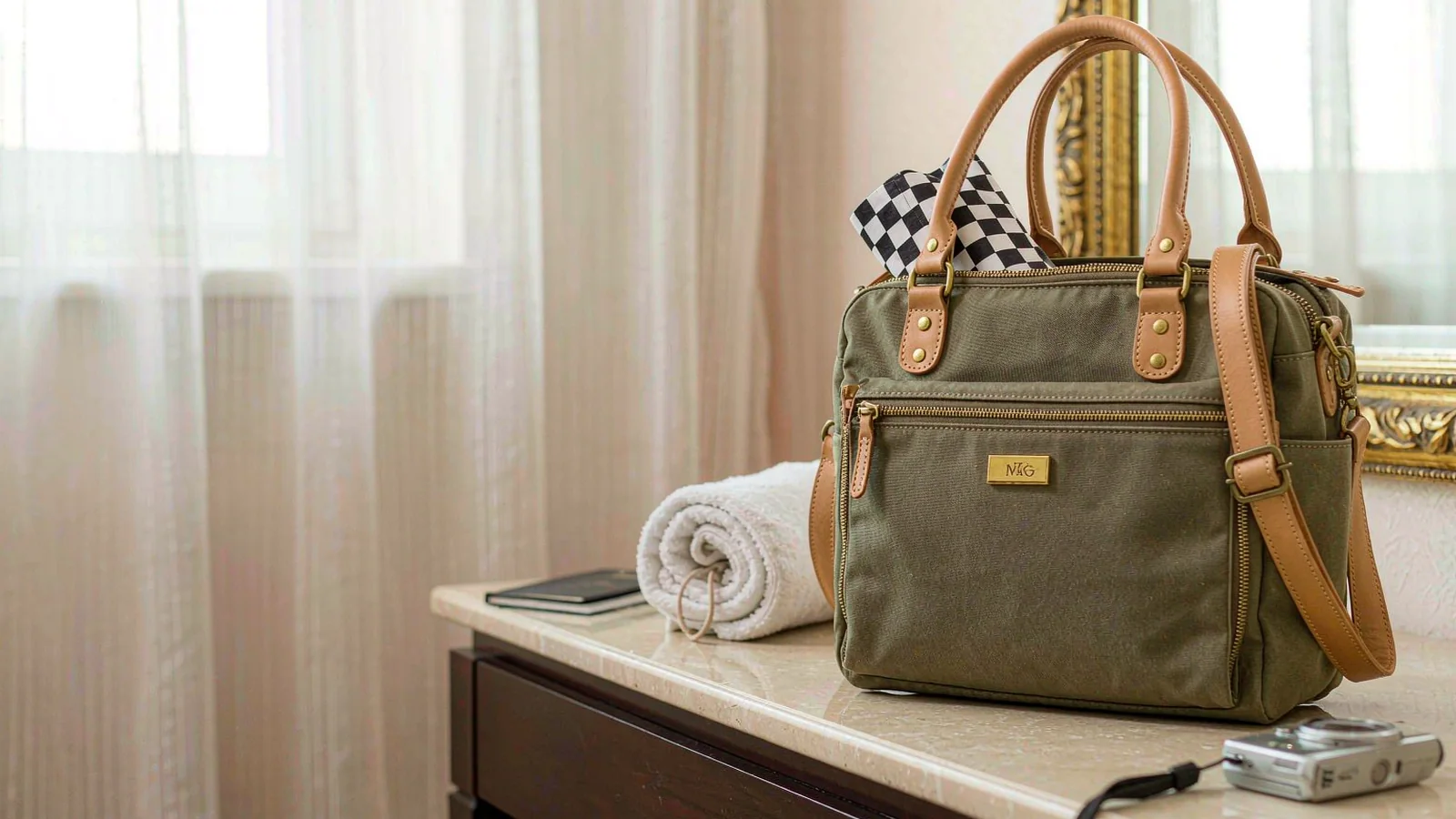 P1 · 23 articles
travel cosmetic bag, travel makeup bag, TSA approved toiletry bag
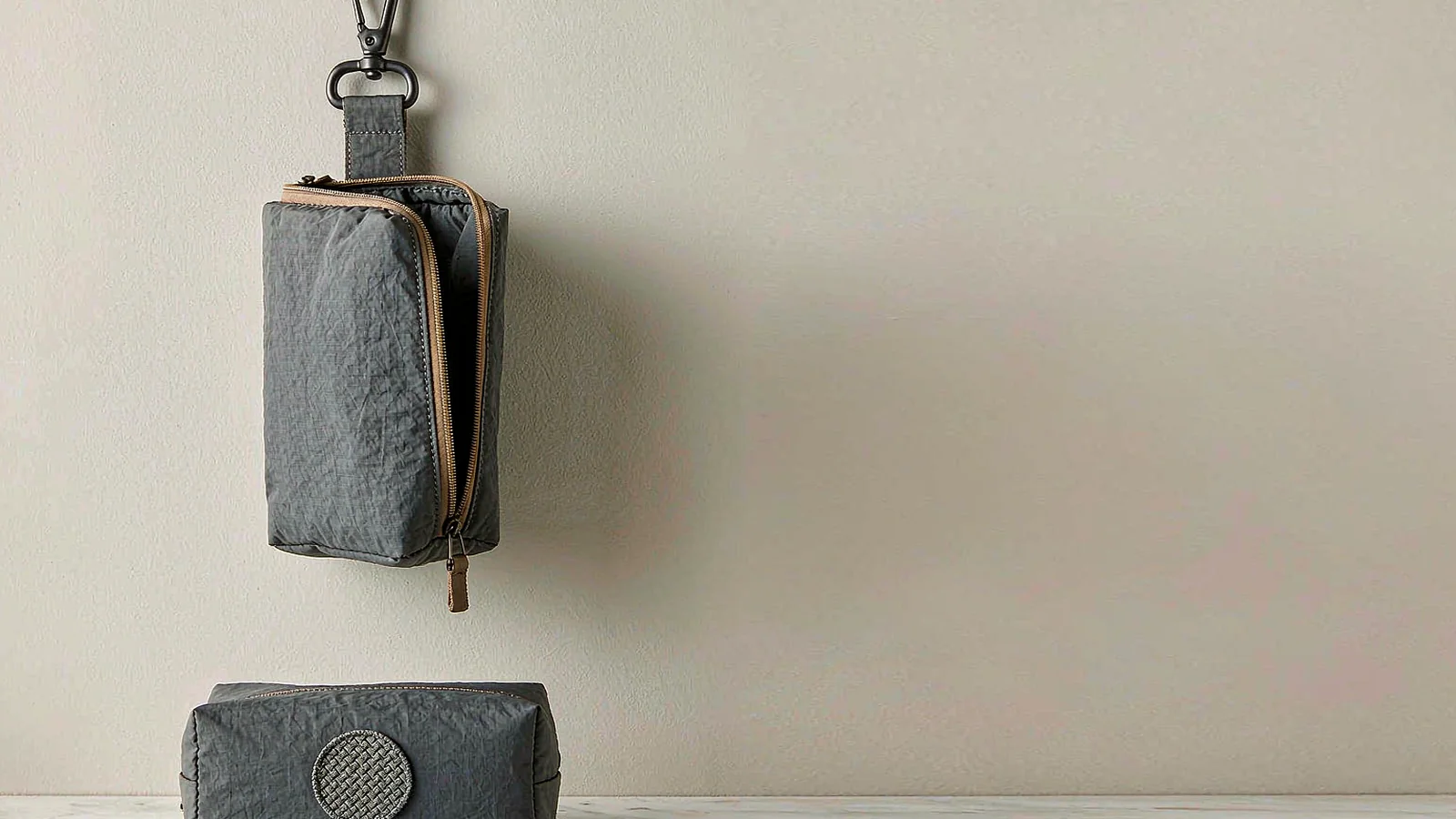 P1 · 19 articles
hanging toiletry bag, hanging makeup organizer, roll up toiletry bag
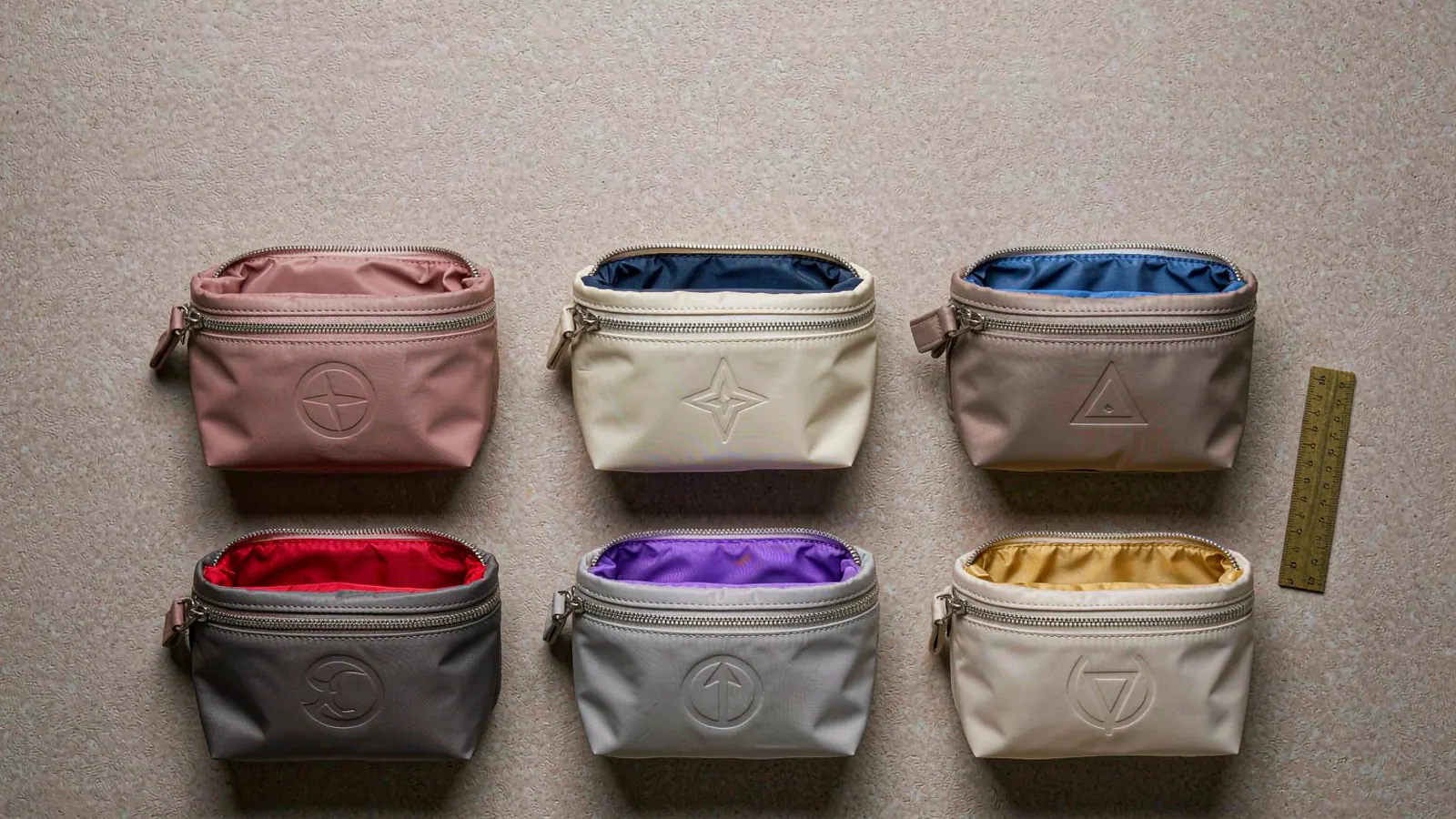 P1 · 19 articles
cosmetic pouch, makeup pouch, beauty pouch
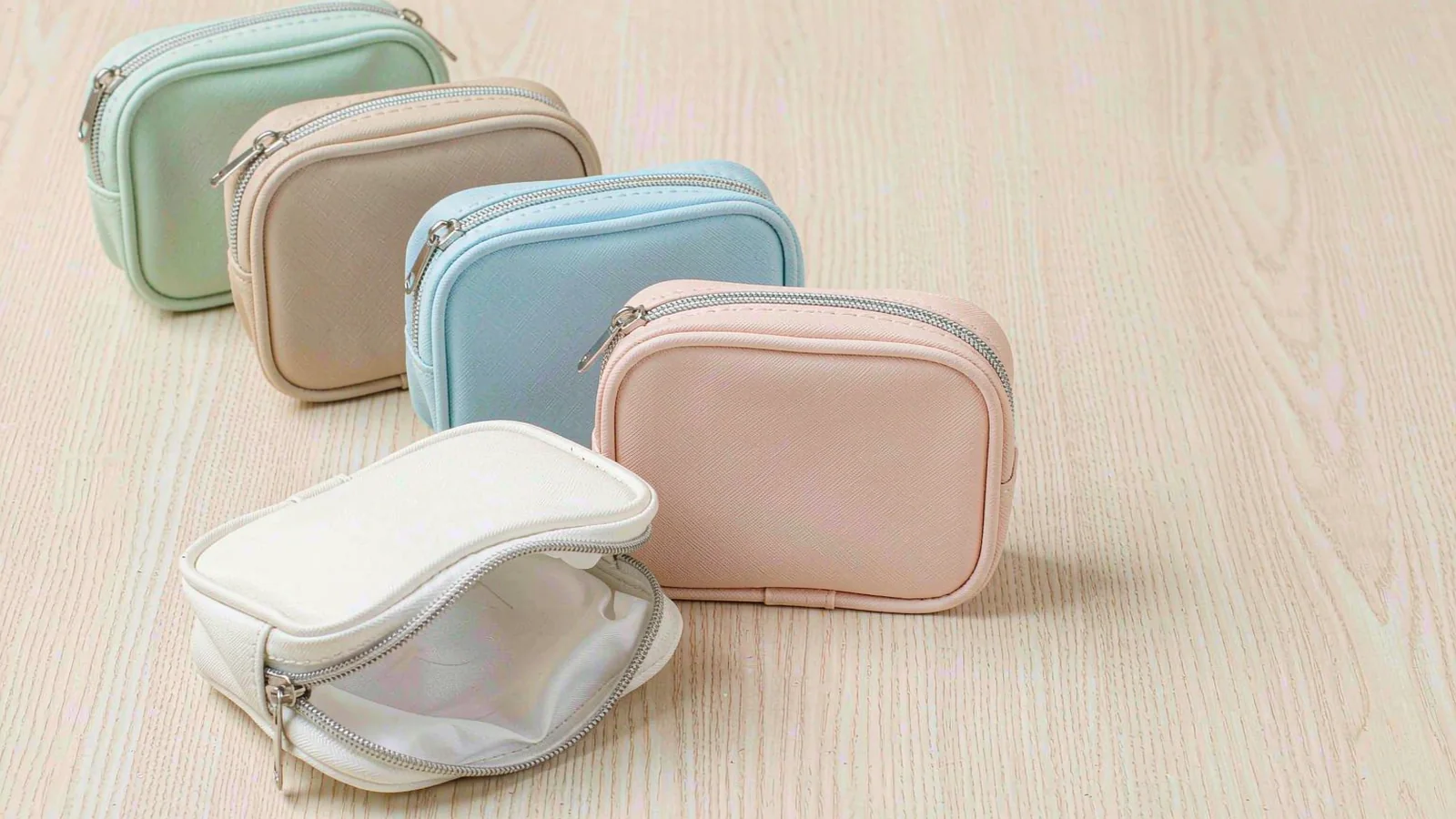 P1 · 23 articles
nylon cosmetic bag, leather makeup bag, PVC toiletry bag, canvas cosmetic bag
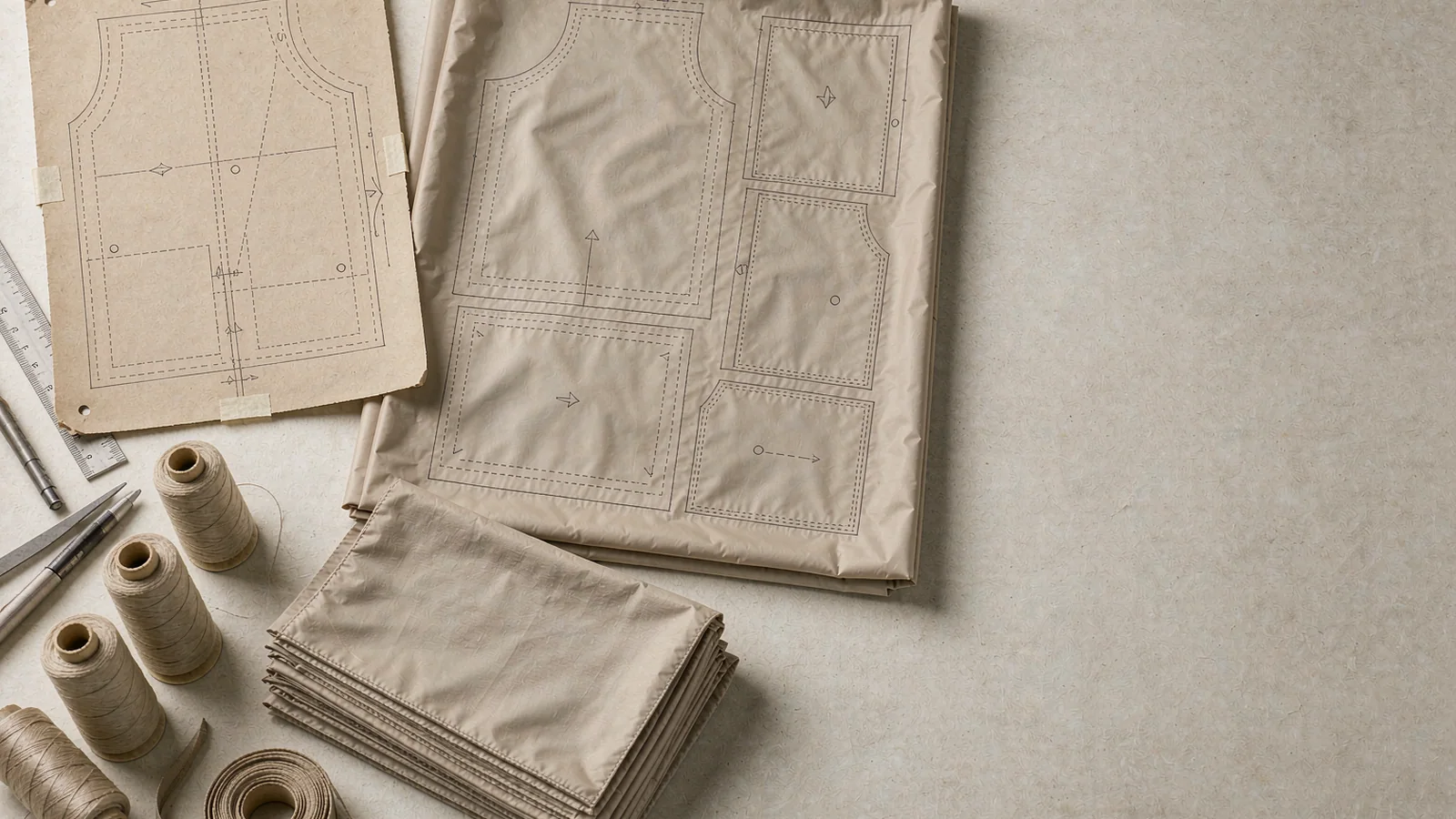 P1 · 19 articles
cosmetic bag manufacturing process, makeup bag production, quality control
 P1 · 14 articles
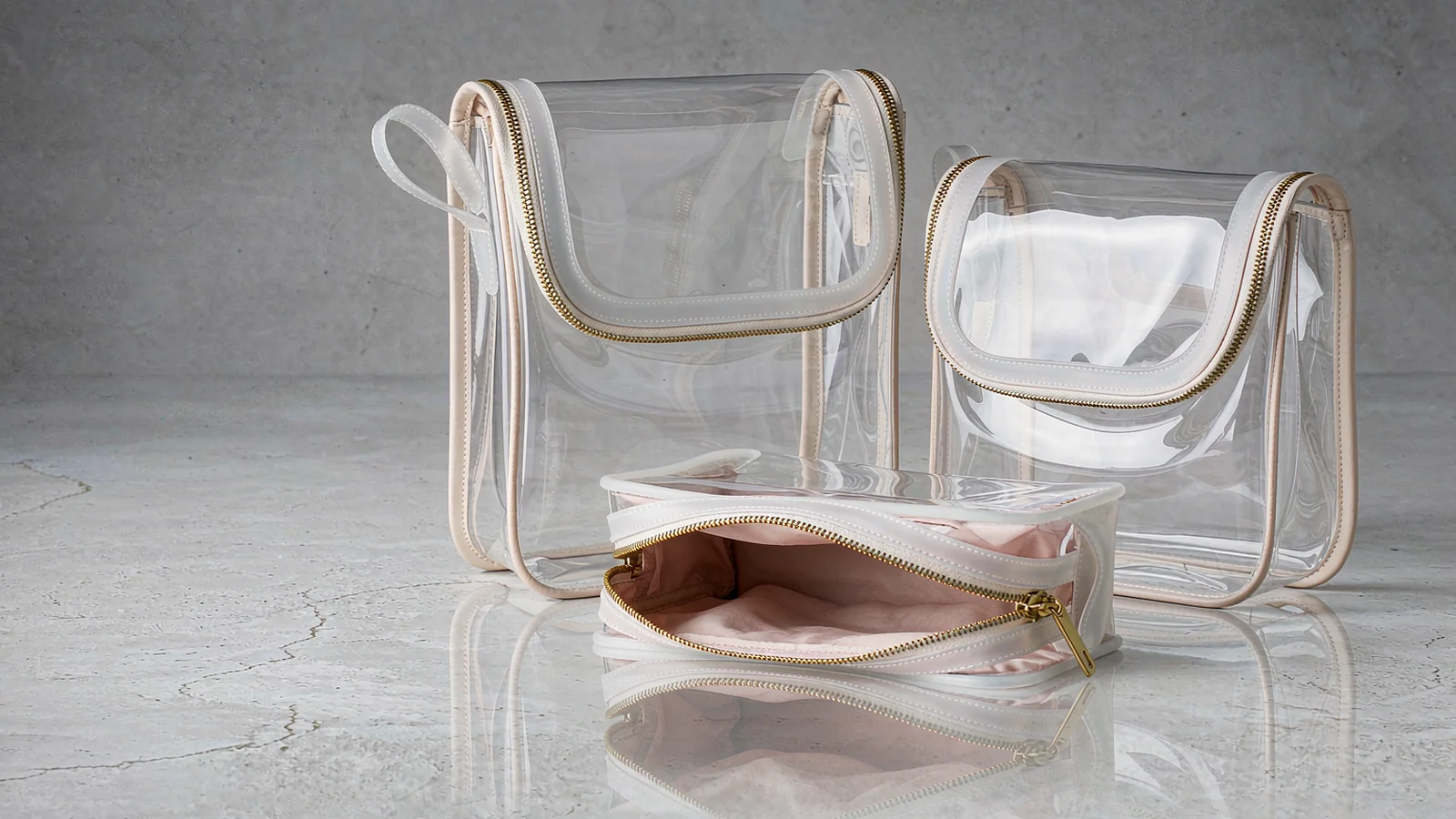
clear cosmetic bag, PVC makeup bag, transparent toiletry bag, stadium approved bag
 P2 · 14 articles
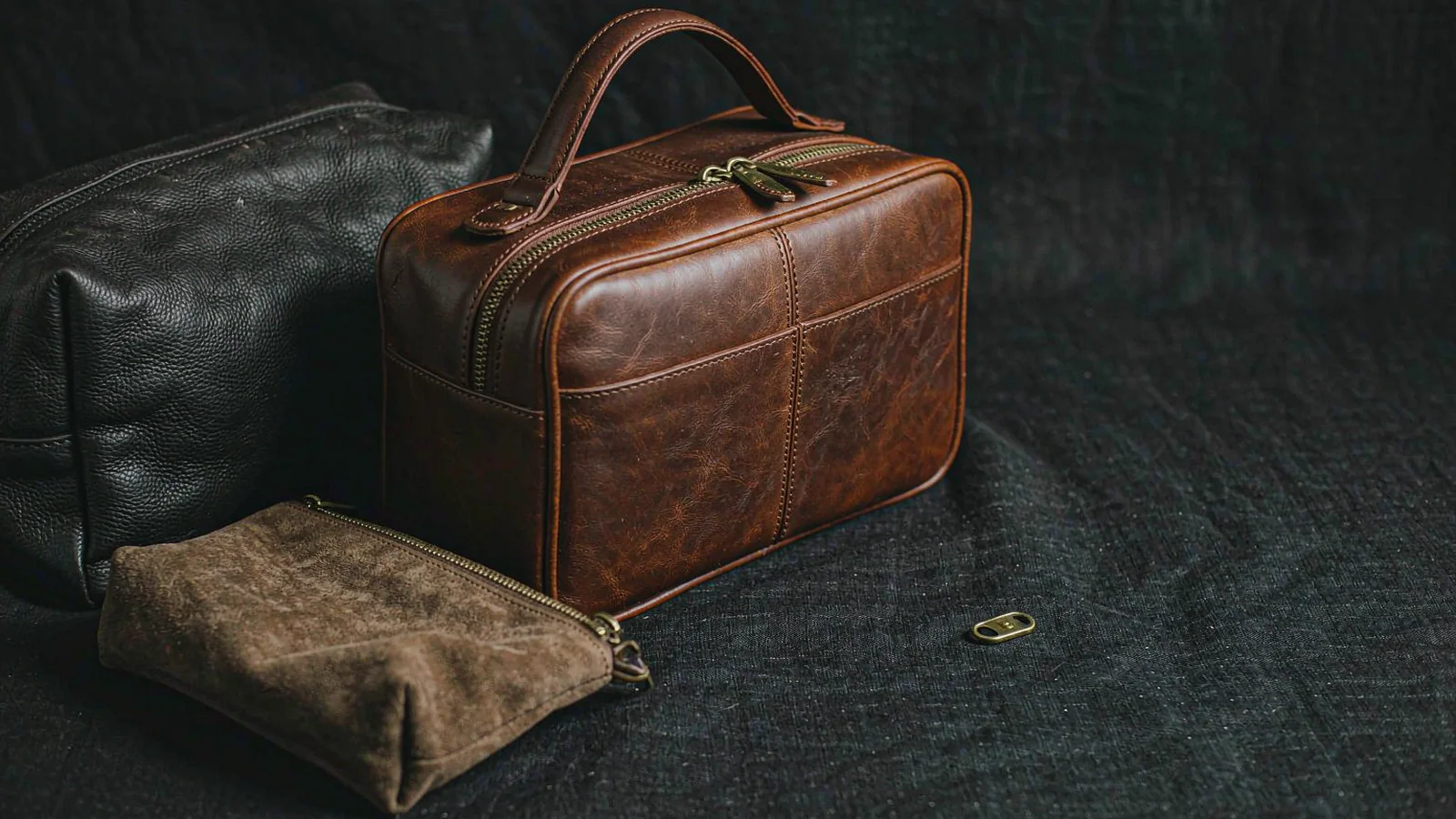
leather makeup bag, PU cosmetic bag, vegan leather toiletry bag
 P2 · 9 articles
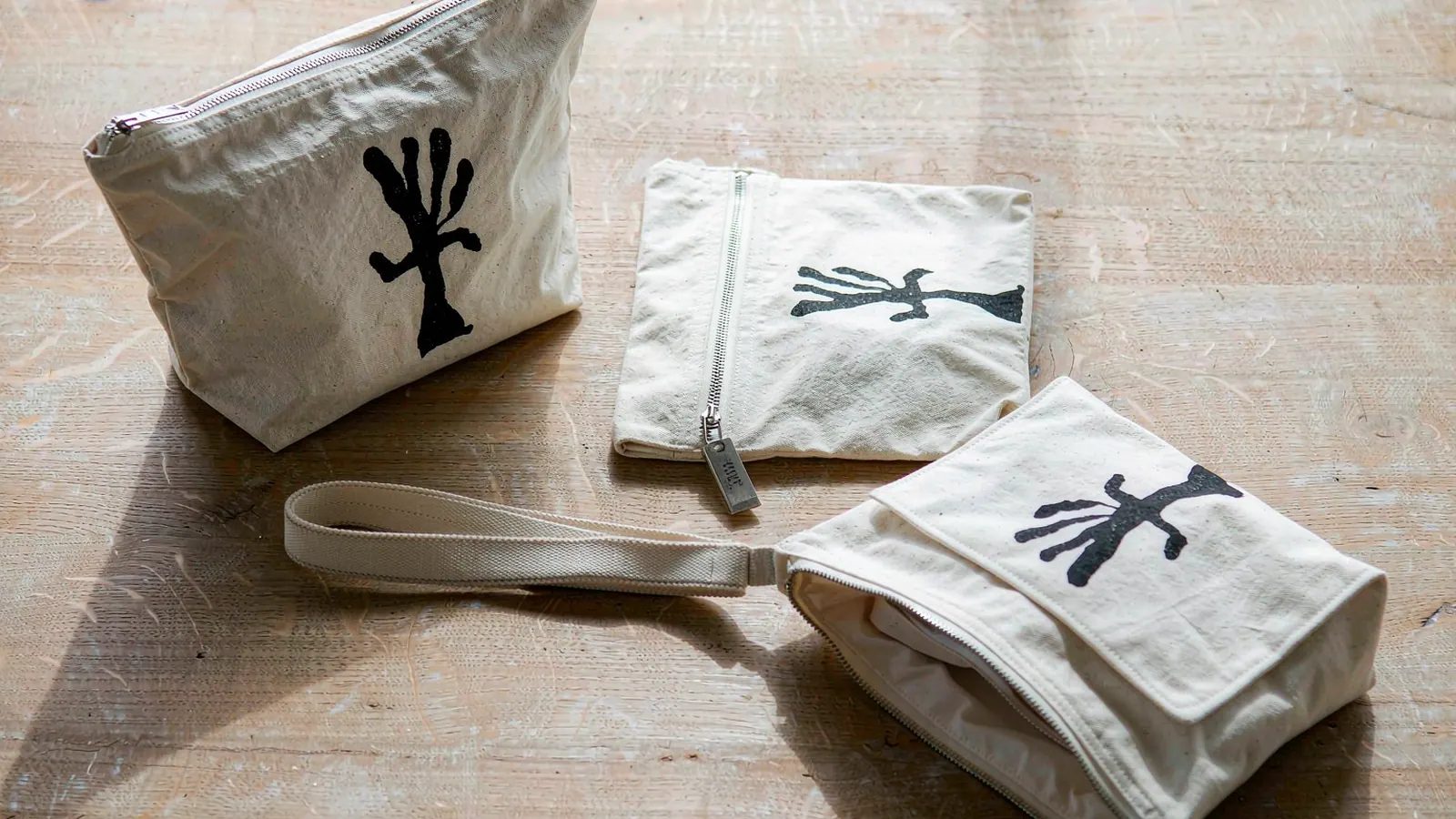
canvas makeup bag, cotton cosmetic pouch, canvas toiletry bag
 P2 · 9 articles
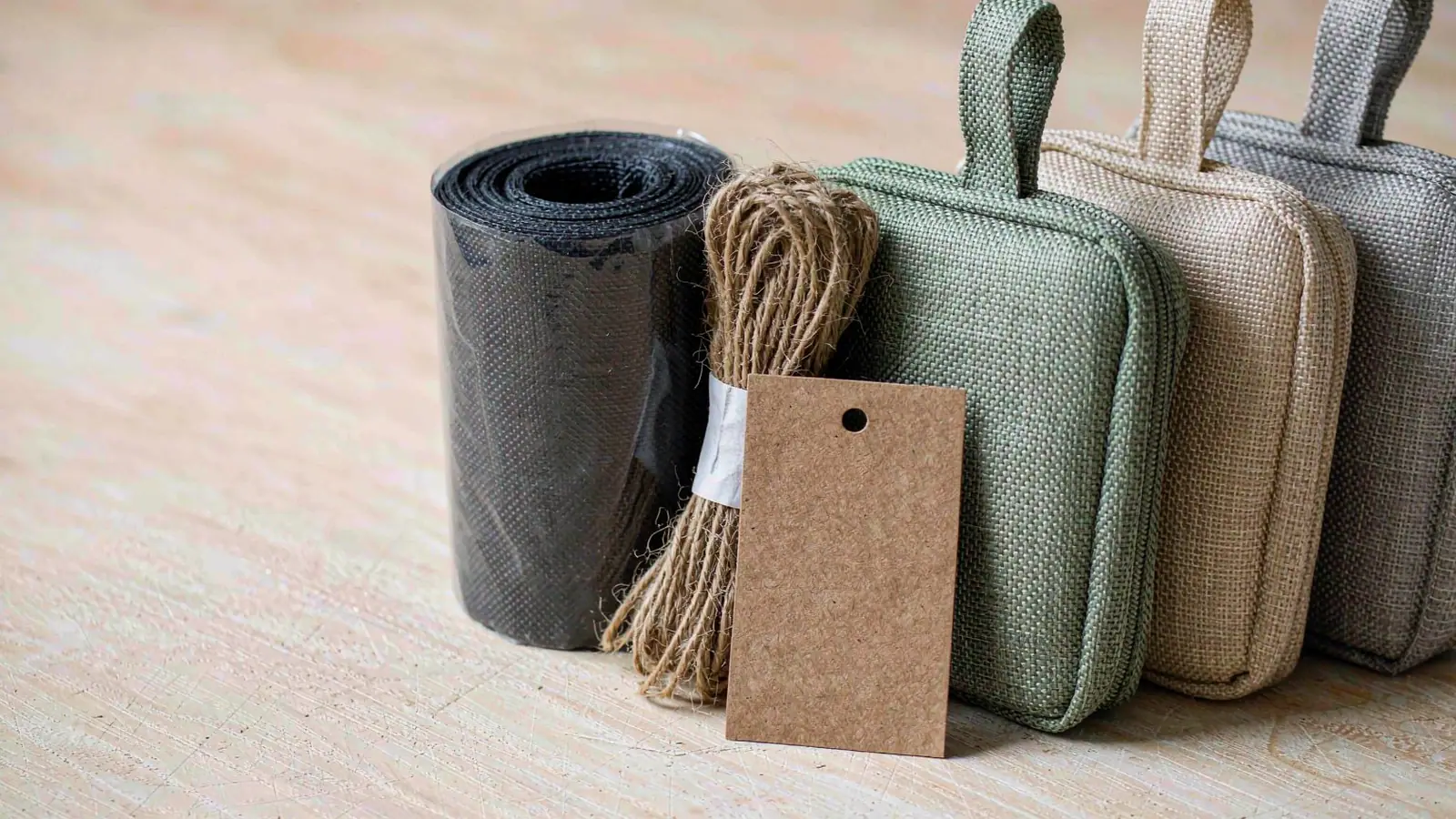
eco friendly cosmetic bag, recycled makeup bag, sustainable toiletry bag
Buyer Questions
What is the minimum order quantity?
500 pieces per style and colourway. A colourway counts as a separate style, so a 500-piece
order in three colours is treated as three 300-to-500-piece runs and priced accordingly.
How long does sampling take?
6–10 working days from a confirmed specification. Constructions that need a new metal
die, a moulded panel or a custom woven label take 12–15 working days.
What is the bulk lead time?
35–50 days after sample approval. The window moves with material availability and
seasonal load; the confirmed date is stated on the quotation.
Can a specific brand colour be matched?
Yes. Send the Pantone reference and the substrate it will be printed or dyed on, because the
same reference reads differently on nylon, canvas and PU. A lab dip or printed swatch is
returned with the sample.
Which artwork format is needed for the logo?
Vector artwork (AI, EPS or SVG) for print, embroidery and deboss. Raster artwork is accepted
for digital print and sublimation at 300 dpi at final print size.
How is quality checked before shipment?
Final random inspection to AQL 2.5 under ISO 2859-1, with the report issued before loading.
Buyer-appointed inspectors are welcome to use the same sampling plan.
What are the payment and shipment terms?
T/T with a 30% deposit and the 70% balance against the bill of lading. Shipment is FOB
Xiamen; other Incoterms can be quoted on request.
Is compliance documentation included?
Documentation for CPSIA, REACH, RoHS, Prop 65, UKCA, OEKO-TEX and GRS can be provided for
the destination market. Test reports from recognised laboratories are arranged where the buyer's
retailer requires them.
Can an existing bag be matched from a physical sample?
Yes. Send one reference piece and the construction is reverse-engineered into a written
specification — dimensions, substrate weight, zip chain and puller, lining, stitch count and
hardware finish. The reference is returned with the sample. Where the original uses a branded or
patented component, a functional equivalent is quoted instead.
What happens if the first sample is not right?
The specification is amended in writing and a corrected sample is built before any bulk deposit falls
due. Corrections are recorded on the specification document so the change survives into the bulk run
rather than being applied once and forgotten.
Can sizes and colours be mixed within one order?
Sizes can be mixed within a style because they come off the same pattern. A colourway counts as a
separate style for material booking and printing purposes, so a three-colour order is treated as three
runs of at least 500 pieces each and priced per colourway.
Is an artwork template supplied with the quotation?
Yes. Once the silhouette is confirmed, a dimensioned template showing the printable area, the logo
placement and the safe margins is issued so artwork is set to the correct proportions the first time.
Panels with a curved or gusseted surface get their own template.
How is the unit price built up?
Material, trims and hardware, labour, branding set-up amortised across the quantity, packing and the
inland leg to Xiamen. The quotation separates them, so a buyer can see what moving from 500 to
2,000 pieces changes and what moving from screen print to a woven label changes.
Can a barcode, care label and hangtag be added?
All three. Barcodes are applied to the hangtag or to a carton label from the buyer's numbering; care
and fibre content labels are written to the destination market's labelling rules; hangtags are produced
to the buyer's artwork on the specified board and finish.
What packing is standard?
One piece per polybag with the required warning text, then into an export carton at a count agreed
before bulk. Carton dimensions, gross weight and marks are stated on the quotation so the buyer's
freight forwarder can work from real numbers rather than an estimate.
Is a confidentiality agreement accepted?
Yes. Artwork, specifications and unreleased silhouettes are treated as the buyer's property. A
non-disclosure agreement in the buyer's own format is signed before artwork is shared, and the same
undertaking is extended to the production partners involved in the programme.
Send five things and a written quotation comes back with MOQ, sampling window, bulk lead
time, inspection standard and carton data: the construction, the dimensions, the material preference, the
quantity per colourway, and the destination market.
Recently Published Guides
Standards referenced
Start a Cosmetic Bag Programme
Send the silhouette, dimensions, material preference and logo artwork, and the programme team will
return a written quotation with MOQ, sampling window, bulk lead time and inspection standard.
Email: [email protected] ·
WhatsApp: +86 177 5002 0688