What Is a Cosmetic Bag? Complete Definition, Types & Uses in 2026
Executive Summary
A cosmetic bag is a purpose-built storage and transport organizer designed to hold makeup, skincare products, toiletries, and beauty tools in a compact, protective, and portable format. Published category totals are inconsistent between research houses, so buyers are better served by demand proxies: toiletry bag draws roughly 74,810 weekly Amazon searches (ASINSIGHT 2026.07) and “travel bag for toiletries” about 110,000 monthly searches (ASINSIGHT 2026.09).
For brands and retailers, the key decision parameters are: material selection (nylon, polyester, PVC, leather, canvas, RPET), MOQ starting at 500 pcs for custom production, sample lead time of 6–10 days, bulk production of 35–50 days, and quality inspection under AQL 2.5 standards. Whether you are a startup launching a private label line or an established retailer sourcing bulk inventory, understanding the full taxonomy of cosmetic bag types, materials, and use cases is essential for making informed sourcing decisions.
Definition: What Exactly Is a Cosmetic Bag?
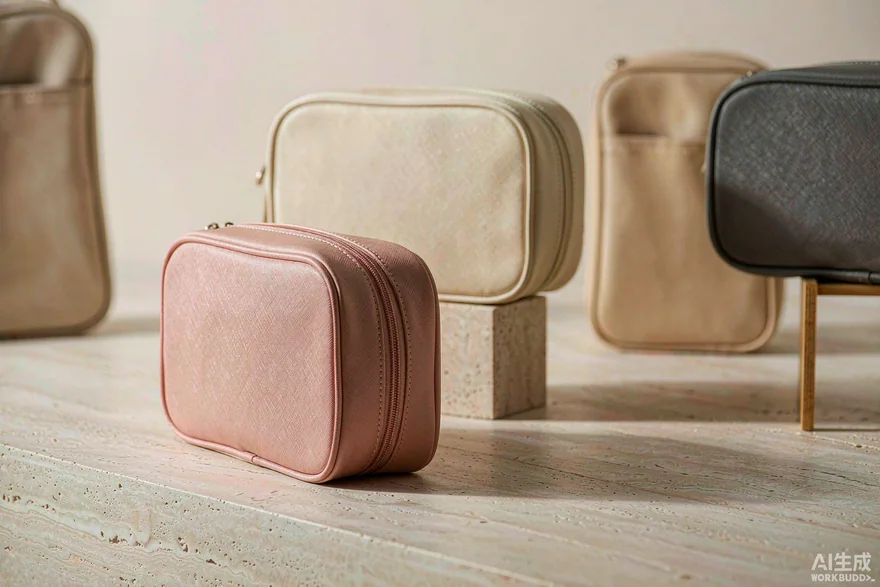
A cosmetic bag — also referred to as a makeup bag, toiletry bag, beauty pouch, or vanity case — is a specialized soft-sided or semi-rigid container engineered to organize, protect, and transport personal care products. Unlike a generic pouch or purse, a cosmetic bag incorporates design features specifically tailored to beauty products: leak-resistant linings to contain spills, compartmentalized interiors to separate liquids from powders, brush holders to protect bristles, and often a hanging hook or standing base for convenient access during use.
The term "cosmetic bag" is the broadest category descriptor, encompassing everything from a small lipstick pouch to a full rolling makeup case. In retail and B2B sourcing contexts, the category is further subdivided by function, size, material, and intended user. Understanding this taxonomy is critical because different subcategories serve distinct customer segments and require different manufacturing approaches.
From a B2B perspective, cosmetic bags represent one of the highest-volume custom promotional products in the global merchandise industry. Typical unit prices sit between $0.45 and $12.00 FOB (Alibaba 2026.10), which is why the category carries such a large share of corporate gifting, beauty brand launches, hotel amenity kits and event merchandising programmes. The combination of low unit cost ($0.45–$12.00 FOB), high perceived value, and large printable surface area makes cosmetic bags a preferred choice for brand activation campaigns.
1.1 The Difference Between Cosmetic Bag, Makeup Bag, and Toiletry Bag
While these terms are often used interchangeably in consumer language, they carry distinct meanings in product development and retail categorization:
| Term | Primary Function | Typical Size | Key Features | Common Materials |
|---|---|---|---|---|
| Cosmetic Bag | General beauty product storage | 15–25cm wide | Main compartment + internal pockets | Nylon, polyester, PVC, canvas |
| Makeup Bag | Cosmetics specifically (foundation, lipstick, eyeshadow) | 12–20cm wide | Brush slots, mirror, padded dividers | Nylon, PU leather, velvet |
| Toiletry Bag | Toiletries for travel (shampoo, toothbrush, razor) | 20–30cm wide | Hanging hook, waterproof lining, wet/dry separation | Nylon, polyester, TPU, PVC |
| Cosmetic Pouch | Small, flat, minimalist storage | 10–18cm wide | Single zipper, no internal structure | Canvas, cotton, PU leather |
| Vanity Case | Semi-rigid, professional-grade storage | 25–40cm wide | Hard shell, adjustable dividers, lock | PU leather, ABS, aluminum |
For B2B buyers, this distinction matters because each subcategory has different material requirements, pricing structures, and target retail price points. A custom makeup bag for a beauty brand launch will emphasize print quality and brand alignment, while a custom toiletry bag for a hotel chain will prioritize durability, waterproofing, and cost efficiency.
The 12 Core Types of Cosmetic Bags
The cosmetic bag market offers a rich taxonomy of product types, each optimized for specific use cases. Below is a comprehensive breakdown of the 12 core types that every B2B buyer should understand before placing a custom order.
2.1 Pouch Style Cosmetic Bags
The pouch style is the simplest and most ubiquitous cosmetic bag format. It consists of a single compartment with a zipper closure, typically made from flexible materials such as nylon, polyester, canvas, or PVC. Pouch style bags are lightweight, inexpensive to produce, and offer a large printable surface area — making them the preferred choice for promotional giveaways, beauty brand samples, and retail add-on items.
Standard dimensions range from 12×8×4cm (small) to 22×15×8cm (large). The simplicity of the design means MOQ can be as low as 500 pcs for custom printing, with unit costs starting at $0.45 FOB for basic polyester models. For brands looking to maximize logo visibility at minimum cost, the pouch style is the logical starting point.
2.2 Hanging Toiletry Bags
Hanging toiletry bags feature a built-in hook that allows the bag to be suspended from a shower rod, towel rack, or door hook, transforming it into a vertical organizer. This design is particularly popular for travel, as it provides easy access to all contents without taking up counter space — a critical advantage in small hotel bathrooms or shared facilities.
Quality hanging bags incorporate reinforced hook attachment points (rated for 2–5kg load), multiple tiered compartments, and a waterproof base to protect surfaces from wet items. The hook mechanism itself is a key quality differentiator: plastic hooks are lightweight but prone to breakage, while metal hooks offer superior durability at a modest cost increase. For B2B orders targeting the travel retail segment, hanging toiletry bags consistently outperform flat pouches in both sell-through rate and customer satisfaction scores.
2.3 Roll-Up Cosmetic Bags
Roll-up cosmetic bags unroll into a flat mat with multiple pockets or elastic loops, then roll into a compact cylinder for transport. This design originated in professional makeup artist kits but has gained mainstream popularity for travel due to its space efficiency and full visibility of contents when unrolled.
The roll-up format is particularly well-suited for makeup brush storage, as the elastic loops hold individual brushes securely while allowing air circulation. For beauty brands offering brush sets as a product line, a custom roll-up brush bag can serve as both packaging and a value-added accessory, increasing perceived product value by 25–40% according to retail packaging studies.
2.4 Clear PVC Cosmetic Bags
Clear PVC (or TPU) cosmetic bags have experienced explosive growth since 2017, driven by two factors: TSA security requirements for carry-on liquids and the "stadium bag" trend requiring transparent bags for venue entry. Transparent shells carry their own engineering requirements, from weld strength to plasticiser limits, so unit cost and tooling both sit above an equivalent opaque bag.
For B2B buyers, clear cosmetic bags offer unique branding opportunities: the contents become part of the visual presentation, and the transparent material allows for creative printing on both the bag and any internal packaging. PVC is the most common material (0.2–0.5mm thickness), while TPU offers a more premium feel with better cold-weather flexibility and recyclability. Custom clear bags with printed logos start at $0.65 FOB with MOQ 500 pcs.
2.5 Rolling Cosmetic Cases
Rolling cosmetic cases — also called makeup artist cases or professional vanity trolleys — are the largest and most specialized cosmetic bag format. They feature wheels, a telescoping handle, multiple tiered trays, and often a hard shell construction. These are designed for professional makeup artists, beauty influencers, and salon owners who need to transport large inventories of products to client locations or events.
Manufacturing rolling cases requires different production capabilities than soft-sided bags, including metal frame construction, injection-molded plastic components, and precision hinge installation. Rolling cases carry the same 500 pcs minimum per style and colourway, with unit costs ranging from $18–$65 FOB depending on size and material. For B2B buyers targeting the professional segment, a current quality-management certificate and sample verification are essential before committing to large orders, with lot acceptance checked against ISO 2859-1 sampling procedures.
2.6 Standing / Base-Stand Cosmetic Bags
Standing cosmetic bags feature a rigid or reinforced base that allows the bag to stand upright on a counter or vanity, with a top-opening design that provides easy access to contents. This format bridges the gap between flat pouches and hard cases, offering the portability of a soft bag with the accessibility of a case.
The standing design is particularly popular for everyday use, as it eliminates the need to rummage through a flat bag. Key quality indicators include the rigidity of the base (EVA foam insert or plastic stiffener), the stability of the standing posture when fully loaded, and the durability of the top zipper when the bag is repeatedly opened and closed in the standing position.
2.7 Cosmetic Bags with Mirror
Cosmetic bags with built-in mirrors add a functional layer that transforms the bag from a storage container into a portable vanity. Mirrors can be fixed (glued to the inside lid), foldable (hinged), or LED-illuminated (battery-powered with adjustable brightness). The LED mirror variant has been one of the fastest-growing subcategories since 2023, particularly among Gen Z and millennial consumers who value on-the-go makeup application capability.
From a manufacturing perspective, mirror integration requires careful engineering: the mirror must be securely mounted to prevent breakage during transit, the LED circuitry must meet CE/FCC certification requirements for electronic products, and the battery compartment must be accessible for replacement. B2B buyers should note that LED mirror cosmetic bags are classified as electronic products in some jurisdictions, requiring additional compliance documentation.
2.8 Waterproof / Leak-Proof Cosmetic Bags
Waterproof cosmetic bags feature sealed seams, coated materials (TPU, PEVA, or silicone-coated nylon), and sometimes watertight zippers to prevent liquid products from leaking out — or external moisture from getting in. This category is essential for travel, gym use, and outdoor activities where exposure to water is likely.
True waterproofing requires more than just water-resistant fabric: it demands welded or taped seams (not stitched), waterproof zippers (such as YKK AquaGuard), and a fully coated interior. B2B buyers should request IP (Ingress Protection) rating verification from suppliers, as many products marketed as "waterproof" only offer splash resistance. For hotel and resort amenity programs, waterproof toiletry bags are a standard requirement due to the humid bathroom environment.
2.9 Cosmetic Bags with Compartments / Dividers
Multi-compartment cosmetic bags use internal dividers, mesh pockets, elastic loops, and removable inserts to organize products by type or function. This design caters to users who carry a wide range of products and want quick access without dumping everything out.
The number and configuration of compartments directly impact manufacturing complexity and cost. A basic 2-compartment bag adds approximately 15% to production cost compared to a single-compartment pouch, while a fully configurable system with removable Velcro dividers can add 40–60%. For B2B buyers, the key is matching compartment complexity to the target user: occasional users need only 1–2 compartments, while enthusiasts and professionals benefit from 4+ organized sections.
2.10 Mini / Pocket Cosmetic Bags
Mini cosmetic bags are ultra-compact pouches designed to hold just the essentials — a lipstick, a compact, a small perfume atomizer, or a credit card. They are often used as promotional items, wedding favors, or add-on gifts with beauty product purchases.
Despite their small size (typically 8–12cm wide), mini bags offer excellent branding real estate relative to cost. Unit prices start at $0.30 FOB for basic models with MOQ 500 pcs, making them one of the most cost-effective custom promotional products available. For beauty brands running sampling campaigns or influencer seeding programs, mini cosmetic bags can increase perceived gift value by 200% or more compared to plain polybag packaging.
2.11 Cosmetic Bag Sets / Nesting Bags
Cosmetic bag sets include 2–4 coordinating bags of different sizes, designed to be used together or separately. The nesting design allows smaller bags to fit inside larger ones for compact storage, while the coordinated aesthetic creates a premium unboxing experience.
Sets are particularly popular in the gift and retail sectors, as they allow brands to offer a "complete solution" at a bundled price point. From a sourcing perspective, sets require careful color matching across different sizes and materials, as well as coordinated packaging. MOQ for sets is 500 complete sets (each unit = one complete set), with FOB costs ranging from $2.50–$15.00 depending on the number of pieces and materials used.
2.12 Smart / Tech-Integrated Cosmetic Bags
The newest category in the cosmetic bag market, smart bags incorporate electronic features such as LED mirrors with adjustable color temperature, USB charging ports, built-in scales for luggage weight compliance, Bluetooth tracking tags, and even UV sanitizing compartments. Smart cosmetic bags occupy a narrow slice of the category and attract attention out of proportion to their volume, which makes them a useful merchandising hook rather than a volume driver.
For B2B buyers, smart cosmetic bags represent a premium differentiation opportunity but require careful vetting of suppliers' electronic manufacturing capabilities, certification compliance (CE, FCC, RoHS, PSE), and warranty support. MOQ is typically higher (500–1000 pcs) and lead times longer (45–60 days) due to electronic component sourcing and assembly. Independent verification against ISO 105 colour fastness tests is worth building into the purchase specification before bulk is released.
Material Guide: 8 Primary Materials for Cosmetic Bags
Material selection is the single most important decision in custom cosmetic bag production, affecting cost, durability, appearance, functionality, and environmental profile. Below is a comprehensive comparison of the 8 primary materials used in cosmetic bag manufacturing.
| Material | Typical Weight | Durability | Water Resistance | Print Quality | FOB Cost Range | Best For |
|---|---|---|---|---|---|---|
| Nylon (210D–600D) | Light–Medium | Excellent | Good (with coating) | Good (sublimation) | $0.80–$3.50 | Travel, hanging toiletry |
| Polyester (300D–900D) | Light–Medium | Very Good | Good (with coating) | Excellent (digital print) | $0.60–$2.80 | Promotional, retail |
| PVC (0.2–0.5mm) | Light | Moderate | Excellent | Excellent (silk screen) | $0.45–$2.00 | Clear bags, TSA |
| TPU (0.2–0.4mm) | Light | Good | Excellent | Good | $1.20–$4.00 | Premium clear, eco |
| PU Leather | Medium | Good | Moderate | Good (deboss/emboss) | $1.50–$6.00 | Premium, gift |
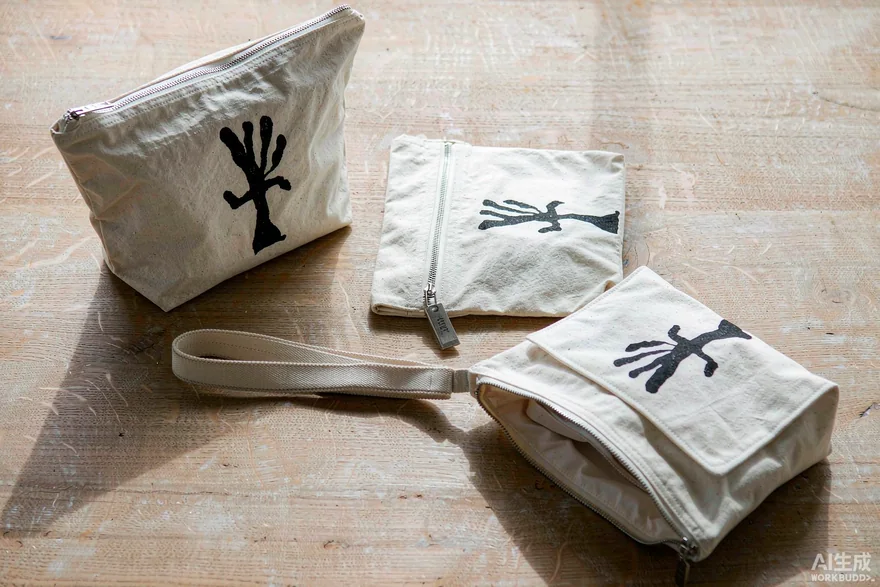
| Canvas / Cotton | Medium–Heavy | Good | Poor (unless coated) | Excellent (screen print) | $0.90–$4.50 | Eco, promotional |
| RPET Recycled Poly | Light–Medium | Very Good | Good (with coating) | Excellent | $1.00–$3.80 | Sustainable brands |
| Velvet / Satin | Light | Moderate | Poor | Good (foil print) | $1.20–$5.00 | Luxury, jewelry |
3.1 Nylon: The Travel Workhorse
Nylon is the most widely used material for travel-oriented cosmetic bags, prized for its exceptional strength-to-weight ratio, natural abrasion resistance, and ability to accept waterproof coatings (PU or TPU). Denier (D) is the standard measurement of nylon fiber thickness: 210D is lightweight and economical, 420D offers a balance of weight and durability, and 600D+ is used for heavy-duty applications. For most cosmetic bag applications, 210D or 420D nylon with a PU coating provides the optimal balance of performance and cost.
Nylon accepts sublimation printing exceptionally well, allowing for full-color, all-over prints with photographic quality — a significant advantage for brands with complex artwork or gradient designs. The material is also naturally mold-resistant and quick-drying, making it ideal for humid bathroom environments.
3.2 Polyester: The Promotional Favorite
Polyester is the most cost-effective synthetic material for cosmetic bag production, offering good durability, excellent printability (especially digital and silk-screen printing), and a wide range of available colors and finishes. While slightly less abrasion-resistant than nylon of equivalent denier, polyester's lower cost makes it the preferred choice for high-volume promotional orders where unit price is the primary consideration.
Polyester cosmetic bags can be produced with MOQ as low as 500 pcs for custom colors and printing, with lead times of 25–35 days for bulk orders. The material accepts both PU and PVC coatings for water resistance, and recycled polyester (RPET) variants are available for brands with sustainability requirements.
3.3 PVC and TPU: The Clear Choice
PVC (polyvinyl chloride) and TPU (thermoplastic polyurethane) are the two primary materials for clear cosmetic bags. PVC is more economical and widely available, but it becomes stiff in cold temperatures and is less environmentally friendly (contains chlorine, difficult to recycle). TPU is more flexible, more durable, recyclable, and free of harmful plasticizers — but costs approximately 50–80% more than equivalent PVC.
For B2B buyers targeting the travel retail segment, TPU clear bags are increasingly preferred due to their premium feel and better environmental profile. However, PVC remains dominant in the promotional and budget segments due to cost. Both materials can be printed using silk-screen or digital methods, with PVC offering slightly better ink adhesion.
Primary Use Cases and Target Users
Cosmetic bags serve a remarkably diverse range of use cases and user segments. Understanding these segments is critical for B2B buyers who need to match product design to target market demand.
4.1 Everyday Personal Use
The largest segment by volume, everyday cosmetic bags are used by consumers to organize their daily beauty routine at home or in their purse/backpack. This segment values affordability, attractive design, and adequate capacity for 5–15 products. Pouch style and standing bags dominate this segment, with retail price points ranging from $5–$25.
4.2 Travel and Tourism
Travel cosmetic bags must meet specific requirements: TSA compliance for carry-on liquids, hanging capability for small hotel bathrooms, leak-proof construction for pressurized cabin environments, and compact size for luggage efficiency. Hanging toiletry bags and clear TSA bags are the dominant formats, with retail prices from $10–$40.
4.3 Professional Makeup Artists
Professional makeup artists require heavy-duty, large-capacity storage with excellent organization and protection for expensive products and brushes. Rolling cases, large standing bags, and brush rolls dominate this segment. Durability, wheel quality, and compartment flexibility are paramount, with retail prices from $50–$300+.
4.4 Promotional and Corporate Gifting
Promotional cosmetic bags are custom-printed with company logos and distributed at trade shows, conferences, beauty events, or as employee/client gifts. Cost efficiency and logo visibility are the primary drivers, with pouch style and mini bags dominating. FOB costs from $0.30–$3.00, MOQ typically 500–5000 pcs.
4.5 Hotel and Hospitality Amenities
Hotels, resorts, and cruise lines purchase custom toiletry bags as part of their amenity programs, often pre-filled with travel-sized toiletries. Durability, waterproofing, and brand alignment with the hotel's aesthetic are key requirements. Hanging and standing formats are most common, with FOB costs from $1.50–$8.00 and MOQ from 1000 pcs.
4.6 Beauty Brand Private Label
Beauty brands (both DTC and wholesale) create custom cosmetic bags as product packaging, gift-with-purchase items, or standalone accessories. Brand alignment, print quality, and premium feel are critical. This segment spans all formats and price points, from mini sample pouches to luxury vanity cases.
B2B Customization Capabilities
For brands and retailers looking to create custom cosmetic bags, the range of customization options is extensive. Below is a comprehensive overview of what is achievable through a professional sourcing partner.
5.1 Custom Logo and Branding Methods
| Method | Best For | MOQ | Cost Impact | Durability |
|---|---|---|---|---|
| Silk Screen Printing | Simple logos, 1–4 colors | 500 pcs | Low | Good |
| Digital / Sublimation | Full-color, complex artwork, all-over print | 100 pcs | Medium | Excellent |
| Heat Transfer | Detailed logos, gradient colors | 300 pcs | Low–Medium | Good |
| Embroidery | Premium, textured logos (canvas/nylon) | 500 pcs | Medium–High | Excellent |
| Deboss / Emboss | Leather/PU leather, subtle premium branding | 300 pcs | Medium | Excellent |
| Foil Stamping | Luxury, metallic finishes | 500 pcs | Medium | Good |
| Woven Label | Interior brand tags, premium positioning | 1000 pcs | Low | Excellent |
| Rubber/PVC Patch | 3D logos, outdoor/tactical aesthetic | 500 pcs | Medium | Excellent |
5.2 Custom Design and Structural Modifications
Beyond logo printing, B2B buyers can customize virtually every structural aspect of a cosmetic bag: dimensions, compartment configuration, zipper type and color, lining material and color, hardware finish (nickel, gunmetal, gold, matte black), strap/handle design, hanging hook type, and packaging (polybag, header card, retail box, gift box). For fully custom designs, a technical drawing (AI or PDF format) with dimensions is required, and a pre-production sample will be created for approval before mass production begins.
5.3 Why Use a Specialist Sourcing Partner Rather Than Going Direct
When sourcing custom cosmetic bags, working with an experienced sourcing partner offers several advantages over approaching a production unit directly or routing the work through an unspecialised intermediary:
- Quality consistency: A dedicated partner implements AQL 2.5 inspection standards on every production run, catching defects before shipment
- Communication efficiency: English-speaking project managers eliminate language barriers and time zone delays
- Design expertise: Access to in-house designers who can optimize your design for manufacturability and cost efficiency
- Supply chain resilience: Multiple vetted factories provide capacity redundancy and competitive pricing
- Compliance support: Assistance with CPSIA, REACH, Prop 65, and other regulatory requirements for target markets
- Sample management: Structured sample process with 6–10 day turnaround and clear revision tracking
The B2B Customisation View
Before a single metre of fabric is cut, the briefing stage settles the silhouette, the lining, the closure and the branding method for makeup bags and toiletry bags.
Standard terms: 500 pieces minimum per style and colourway, 6–10 working days for sampling (12–15 for complex builds), 35–50 days bulk production, AQL 2.5 inspection under ISO 2859-1, FOB Xiamen, T/T 30 deposit / 70 balance.
The commercial arrangement is straightforward: one sourcing partner, one technical pack, one inspection standard, one consolidated shipment.
Which Brand Types Benefit Most
7.1 Startup Brands
For startup beauty or lifestyle brands, custom cosmetic bags offer an affordable entry point into branded merchandise. With MOQ starting at 500 pcs and unit costs under $2.00 for basic models, startups can create professional-looking branded packaging without significant capital investment. Recommended starting point: a custom printed nylon or polyester pouch with silk-screen logo, packaged in a simple polybag.
7.2 Established Brands
Established brands can leverage custom cosmetic bags as a premium brand extension, gift-with-purchase item, or standalone retail product. Higher-quality materials (PU leather, velvet, RPET), complex printing (sublimation, foil stamping), and custom retail packaging elevate perceived value and reinforce brand identity. Recommended: multi-compartment hanging bags or vanity cases with debossed logos and custom gift boxes.
7.3 Retailers and Wholesalers
Retailers sourcing cosmetic bags for resale should focus on trending designs, competitive pricing, and reliable supply. Private label programs allow retailers to build their own brand equity while maintaining margin control. Recommended: a curated range of 3–5 SKUs across price points, with seasonal design refreshes to drive repeat purchases.
7.4 Corporate and Promotional Buyers
Corporate buyers prioritize cost efficiency, logo visibility, and reliable delivery timelines. Pouch style and mini bags are ideal, with silk-screen or heat-transfer logos. Recommended: budget polyester or canvas pouches with 1–2 color logo, shipped in bulk polybags for distribution at events or in welcome kits.
Frequently Asked Questions
What is the minimum order quantity for custom cosmetic bags?
The standard MOQ for custom cosmetic bags is 500 pcs per design/color. However, this varies by customization method: digital/sublimation printing can start at 100 pcs, while custom woven labels and fully custom molds require 1000+ pcs. For first-time buyers, the standard recommendation is starting with 500 pcs to balance cost efficiency with risk management.
How long does it take to produce custom cosmetic bags?
The standard timeline is: 6–10 days for pre-production sample creation, 3–5 days for sample shipping and approval, and 35–50 days for bulk production after sample sign-off. Total timeline from order placement to shipment is typically 45–65 days. Rush production (25–30 days) may be available for an additional fee depending on factory capacity.
What file format do I need for my logo or artwork?
For silk-screen printing and embroidery, vector files (AI, EPS, or PDF with outlined text) are required. For digital and sublimation printing, high-resolution raster files (300 DPI, PNG or TIFF) are acceptable. The programme offers complimentary file conversion and basic design assistance for all orders.
Can I request a sample before placing a bulk order?
Yes. Approving a pre-production sample before bulk is standard practice, because it fixes colour, hand-feel, stitch density and hardware before cutting starts. Sampling runs 6-10 working days for standard constructions and 12-15 working days where tooling or custom hardware is involved.
What quality standards do you follow?
All production runs are inspected under AQL 2.5 (Acceptable Quality Level) with general inspection level II. This means that for a batch of 500 pcs, 50 units are randomly inspected, with a maximum of 5 major defects and 7 minor defects accepted. We also offer full inspection (100% inspection) for premium orders at an additional cost.
What materials are available for custom cosmetic bags?
The programme offers 8 primary material categories: nylon (210D–600D), polyester (300D–900D), PVC (0.2–0.5mm), TPU (0.2–0.4mm), PU leather, canvas/cotton, RPET recycled polyester, and velvet/satin. Each material is available in multiple colors, weights, and finishes. The coordination team can recommend the optimal material based on your budget, use case, and branding requirements.
Do you offer eco-friendly or sustainable materials?
Yes, the programme offers several sustainable options including RPET (recycled polyethylene terephthalate) made from post-consumer plastic bottles, GOTS-certified organic cotton, OEKO-TEX certified fabrics, and TPU (recyclable alternative to PVC). We can provide GRS (Global Recycled Standard) certification documentation for RPET products upon request.
What printing methods are available for logos?
The programme offers 8 branding methods: silk-screen printing, digital/sublimation printing, heat transfer, embroidery, deboss/emboss, foil stamping, woven labels, and rubber/PVC patches. The optimal method depends on your material, artwork complexity, quantity, and budget. The coordination team provides free method recommendations with every quote.
Can I customize the interior design and compartments?
Absolutely. Interior customization includes: number and size of compartments, mesh pockets, elastic brush loops, zippered internal pockets, removable dividers (Velcro), mirror integration, and custom lining colors and patterns. Fully custom interiors require a technical drawing and may increase MOQ to 1000 pcs for the first production run.
What payment terms do you offer?
Standard terms are 30% deposit via T/T (telegraphic transfer) to begin production, with the 70% balance due before shipment. Standard terms are T/T 30% deposit with the 70% balance against bill of lading, which is the arrangement used on the vast majority of repeat programmes. Where a buyer prefers platform escrow, that route can usually be arranged as well. The programme does not accept PayPal for bulk orders due to transaction fee structure.
How are cosmetic bags shipped?
Standard shipping is by sea freight FOB (Free On Board) from the port of origin, with transit times of 25–35 days to West Coast USA and 30–40 days to Europe. Air freight is available for urgent orders (5–7 days) at approximately 4–6x the cost of sea freight. We can also arrange DDP (Delivered Duty Paid) shipping to your door for an all-inclusive price.
Do you provide custom packaging?
Yes, the programme offers a range of packaging options: standard polybag (free), header card with custom printing, custom retail box (with your artwork), gift box with tissue paper and sticker, and hang tags. Custom packaging increases unit cost by $0.20–$2.50 depending on complexity, and may require additional MOQ for box printing.
What certifications do your products have?
Buyers should ask any candidate production partner for a current quality-management certificate (ISO 9001) and a social-compliance audit report (BSCI or Sedex), then check certificate numbers with the issuing body. Products can be tested for CPSIA (USA), REACH (EU), Prop 65 (California), and UKCA (United Kingdom) compliance upon request. Test reports from SGS, Intertek, or TÜV are available for a testing fee of $150–$500 per product/material combination.
Can I mix colors or designs in one order?
For orders above 1000 pcs, we can accommodate up to 3 color variations per design at no additional cost (as long as total quantity meets MOQ per color). For mixed designs, each design is treated as a separate SKU and must meet the minimum 500 pcs per design. The standard recommendation is consolidating designs to maximize production efficiency and minimize cost.
What is your return and defect policy?
All products are inspected before shipment under AQL 2.5 standards. If defects exceeding AQL limits are found upon receipt, the programme offers: (1) replacement of defective units at no cost on the next order, (2) partial refund proportional to defect rate, or (3) full re-production for critical quality failures. All claims must be submitted within 30 days of receipt with photographic evidence.
People Also Ask
What is the best material for a cosmetic bag?
The best material depends on the use case: nylon (420D with PU coating) is ideal for travel and hanging toiletry bags due to its durability and water resistance; polyester offers the best value for promotional and retail applications; PVC or TPU is required for clear TSA-compliant bags; PU leather provides a premium feel for gift and luxury segments; and RPET recycled polyester is the top choice for sustainability-focused brands.
How much does a custom cosmetic bag cost?
Custom cosmetic bags range from $0.45 to $12.00 FOB depending on material, size, complexity, and quantity. Basic polyester pouches with 1-color logo start at $0.45–$0.80 for orders of 5000+ pcs. Mid-range nylon hanging bags with custom printing cost $2.50–$5.00. Premium PU leather vanity cases with custom packaging range from $6.00–$12.00. Setup fees for custom molds or printing screens may apply for first-time orders.
How do I start a cosmetic bag brand?
Starting a cosmetic bag brand involves: (1) defining your target market and price point, (2) creating or sourcing designs, (3) finding a reliable manufacturing partner, (4) ordering samples and iterating, (5) setting up an e-commerce platform or retail distribution, (6) building brand awareness through social media and influencer partnerships, and (7) managing inventory and fulfillment. Many successful brands start with a single hero product (e.g., a custom hanging toiletry bag) before expanding their range.
Are cosmetic bags profitable to sell?
Cosmetic bags can be highly profitable due to low production costs and high perceived value. Typical retail markup is 3–5x FOB cost, meaning a $2.00 FOB bag retails for $8–$15. Promotional and corporate gifting segments offer margins of 40–60%, while DTC e-commerce can achieve 65–75% gross margins. Success depends on product differentiation, brand positioning, and efficient customer acquisition.
What size cosmetic bag do I need for travel?
For carry-on travel, a TSA-compliant clear quart-sized bag (approximately 20×15×5cm) is required for liquids. For full toiletries, a hanging toiletry bag of 25×20×10cm when closed is the most popular size, offering enough capacity for 7–10 days of products while fitting in standard carry-on luggage. For minimalist travel, a compact pouch of 18×12×6cm suffices for essentials.
Request a Sample or a Written Quotation
Send the silhouette, dimensions, material preference and logo artwork, and the programme team will return a written quotation with MOQ, sampling window, bulk lead time and inspection standard.
Email: [email protected] · WhatsApp: +86 177 5002 0688