Spa & Salon Cosmetic Bags: Retail & Client Retention
Executive Summary
How do spa and salon cosmetic bags earn their place in a retail range and in a retention programme? By doing two different jobs with two different specifications. The retail bag has to earn its shelf space against a serum, which means a price ladder with an entry pouch for trial, a mid pouch for volume and a premium case for margin. The aftercare bag has to leave the treatment room with the client and be used daily.
Margin arithmetic is the first constraint. As an illustrative planning range derived from stated assumptions, a mid-tier pouch at an illustrative $4.20 to $6.80 landed and an illustrative $24.00 retail implies roughly $17.20 to $19.80 of gross margin per unit before shrinkage and card fees. Volume is the second constraint: the minimum is 500 pieces per style and colourway, which a single-site spa has to plan against deliberately rather than discover at delivery. Sampling takes 6-10 working days and bulk runs 35-50 days after approval.
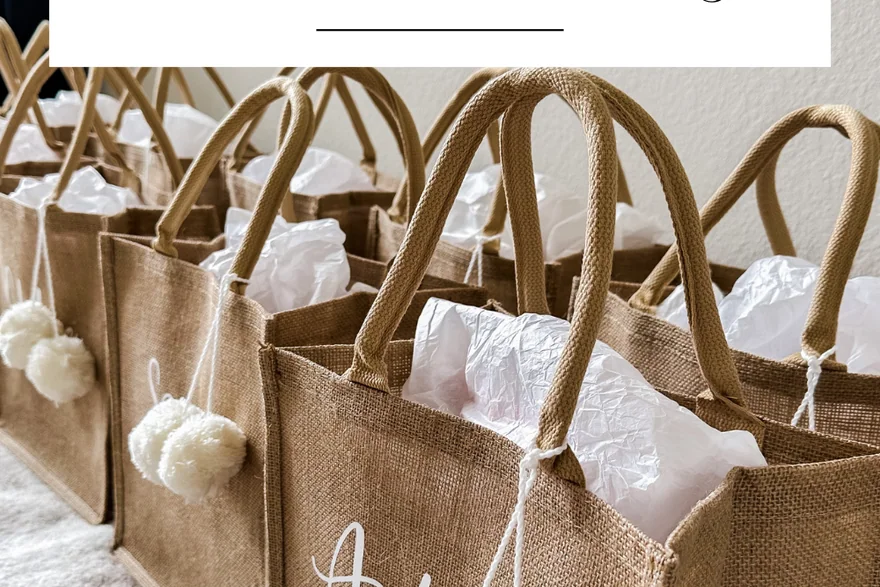
Two roles for a bag in a spa or salon
A cosmetic bag in a spa or a salon is either a retail stock unit or a take-home element of a service, and those are different products with different budgets. The retail unit competes for shelf space against products with high repeat rates and strong brand recognition, so it has to justify its linear centimetres through margin per unit and through how often a client reaches for it. The take-home unit sits inside the service price and is judged by whether the client uses it for weeks afterwards.
Those two roles pull the specification apart. A retail bag needs a finish that reads as worth the price at arm's length: a structured base that stands on a shelf, a lining colour that matches the range, hardware in one consistent tone and a hangtag carrying a barcode. A take-home bag needs the qualities that survive being thrown into a gym bag: a wipe-clean lining, a reliable closure and a mark restrained enough to be used in public.
The category has real pull for clients. The phrase make up bags for women draws around 80,000 monthly searches and custom makeup bag draws 5,400 to 6,600 monthly searches, so the object needs no explanation at the till. Typical unit price bands run $0.45 to $12.00 on Alibaba as of 2026.10, which leaves plenty of room between landed cost and a spa retail price point, and typical marketplace minimums run 100 to 1,000 pieces.
Four decisions shape everything downstream. Which role the bag plays, or whether it plays both as two variants. What margin the range needs and therefore what the ladder looks like. How the bag displays on the actual fixture the site has, not on a photographic shelf. And what reorder cadence the site can sustain against a 500-piece minimum per style and colourway.
Operators benchmarking against other spas and salons should treat what they see as market observation only. A competitor's shelf, price point or take-home kit is a useful reference for positioning; it is not evidence of that business's landed cost, sell-through rate or client profile, and copying the visible artefact without the operating model behind it is how a retail range ends up as dead stock in a stockroom.
Margin structure and the price ladder
Retail margin on a bag starts with landed cost per unit, not with unit price at the port. Landed cost includes the bag, the decoration, the freight, the duty and the retail packaging, and it is the number the retail price has to be set against. As an illustrative planning range derived from stated assumptions, and not a measured result or a quoted price: at an illustrative landed cost of $4.20 to $6.80 and an illustrative retail price of $24.00, the illustrative gross margin per unit is $17.20 to $19.80, or roughly 72 to 83 per cent of the retail price before shrinkage, card fees and staff discount.
A single price point rarely works. Three tiers do the work of three different jobs: an entry pouch around $12.00 to $16.00 retail that a client buys without deliberation, a mid pouch around $22.00 to $28.00 retail that carries the volume, and a premium case around $38.00 to $55.00 retail that lifts the average transaction and makes the mid tier look reasonable. The premium tier sells slowly and is worth stocking for exactly that reason.
| Ladder tier | Illustrative landed cost | Illustrative retail price | Illustrative gross margin per unit | Role in the range |
|---|---|---|---|---|
| Entry pouch, 18 x 11 cm | $1.90 - $3.10 | $12.00 - $16.00 | $8.90 - $12.90 | Trial purchase, till impulse |
| Mid pouch, 23 x 14 cm | $4.20 - $6.80 | $22.00 - $28.00 | $15.20 - $23.80 | Volume and gifting |
| Premium case, 26 x 17 cm | $9.50 - $14.00 | $38.00 - $55.00 | $24.00 - $41.00 | Margin and price anchoring |
| Take-home aftercare pouch | $2.20 - $3.60 | Not for sale | Absorbed into service price | Retention and brand recall |
| Gift with a treatment course | $3.40 - $5.80 | Not for sale | Absorbed into course price | Course commitment |
The volume constraint is where spa programmes usually stumble. The minimum is 500 pieces per style and colourway. A single-site spa selling an illustrative 8 to 12 bags a month would need more than three years of sell-through to clear one run, which is not a plan. Three routes make the number work: consolidate the order across several sites in a group, hold one colourway across the whole range so that entry, mid and premium share a shell, or allocate part of the run to take-home and gift-with-course stock that is consumed by the service rather than sold.
- Set the retail price against landed cost per unit, including freight, duty and retail packaging.
- Run three tiers so the mid tier carries volume while the premium tier anchors the price.
- Share one colourway across the ladder so several sizes can sit inside one minimum.
- Allocate part of every run to take-home stock, which is consumed by the service rather than sold.
- Reorder on a stock threshold set against 35-50 days of bulk plus transit, not on a date.
Shrinkage deserves a line in the plan because soft goods in a client-facing space go missing. An illustrative planning allowance of 2 to 5 per cent of retail units covers loss, damage and the bag that gets used as a staff kit, and it should be applied to the margin arithmetic rather than discovered at the annual stock take. Card fees and any staff discount come off the same line, which is why the illustrative margin percentages above are stated before those deductions.
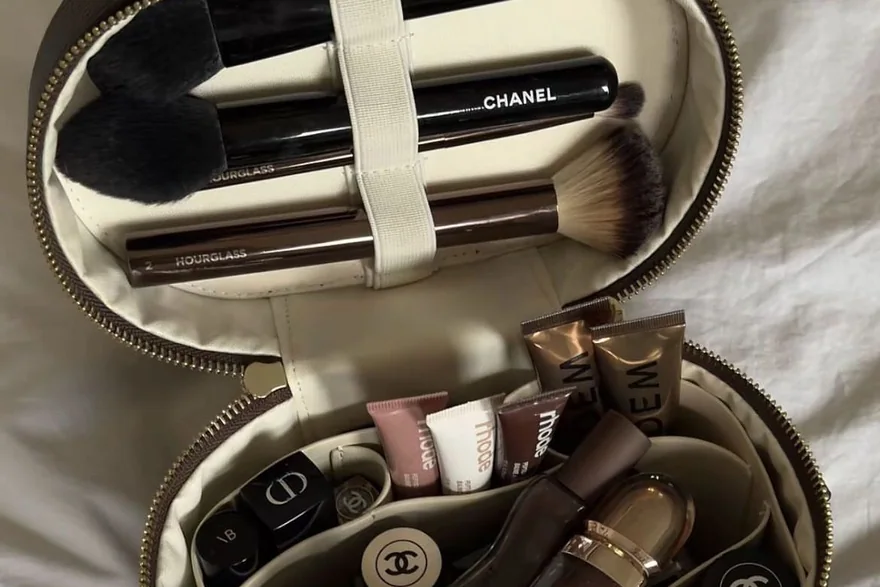
Retail display, fixture and sanitisation
A bag on a shelf has to do three things without a sales conversation: stand up, invite a touch, and read at a metre and a half. A soft unstructured pouch fails the first of those, and a bag that slumps on a fixture looks like clearance stock no matter what it cost. Structure is therefore a display decision before it is a durability decision, which is why the mid and premium tiers are usually specified with a piped or stiffened base.
| Display format | Fixture requirement | Units per 30 cm of shelf | Client interaction | Best for |
|---|---|---|---|---|
| Standing structured case | Flat shelf or riser | 3 - 4 | Picked up, opened, set back down | Premium tier |
| Hanging pouch on a peg | Slatwall peg, 8-12 cm | 4 - 6 | Lifted off, zipper tested | Entry tier near the till |
| Open basket of soft pouches | Shallow basket, 30 x 25 cm | 8 - 12 | Rummaged; needs restacking | Sale and end-of-range |
| Stacked shelf with a riser | Two-tier acrylic riser | 6 - 8 | Top unit touched first | Mid tier, colour-blocked |
| Counter unit at the till | Tray of 30 x 20 cm | 4 - 5 | Impulse, no deliberation | Trial price point |
The colour story should be capped at three tones plus one hardware finish. A shelf carrying eight unrelated prints reads as a gift shop rather than as a range, while three coordinated grounds with one consistent puller tone reads as a brand. Hardware is the detail clients notice when they pick the bag up, so the zipper puller, any eyelets and the hangtag cord should all be in the same metal tone across the whole ladder.
Retail packaging is the last display cost. A hangtag carrying the retail price, a barcode, the fibre content and any recycled or organic claim is the minimum; a printed belly band or a cotton dust bag suits the premium tier. Barcode placement matters operationally, because a tag that folds over the zipper has to be lifted at every scan, and a tag on a cord at the puller is the fastest to scan at a busy reception desk.
Bags used inside the treatment room have a different requirement: they are handled with product on hands, several times a day, and they need to be wiped down between clients. Coated and laminated constructions are the usual answer, and the test methods for coated fabrics are set out in ASTM D751. Where the range sits next to robes and towels, an organic cotton shell certified to the Global Organic Textile Standard, whose scope is at GOTS, keeps the material story consistent across the room.
Loss prevention is worth a sentence in the specification. Small soft goods in a public space disappear, so a bag that can take a security tag through the lining seam, or a fixture that holds units on a peg rather than in a basket, reduces shrinkage without changing the client experience. A basket of twelve loose pouches invites rummaging and leaves the range looking disorganised by mid-afternoon in any case. Attaching a tag to a soft bag is awkward, so the practical route is a fixture that holds each unit on a peg or a short cord rather than an open tray that anyone can sweep.
The aftercare bag and the reorder cadence
The retention value of a bag comes from what happens after the appointment. A take-home pouch given at check-out carries the aftercare products the therapist has just recommended, and if the bag is used daily for the following fortnight then the brand is present at the point where the client decides whether to rebook. That is a mechanical description of the loop, not a measured outcome: the mechanism only works if the bag is good enough to be used and restrained enough to be carried.
| Touchpoint | When it happens | What the bag carries | What the site tracks |
|---|---|---|---|
| Check-out after a treatment | Same visit | Aftercare minis, aftercare card | Kits issued against treatments performed |
| Aftercare period | Days 3 to 14 | Products in daily use at home | Product reorders at the desk |
| Rebooking contact | Day 21 to 30 | Rebooking card from the kit | Next appointment booked |
| Return visit | Next appointment | Bag brought back into the room | Retail units sold to returning clients |
| Course or seasonal programme | Quarterly | Gift-with-course pouch | Courses sold against the offer |
Cost is absorbed into the service rather than recovered at the till. As an illustrative planning range derived from stated assumptions, a take-home pouch at an illustrative $2.20 to $3.60 landed plus illustrative contents at $1.80 to $3.40 puts an illustrative $4.00 to $7.00 into each kit. Whether that is sensible depends on the treatment price and on how many kits are issued a week, so the number should be tested against the service margin before the run is ordered rather than after.
The take-home bag must be visibly different from the retail bag. If the pouch given away at check-out is the same object as the $24.00 unit on the shelf, the retail line loses its justification and clients learn to wait for the free one. The usual separation is specification rather than artwork: a simpler lining, no dust bag, a smaller size, or a different puller. The colourway stays shared so the two sit inside one minimum.
When a treatment bag and a retail bag look identical, the retail unit stops selling. Separate them by specification, not by logo: a smaller size, a plainer lining, no presentation packaging. The shared colourway still lets both sit inside one 500-piece run per style and colourway.
Reorder cadence should be planned against the production calendar. Sampling takes 6-10 working days, or 12-15 working days for complex constructions, and bulk runs 35-50 days after sample approval, so a reorder raised at the point of stock-out leaves a gap of roughly three months. Holding one colourway across eighteen to twenty-four months lets a site reorder a single tier without disturbing the rest of the range, which is the practical reason to resist changing the palette every season.
Inspection protects the retail price. A bag sold at a premium price point is inspected as a retail article, so print registration, lining alignment, hardware tone consistency and zipper action all need written defect definitions, and the run should be inspected to AQL 2.5 under ISO 2859-1. A mid-tier bag that arrives with a visible print misregistration cannot be sold at the mid-tier price, and discounting it damages the ladder more than the units are worth.
The B2B Customisation View
The route from concept to shelf for makeup bags and toiletry bags is short when the specification is tight at the start, and painfully long when it is not.
Fixed commercial parameters: 500 pieces per style and colourway minimum, first sample in 6–10 working days (12–15 for complex or hardware-intensive constructions), bulk 35–50 days after approval, AQL 2.5 inspection under ISO 2859-1, FOB Xiamen, T/T 30/70.
The role played here is programme coordinator: QUANZHOU JUNYUAN BAGS translates a retail brief into a factory-ready technical pack and then audits the output against it before goods leave the floor.
Which Brand Types Benefit Most
Spa and salon programmes suit buyers who control both a retail shelf and a treatment list, because that combination is what makes a single colourway work across two roles. Five buyer types use this format.
- Day spas and medi-spas. These buyers run the strongest retail ranges because the treatment and the product are the same story, and they can justify a premium case on the shelf. The constraint is volume against a 500-piece minimum, so the aftercare and gift-with-course allocations are what make a single-site order viable.
- Hair salons and barbershops. Retail here is impulsive and till-adjacent, so an entry pouch on a peg near the desk outperforms a premium case on a shelf. A wipe-clean lining matters because the bag will sit next to styling products, and hardware tone should match the salon's existing fixtures rather than introduce a new metal.
- Nail and beauty bars. High footfall and short visits favour a small trial price point and a strong colour story. These sites benefit most from one shared colourway across entry and mid tiers, because the range sits in a small footprint and has to read as a set from two metres away.
- Salon groups, franchises and spa chains. Multi-site operations are the natural fit for the minimum: one colourway ordered once, allocated across sites, with the aftercare stock drawn from the same run. They also hold a palette longest, which is what allows a single-tier reorder without redesigning the range, and they can allocate aftercare stock from the same run so the treatment side never runs short.
- Spa and salon distributors and wholesale buying groups. Distributors consolidate demand across many independent sites, which turns the 500-piece minimum into routine and makes a three-tier ladder economical. They need stable colourways, consistent carton counts and documentation that survives a retailer's own audit.
Frequently Asked Questions
How long does one 500-piece run last a single-site spa?
Longer than most operators expect. A site selling an illustrative 8 to 12 retail bags a month would need more than three years of retail sell-through alone to clear one run. That is why single sites allocate a share of the run to aftercare and gift-with-course stock, which is consumed by the service rather than sold, or consolidate the order across several locations.
What retail price should a spa set on a mid-tier cosmetic bag?
Set it against landed cost rather than against a competitor's shelf. As an illustrative planning range derived from stated assumptions, a mid pouch at an illustrative $4.20 to $6.80 landed supports an illustrative $22.00 to $28.00 retail, leaving roughly $15.20 to $23.80 of gross margin per unit before shrinkage, card fees and staff discount. The premium tier then anchors that price.
Should a spa give bags away or sell them?
Both, but never the same bag. A take-home pouch given at check-out supports aftercare and rebooking, and a retail unit on the shelf carries margin. If the two are identical the retail version stops selling, so separate them by specification: a smaller size, a plainer lining, no presentation packaging, while sharing the colourway so both sit inside one minimum.
How can a single spa reach the 500-piece minimum without over-stocking?
Three routes. Share one colourway across entry, mid and premium so three sizes sit inside one run. Allocate part of the run to aftercare and gift-with-course stock, which is consumed by treatments rather than sold. Or consolidate with other sites in a group. The third is simplest; the second is the one that works for a genuinely independent property.
What margin does a retail cosmetic bag carry?
As an illustrative planning range derived from stated assumptions, and not a measured result: an illustrative $4.20 to $6.80 landed cost against an illustrative $24.00 retail implies $17.20 to $19.80 of gross margin per unit, or roughly 72 to 83 per cent of the retail price. Shrinkage, card fees and staff discount come off that figure, so an illustrative allowance of 2 to 5 per cent for shrinkage is worth building in.
How should cosmetic bags be displayed on a spa retail shelf?
Standing, touched and readable at a metre and a half. A structured case on a flat shelf or riser holds three to four units per 30 cm and reads as premium. A soft pouch needs a peg or a basket, and a basket of loose pouches has to be restacked constantly if the range is not to look disorganised by the afternoon.
Does a retail bag need a barcode and a hangtag?
Yes, for a retail unit. The hangtag should carry the retail price, a barcode, the fibre content and any recycled or organic claim, and it should hang at the zipper puller so it can be scanned without unfolding the bag. The premium tier can add a printed belly band or a cotton dust bag; the take-home version should carry neither.
What fabric suits a bag used inside a treatment room?
A coated or laminated construction that can be wiped down between clients, since the bag is handled several times a day with product on hands. The test methods for coated fabrics are set out in ASTM D751. Where the range sits beside robes and towels, an organic cotton shell certified to GOTS keeps the material story consistent across the room.
Can a spa bag be sanitised between clients?
The specification decides that. A TPU-laminated or PU-coated shell tolerates a wipe-down with the products a site already uses; an uncoated cotton canvas does not, and will stain. Buyers should test the intended sanitiser on the sample panel rather than on the finished bag, and should ask which coating the test was run against, because sanitiser tolerance varies widely between a PU film and a TPU laminate.
How often should a spa reorder its retail bag line?
On a stock threshold rather than a date. With 6-10 working days for sampling, 35-50 days for bulk after approval and transit on top, a reorder raised at the point of stock-out leaves roughly a three-month gap. Holding one colourway across eighteen to twenty-four months allows a single-tier reorder without redesigning the range, and an annual top-up of the entry tier keeps the till-adjacent fixture full.
What should go inside an aftercare take-home bag?
The products the therapist actually recommended, in travel sizes, plus a printed aftercare card and a rebooking card. Contents in the illustrative $1.80 to $3.40 range alongside an illustrative $2.20 to $3.60 bag put an illustrative $4.00 to $7.00 into each kit. The card matters as much as the contents, because it is the part that carries the rebooking prompt home.
Should the premium case use the same colourway as the rest of the range?
Yes. Sharing the ground colour and the hardware tone across all three tiers is what lets a site hold one run and reorder a single tier later. The premium unit separates itself through structure, lining and packaging rather than through a different palette, so the shelf reads as one range with three price points rather than as three unrelated products.
Can a salon group share one colourway across sites?
Yes, and it is the most efficient structure available to a group. One colourway, one order, allocated across sites by forecast, with aftercare stock drawn from the same run. The only discipline required is that individual sites cannot request their own colour variant without breaking the run back into separate minimums, so the palette has to be agreed once at group level and then left alone.
How is a retail bag order inspected for appearance defects?
As a retail article, to AQL 2.5 under ISO 2859-1, with print registration, lining alignment, hardware tone consistency and zipper action each given a written defect definition. A bag with a visible misregistration cannot be sold at its intended tier, and discounting it damages the price ladder more than the affected units are worth. Approving a signed swatch for shell, lining and print before bulk start gives the inspection something to measure against.
Which certifications matter for a spa retail line?
A recycled-content claim needs a transaction certificate under the Global Recycled Standard tied to the specific lot; an organic fibre claim needs GOTS certification. Finished-article testing for harmful substances is covered by OEKO-TEX Standard 100. Without the certificate tied to that specific lot, the claim should not appear on a hangtag, a shelf talker or a treatment menu, because a client asking one question at the desk should not be able to prove the site wrong.
People Also Ask
Do spas sell cosmetic bags?
Many do, usually as a small three-tier range rather than as a single item: an entry pouch for trial, a mid pouch for volume and a premium case for margin. Others use the bag purely as a take-home aftercare element. The format needs no explanation to clients, with the phrase make up bags for women drawing around 80,000 monthly searches.
What is a reasonable markup on spa retail products?
It depends on landed cost, not on a rule of thumb. As an illustrative planning range derived from stated assumptions, a bag at an illustrative $4.20 to $6.80 landed supports an illustrative $22.00 to $28.00 retail, before shrinkage, card fees and staff discount. Buyers should build the allowance for shrinkage into the margin rather than discover it at the annual stock take.
How do spas keep clients coming back after a treatment?
The mechanism is straightforward: the client leaves with the aftercare products already in hand, in a bag used daily, with a rebooking card inside. Whether it works depends on execution rather than on the giveaway, so the bag has to be good enough to be used, restrained enough to be carried in public and robust enough to still look presentable a fortnight later when the rebooking decision is actually made.
What should be in a spa aftercare kit?
Travel sizes of the products the therapist recommended, a printed aftercare card covering the first fortnight, and a rebooking prompt. The bag itself should be a wipe-clean pouch the client will keep using, and it should be visibly simpler than any bag the site sells, so the retail range keeps its value and the client who wants the better one has a reason to come back and buy it.
Request a Sample or a Written Quotation
Send the silhouette, dimensions, material preference and logo artwork, and the programme team will return a written quotation with MOQ, sampling window, bulk lead time and inspection standard.
Email: [email protected] · WhatsApp: +86 177 5002 0688