Baby Shower Cosmetic Bags: Mommy-to-Be Gifting Trend
Executive Summary
Baby shower cosmetic bags are pouches, makeup bags or small toiletry cases bought either as the main gift for a mother-to-be or as a shower favour for guests, and they are judged on softness of palette, on presentation and on how safe they are to leave lying around a home with a baby in it. They work when the pastel is matched across shell, thread and print, when hardware is chosen with infants in mind, and when the bag arrives ready to hand over rather than ready to be re-packed.
The practical specification is a brushed or coated shell in the 200-300 g/m² range, a pastel matched to a physical reference rather than a screen image, and a closure with no small detachable parts. Because the bag will be within reach of a baby, buyers ask for fabric assessment against OEKO-TEX Standard 100 and check trim against CPSIA limits on lead and phthalates. Sampling runs 6-10 working days, or 12-15 for complex constructions, and bulk takes 35-50 days after approval, with inspection at AQL 2.5 under ISO 2859-1.
What a baby-shower cosmetic bag is asked to be
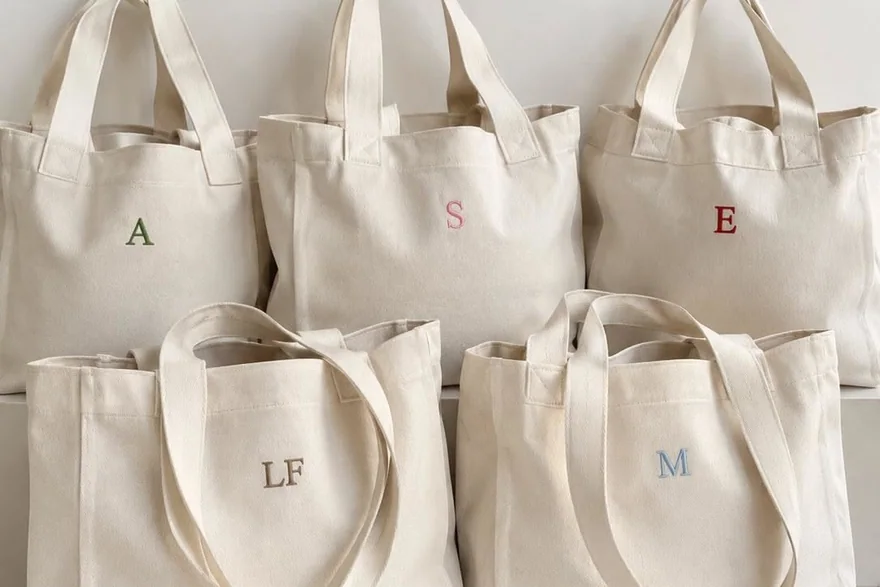
A baby-shower cosmetic bag is a pouch, makeup bag or small vanity case bought for a mother-to-be or given as a shower favour, and it carries an unusual double brief. It has to read as a gift the moment it is picked up, and it has to keep working afterwards as a bag for nappies, wipes, creams or the mother's own things. Those two expectations pull in different directions: gift presentation wants tissue, ribbon and structure, while daily use wants a wipeable lining, a closure that opens one-handed and a shell that survives being knocked off a changing table.
Three things separate the shower bag from a standard retail pouch. The palette is soft by convention rather than by fashion, which makes small colour errors far more visible than they would be on a dark shell. The audience is a household that is about to contain a newborn, so questions of small parts, cords and chemical content are raised by recipients even when the product is not a children's product. And the bag frequently arrives as the wrapping itself, which means the finishing spec matters as much as the bag spec.
Demand underneath the trend is real. 'Travel bag for toiletries' draws roughly 110,000 monthly searches and 'make up bags for women' around 80,000, and the toiletry-bag category shows about 74,810 weekly searches on Amazon data from 2026.07, which tells buyers that the shape is already familiar to shoppers and needs no explanation. Typical unit price bands on open marketplaces run $0.45-$12.00 depending on fabric and construction, with marketplace minimums usually quoted between 100 and 1,000 pieces. A custom programme runs on a firmer figure: 500 pieces per style and colourway.
A shower bag is given to an adult. It will nonetheless end up on a floor, in a pram basket and within reach of a crawling baby, which is why the hardware and fabric questions below are worth answering before sampling rather than after a customer asks.
Soft palette execution: matching pastels across shell, thread and print
Pastels are harder to produce than saturated colours, not easier. A mid-tone navy hides a 5% dye-lot shift; a blush at 10% saturation shows it immediately, because the eye reads the difference between warm pink and cool pink far more readily than the difference between two blues. That sensitivity applies three times over on a shower bag, which typically combines a pastel shell, a contrast thread on the seam and zip tape, and a printed name or motif. If those three are matched separately rather than to one physical reference, the bag looks assembled from three different products.
| Palette family | Typical reference | Shell fabric | Thread and trim | Main watch-out |
|---|---|---|---|---|
| Warm blush and peach | Soft coral family, low chroma | Brushed polyester peach-skin, 220-260 g/m² | Matching dyed thread, rose gold metal pull | Shifts orange under warm retail lighting |
| Cool sage and eucalyptus | Muted grey-green, 20-30% saturation | Cotton canvas, 280-320 g/m² | Tone-on-tone thread, antique brass trim | Reads grey on screen and green in hand |
| Powder blue and sky | Light blue with slight grey cast | TPU-laminated polyester, 190-230 g/m² | Contrast white thread, silver pull | Metamerism between shell and print |
| Butter and cream | Warm off-white, not optical white | Quilted nylon, 210-250 g/m² | Tone-on-tone thread, matte trim | Shows soil and handling marks fastest |
| Lavender and lilac | Soft violet, low chroma | Velvet or velour, 260-300 g/m² | Matching thread, pearl-finish pull | Crush marks show on pile fabrics |
The mechanism for getting pastels right is a single approved physical reference and a stated viewing condition. Buyers should approve a dyed swatch of the actual production fabric rather than a colour chip, because a chip and a brushed polyester surface reflect light differently and will not match on the finished bag. Approval should happen under two lighting conditions, daylight-equivalent and warm indoor, and the print reference should be matched to the swatch rather than to a screen proof. Where a name or motif is printed, ask for a spot-colour match rather than a CMYK conversion, since process colour on a pastel ground is where most drift occurs.
Fabric choice follows the palette rather than preceding it. Brushed polyester in the 220-260 g/m² range gives the soft hand that reads as nursery-appropriate and takes a printed name cleanly. Cotton canvas at 280-320 g/m² gives a natural, slightly matte look that suits sage and cream, and takes embroidery without puckering. TPU-laminated polyester at 190-230 g/m² is the practical option where the bag will hold wipes or creams, because it wipes clean and resists the staining that light colours otherwise show within weeks. Velvet and velour look excellent in photography and show crush marks in transit, so they suit hand-delivered gifts more than shipped ones.
Colour fastness deserves a specific requirement on pale shells. A pastel that rubs or bleeds is unusable, and the risk is highest with dark print on a light ground and with contrast trim against a pale body. Buyers can specify testing against the AATCC test-methods framework and against ISO 105 colour-fastness methods; the ISO committee page for ISO 105 colour fastness is the reference point for the series, and the AATCC test methods index covers the rubbing and laundering methods most often cited in bag specifications.
Finally, plan the trim as part of the palette rather than as an afterthought. Zip tape in stock black on a blush shell is the most common visible shortcut, and it dates the bag immediately. Dyed-to-match tape, a tone-on-tone coil and a pull finish chosen from the same family cost slightly more and change the perceived quality entirely. On a gift that is photographed and shared, that difference is worth more than the cents it costs.
Safety considerations when the bag sits within reach of an infant
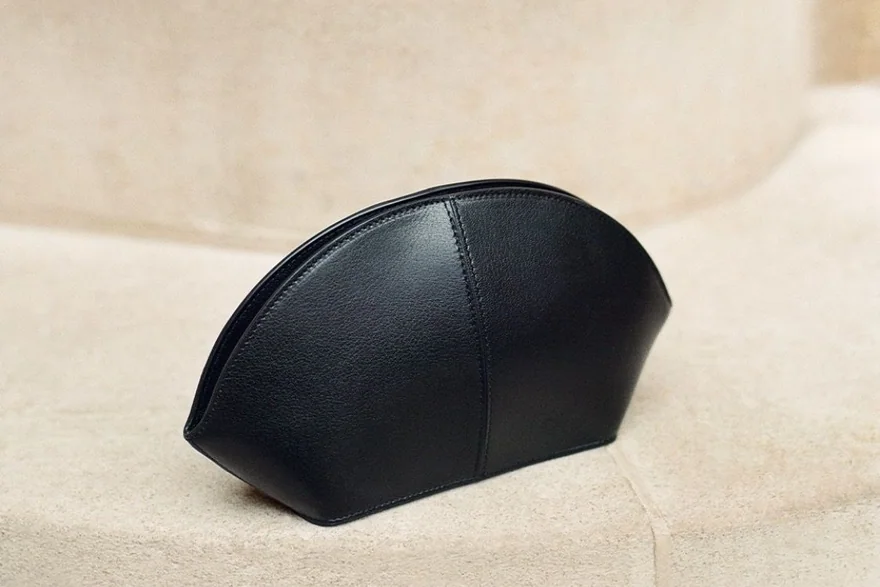
A shower bag is an adult product, and it should not be described or marketed as a toy. It will nonetheless spend its life in a home with a baby: on a changing table, in a pram basket, on the floor within reach of a crawler. That reality is what buyers should design to. The risks worth managing are mechanical rather than exotic: small parts that can detach, cords and loops long enough to wrap, magnets that can escape their pocket, and chemical content in the fabric and coating that ends up in a mouth.
- Avoid small detachable charms, buttons, beads and pom-poms on any bag intended for a household with a baby; specify them as stitched, riveted or omitted.
- Keep drawstring and wrist-loop cord lengths short, and avoid a free-hanging loop on a small pouch entirely.
- Specify magnetic closures only where the magnet is fully enclosed and stitch-secured, or replace them with a zip or a snap.
- Ask for fabric assessment against OEKO-TEX Standard 100 and keep the certificate on file with the tech pack.
- Check metal trim and coatings against CPSIA limits for lead content and phthalates where the bag may be given to or used around children.
- Print care and use instructions on the hangtag, and state plainly that the bag is not a toy.
Chemical content is the part most often skipped. Fabric that sits against skin, and coating that a baby may mouth, should be assessed rather than assumed. The standard reference for textile articles is OEKO-TEX Standard 100, which sets limits for a defined list of substances by product class, with the strictest class applying to articles for babies and toddlers. For the United States market, the Consumer Product Safety Improvement Act sets limits on lead and on certain phthalates in children's products, and buyers whose bags are marketed in a way that brings them into scope should confirm their position before production.
Hardware deserves the same attention. A zip pull is the most-handled part of any cosmetic bag and the most likely to be chewed; choose a pull that is moulded or a single piece rather than a small metal charm on a split ring. Metal-to-metal contact points such as a snap or a D-ring should be checked for coating durability, because a worn coating exposes base metal. Where the bag has an internal mirror, ensure it is retained in a sewn pocket rather than loose, and consider whether a glass mirror is appropriate at all in a bag that will be near a baby.
Structure and lining carry quieter risks. A stiff foam lining adds shape and can delaminate into pieces if it is low-grade; specify foam by density and require it to be fully enclosed between shell and lining. Quilting thread should be checked for snag resistance. And any bag intended to hold creams or wipes should use a lining that resists the oils in those products, because a degraded lining is a cleanliness problem long before it is a safety one.
Documentation closes the loop. Whatever the buyer decides, the decision should appear in the tech pack as a written requirement: fabric certificate reference, trim specification with coating, pull test requirement for any attached part, and a hangtag line stating intended use. Inspection follows AQL 2.5 under ISO 2859-1, and pull-tested parts should sit inside the defect classification so a weakly attached charm fails the lot rather than reaching a customer.
Gift-bag presentation: when the bag is also the wrapping
The defining feature of the shower format is that the bag often replaces gift wrap. A guest fills it with small items, closes it and hands it over. That changes the specification more than buyers expect: the bag has to arrive in a condition where it can be filled and given without ironing, re-shaping or re-packing, and it has to look deliberate when it is empty. Crush marks, fold lines, loose threads at the seam and a curled hangtag are all defects that a retail pouch would survive and a gift bag will not.
| Presentation element | What it does | Cost impact | Best for |
|---|---|---|---|
| Individual polybag plus tissue | Holds shape in transit, prevents scuffing | Low, cents per unit | Shipped favours and e-commerce orders |
| Rigid inner support or card insert | Stops collapse so the bag stands when empty | Low to moderate | Boxy and vanity-case constructions |
| Belly band or paper sleeve | Carries the motif and a name without printing the bag | Low, and reusable across colourways | Short runs where names change per event |
| Hangtag with care and use line | Carries safety wording and fabric content | Low | All gift-channel programmes |
| Drawstring dust bag | Protects velvet and pile fabrics in transit | Moderate | Premium hand-delivered gifts |
| Printed insert card | Explains what the bag is for and how to fill it | Low | Favours that guests take home and reuse |
Filling and hand-over matter as much as packing. A pouch that opens flat and stays open is far easier for a guest to fill than one that springs shut, so a structured base or a zip that runs to the side seam is a genuine functional improvement rather than a styling note. Light-coloured linings help here too: a guest filling a cream-lined bag can see what is inside it, whereas a dark lining makes the contents disappear. Where the bag will hold small items, an internal slip pocket keeps them from settling into one corner.
Order multiples work differently in this channel. A shower guest list runs 15-40 people, and a mother-to-be gift is one unit, neither of which clears 500 pieces per style and colourway on its own. The workable structures are the same ones that serve other small-run gift programmes: one shell in one colourway held as committed stock with names or motifs applied per event, a planner or retailer ordering across a season rather than a shower, or a retailer selling the bag as a personalised gift SKU. Buyers should decide which of these they are before quoting, because the answer changes the unit economics more than any fabric choice.
Timing is generous in this category if it is respected. Sampling runs 6-10 working days for a standard pouch and 12-15 working days for complex constructions such as a quilted vanity case, and bulk takes 35-50 days after sample approval. Because showers are scheduled weeks ahead and guest lists are fixed early, the category suits a planned calendar: shell committed once a quarter, decoration batched per event. Shipment is FOB Xiamen with T/T 30 deposit and 70 against bill of lading.
On a gift bag, the buyer pays for the condition it arrives in as much as for the bag itself. A pouch that needs pressing before it can be handed over has failed regardless of how well it was made.
The B2B Customisation View
Launch calendars are unforgiving, so cosmetic pouches, vanity cases and beauty organisers programmes are planned backwards from the on-shelf date rather than forwards from the first sketch.
Fixed commercial parameters: 500 pieces per style and colourway minimum, first sample in 6–10 working days (12–15 for complex or hardware-intensive constructions), bulk 35–50 days after approval, AQL 2.5 inspection under ISO 2859-1, FOB Xiamen, T/T 30/70.
A sourcing and programme-management company is answerable for the whole file, not just the sewing, which is why inspection reports and compliance documents are issued with every shipment.
Which Brand Types Benefit Most
Baby-shower cosmetic bags reward buyers who can commit to a soft palette and repeat it. Start-up brands building a mother-and-baby line get the clearest benefit: one approved pastel family, used across a pouch, a vanity case and a nappy wallet, gives a coherent range from a single dye commitment and clears the 500-piece minimum per style and colourway one colour at a time rather than three at once. Established beauty and skincare brands use the format seasonally, pairing a shower-themed pouch with a gift-with-purchase or a bundle, where the bag is a marketing asset and the minimum is absorbed by normal promotion volume.
Retailers and e-commerce sellers treat it differently again, as a permanent personalisation SKU in two or three soft colourways with a name or a date applied per order, which suits the fact that the demand is steady rather than seasonal. Gift and hospitality buyers, including planners, maternity brands and baby-shower venues, are the group most exposed to the mismatch between a 30-person guest list and a 500-piece minimum, and they are best served by holding a neutral soft shell across a full season and decorating per event. Wholesalers care mainly that the shell takes both print and embroidery cleanly and that the pastel is stable across dye lots, because reorders six months later have to match the first shipment. Across every one of these buyer types, the specification that performs best is a mid-weight shell in one approved pastel, trim dyed to match rather than stocked in black, hardware chosen with an infant-aware checklist, and a packing spec written for hand-over rather than for shelf stacking.
- Start-up mother-and-baby brands: one approved pastel family across several bag formats.
- Established beauty brands: seasonal gift-with-purchase or bundled shower pouch.
- E-commerce sellers: permanent personalisation SKU with per-order names or dates.
- Planners and venues: neutral soft shell held across a season, decorated per event.
- Wholesalers: dye-lot stability so reorders match the original shipment.
Frequently Asked Questions
What fabric suits a baby-shower cosmetic bag best?
Brushed polyester in the 220-260 g/m² range gives the soft hand the category expects and takes a printed name cleanly. Cotton canvas at 280-320 g/m² suits sage and cream palettes and embroiders without puckering. Where the bag will hold wipes or creams, a TPU-laminated polyester at 190-230 g/m² is the practical choice because it wipes clean and resists staining on pale colours.
Why do pastel cosmetic bags show colour drift more than dark ones?
At low chroma the eye is very sensitive to hue shifts, so a 5% dye-lot variation that would be invisible on a navy shell is obvious on blush. The effect compounds when shell, thread and print are matched separately. The fix is one approved dyed swatch of the production fabric, matched under two lighting conditions, with the print colour spot-matched to that swatch.
Should a baby-shower pouch be tested as a children's product?
It is an adult gift and should not be marketed as a toy. Because it will sit within reach of a baby, buyers commonly ask for fabric assessment against OEKO-TEX Standard 100 and check trim against CPSIA limits on lead and phthalates. The right classification depends on how the product is marketed, so the buyer should confirm its position rather than assume it.
Which hardware parts should be avoided on a shower gift bag?
Small detachable charms, beads, buttons and pom-poms are the main concern because they can come away in a mouth. Long cords, free-hanging wrist loops and magnets that are not fully enclosed are next. Specify a moulded single-piece zip pull, a snap or coil zip instead of a magnet, and write a pull-test requirement for any attached part into the defect list.
How is colour fastness specified on a pale shell?
Pale shells show rubbing and bleeding most clearly, particularly with dark print on a light ground or contrast trim against a pastel body. Buyers can reference the ISO 105 series for colour-fastness methods and the AATCC test methods index for rubbing and laundering. Whichever methods are chosen, the requirement belongs in the tech pack with an acceptable rating stated, not implied.
Can a shower bag be personalised with the mother-to-be's name?
Yes, and single-name personalisation is the most common request in the category. Film or a printed transfer suits short lists and gives a crisp edge on brushed polyester; embroidery suits canvas and twill and carries a per-name digitising charge. Design for the longest name in the roster so the lettering size stays consistent across a set.
What makes a cosmetic bag suitable to use as the gift wrapping itself?
It has to arrive fillable and presentable without pressing. That means a structured base or a zip running to the side seam so the bag stays open, an individual polybag with tissue to prevent scuffing, and a rigid inner support for boxy constructions. A light-coloured lining also helps, because a guest filling the bag can see what has gone inside it.
How does the 500-piece minimum work for a single baby shower?
A guest list of 15-40 does not clear 500 pieces per style and colourway. Workable structures are holding one neutral shell across a season and decorating per event, ordering across several showers on one colourway, or selling the bag as a personalised retail SKU. Buyers should decide which model applies before quoting, because it changes unit economics more than fabric choice.
What lining works best for a bag that will hold creams and wipes?
A TPU or PU-laminated lining in the 190-230 g/m² range resists the oils in creams and wipes clean, which matters on a pale shell that will otherwise mark permanently. Standard polyester lining is cheaper and softer but stains. For quilted constructions, check that any foam layer is fully enclosed between shell and lining so it cannot delaminate into pieces.
How should the safety wording appear on the product?
Put it on the hangtag rather than printed on the bag, so the same shell can be used across markets. A short line stating that the bag is not a toy, plus fabric content and care instructions, covers the practical need. Anything more specific should be confirmed with the buyer's own compliance adviser for the market in question.
Does a different pastel colour count as a new minimum?
Yes. The minimum is 500 pieces per style and colourway, so blush, sage and powder blue are three commitments if all three are custom-dyed. The economical approach for smaller programmes is one shell colourway with variation carried by decoration, trim finish or a belly band, which keeps the dye commitment to one. Buyers who want three shades should plan them across a season rather than across one shower.
How long before the shower date should the order be placed?
Sampling takes 6-10 working days for a standard pouch and 12-15 working days for complex constructions such as a quilted vanity case, then bulk takes 35-50 days after sample approval. Add freight after FOB Xiamen. A comfortable plan approves the sample roughly 10-12 weeks before the date, with the guest list fixed before artwork starts.
What inspection standard applies to a shower gift-bag run?
Inspection follows AQL 2.5 under ISO 2859-1. For a gift bag the defect list should be wider than for a retail pouch: crush marks, fold lines, loose threads at the seam and a curled hangtag all fail, because the bag is handed over directly. Pull-tested attached parts belong in the classification so a weak charm fails the lot.
Is velvet a good choice for a baby-shower pouch?
Velvet and velour photograph beautifully in soft palettes and feel appropriate to the occasion, but pile fabrics show crush marks and transit pressure. They suit hand-delivered gifts packed with a dust bag and a rigid outer. For shipped favours or e-commerce orders, brushed polyester or canvas arrives in better condition and costs less to pack.
Can the same shell be reused for a later sip-and-see or naming gift?
Yes, and this is the main reason to hold blank stock in a neutral soft colourway. If the shell and palette are identical, a later event needs only a decoration batch against committed blanks rather than a new production cycle, which shortens the schedule to the decoration and packing steps alone. A retained approved swatch keeps replacement decoration matched to the original dye lot.
People Also Ask
Are cosmetic bags a good baby shower gift?
They are, because the bag keeps being used after the event for wipes, creams or the mother's own things. The specification needs to match that second life: a wipeable lining, hardware without small detachable parts, and a pastel stable enough that reorders match. A bag chosen only for how it photographs tends to fail within weeks. A wipeable lining matters most, because creams and wipes are what the bag ends up holding.
What colour should a baby shower cosmetic bag be?
Soft, low-chroma palettes are the convention: warm blush and peach, muted sage, powder blue, cream and butter, or soft lavender. The practical point is stability rather than the specific hue. Pale colours show dye-lot drift, soiling and print issues far more than mid-tones, so the palette should be approved on a physical swatch and matched across shell, thread and trim.
How many baby shower favour bags should be ordered?
One per guest plus 3-5% for damage and late additions. That total rarely reaches 500 pieces per style and colourway, so the order has to be structured around the minimum: either decorate committed blank stock per event, or buy one neutral shell across a full season's worth of showers. Add a further allowance where the guest list is still open, since late additions arrive after artwork is locked.
Do baby shower bags need safety certification?
They are adult gifts, not toys, so no children's-product certificate is automatically required. Because they end up within reach of a baby, buyers commonly request OEKO-TEX Standard 100 assessment of the fabric and check trim against CPSIA limits. The correct classification depends on how the product is marketed, so buyers should confirm rather than assume. Hardware should be specified the same way: no small detachable parts, and short cords.
Request a Sample or a Written Quotation
Send the silhouette, dimensions, material preference and logo artwork, and the programme team will return a written quotation with MOQ, sampling window, bulk lead time and inspection standard.
Email: [email protected] · WhatsApp: +86 177 5002 0688