Custom Cosmetic Bag Defect Rate: Acceptable Levels & Resolution
Executive Summary
The acceptable defect rate on a custom cosmetic bag order is set by the AQL agreed in the purchase order, and for these programmes that is AQL 2.5 under ISO 2859-1, applied separately to critical, major and minor defects. AQL 2.5 is not a promise that 2.5% of the bags will be faulty; it is the defect level that a sampling plan of that strictness will accept about 95% of the time. Critical defects are treated separately and are normally accepted at zero, whatever the AQL for majors.
A lot of 500 pieces at general inspection level II draws 80 pieces, with acceptance 5 and rejection 6 for majors at AQL 2.5. A lot of 10,000 draws 200 with acceptance 10. When a lot fails, the resolution ladder runs in a fixed order: in-line rework before packing, a 100% sort at 0.05-0.20 USD per piece, a credit of 0.10-0.50 USD per piece for locally reworkable faults, replacement production for functional defects, and rejection as the last resort.
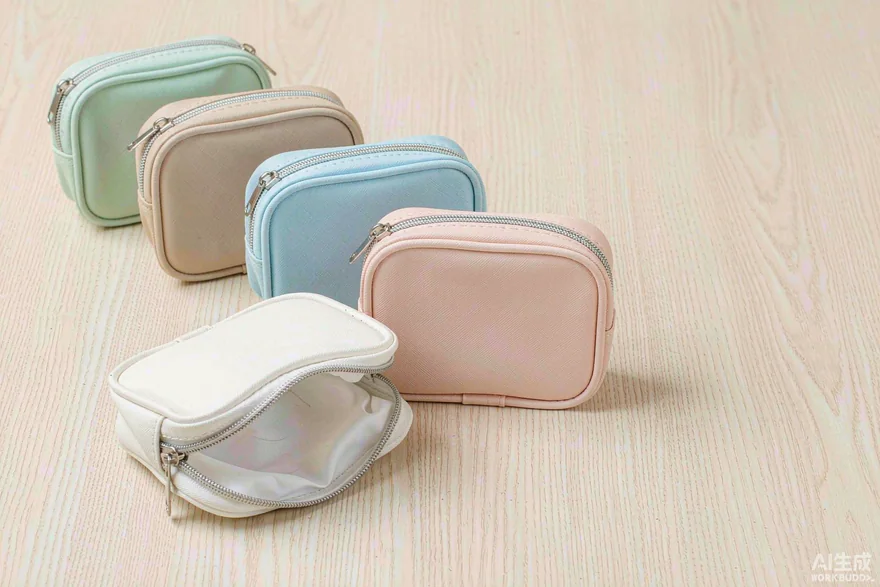
What a defect rate means on a cosmetic bag order
Three numbers get confused in this conversation, and separating them is most of the work. The first is the defect rate actually present in a lot, which nobody knows exactly without inspecting every piece. The second is the AQL, which is a contractual threshold used to decide whether to accept a lot based on a sample. The third is the acceptance number, which is the count of defective units in the sample above which the lot is rejected. A buyer asking for an acceptable defect rate is asking about all three at once.
Under ISO 2859-1, an AQL of 2.5 describes the quality level that the sampling plan will accept most of the time; the statistical design gives the producer roughly a 95% chance of acceptance at that level and the buyer a defined risk above it. It does not mean a supplier is entitled to ship 2.5% faulty goods, and it does not mean 2.5% of the lot will be faulty. It is a decision rule, and it only works if the defect definitions were agreed first.
Defects are therefore classified before inspection, not during it. A critical defect is one that makes the article unsafe, illegal or unusable: a broken needle fragment inside the lining, a detachable small part on a children's item, a zipper that will not close at all, a sharp metal burr on a puller. A major defect is one a customer would notice and return: an open seam, a stain above 3 mm, print misregistration above 2 mm, a slider that skips. A minor defect is a finish imperfection: a loose thread of 5-10 mm, light puckering, a label skewed 2-3 mm.
Most programmes run AQL 0 for critical defects, AQL 2.5 for majors and AQL 4.0 for minors, and state all three in the purchase order. A buyer selling a premium article in a physical retail environment will sometimes tighten majors to AQL 1.0, which changes the acceptance number from 10 to 5 on a 200-piece sample. That tightening is a real decision with a real cost: tighter plans reject more lots, and rejected lots cost calendar time whether or not the goods were actually worse.
Reading an AQL 2.5 table on a real order
The table below is the working reference for bag orders at general inspection level II. The code letter comes from the lot size, the sample size from the code letter, and the accept and reject numbers from the AQL. Read across one row and a buyer can tell, before an inspector is booked, what will happen at each quantity. Note that the sample grows far more slowly than the lot: a 40,000-piece order is inspected on 500 pieces, which is why lot definition matters so much.
| Lot size in pieces | Code letter at level II | Sample size | AQL 0.65 accept or reject | AQL 1.0 | AQL 2.5 | AQL 4.0 |
|---|---|---|---|---|---|---|
| 501-1,200 | J | 80 | 1 / 2 | 2 / 3 | 5 / 6 | 7 / 8 |
| 1,201-3,200 | K | 125 | 2 / 3 | 3 / 4 | 7 / 8 | 10 / 11 |
| 3,201-10,000 | L | 200 | 3 / 4 | 5 / 6 | 10 / 11 | 14 / 15 |
| 10,001-35,000 | M | 315 | 5 / 6 | 7 / 8 | 14 / 15 | 21 / 22 |
| 35,001-150,000 | N | 500 | 7 / 8 | 10 / 11 | 21 / 22 | 21 / 22 |
Two features surprise buyers. The first is that a 500-piece order and a 1,200-piece order are both inspected on 80 pieces, so the smaller order carries inspection cost of roughly 2.25-4.00 USD per piece while the larger carries 0.15-0.26 USD. The second is that the accept number does not scale linearly: at AQL 2.5 the accept number moves from 5 to 7 to 10 to 14 as the sample quadruples, which means larger lots are inspected with a slightly tighter effective percentage. The practical consequence for a buyer choosing how to declare lots is that splitting a 10,000-piece order into four lots raises the total sample from 200 to 500 pieces, improving detection while roughly doubling inspection cost and adding a day of scheduling. Most programmes settle on two or three declared lots, which keeps detection reasonable while limiting inspector days to two or three.
Switching rules also apply. Under ISO 2859-1 a programme moves between normal, tightened and reduced inspection based on recent history: two of five consecutive lots rejected normally triggers tightened inspection, which raises the sample size and lowers the acceptance number, while a sustained clean record can justify reduced inspection. A buyer should ask which state a programme is currently in, because the same lot can pass under normal inspection and fail under tightened inspection.
Finally, the sample must be drawn randomly across the lot, not from the top cartons. A common failure is an inspector sampling the first three cartons of a shipment that was packed in production order, which means the sample only represents the first hour of the run. The purchase order should state that cartons are selected at random from the full lot before the inspector arrives, and that the inspector records the carton numbers sampled. A sample drawn from cartons 1, 2 and 3 of a 167-carton shipment tells a buyer nothing about carton 140, which is where the end of a long run usually shows its problems. The inspector should also be given the carton list in advance so that selection is made before any carton is opened.
The cosmetic bag defect catalogue and where each defect comes from
Defects on cosmetic bags cluster around the zipper, the seams and the print, and each cluster has a specific upstream cause. Naming the cause is what turns an inspection report into a correction: a report that says 12 majors with no cause field produces a re-sort, while a report that says 9 slider skips from one chain lot produces a trim change and a permanent fix. The catalogue below is the practical reference inspectors work from, and it should be attached to the purchase order so that both sides classify a defect the same way.
| Defect | Class | Typical cause | In-line control | Resolution |
|---|---|---|---|---|
| Slider skips or splits the chain | Major | Slider gauge wrong for the chain, or tape twisted at setting | Travel every slider across the full opening twenty times | Replace the slider batch; sort the affected cartons |
| Zipper will not close at all | Critical | Missing bottom stop or wrong slider type fitted | Specify chain, gauge, slider and stops using ASTM D2053 vocabulary | Reject the lot; replacement production |
| Open seam at the gusset corner | Major | Stitch density below 6 SPI or seam allowance below 8 mm | Set 7-9 SPI and 10 mm allowance; pull-test first pieces | In-line rework before packing |
| Print misregistration above 2 mm | Major | Screen re-burned or substrate moved during cure | Fix mesh at 120-160 and cure at 150-160 °C for 30-45 seconds | Sort, or credit 0.10-0.50 USD per piece |
| Coating crack at the fold | Major | Film too stiff for the fold radius, typically 0.30 mm at 6 mm | Assess coating behaviour under ASTM D751 at sampling | Re-specify film or radius; replacement production |
| Adhesive odour in a sealed carton | Minor to major | Packed within 48 hours of bonding | Agree a 48-72 hour airing period before packing | Airing and re-pack; rarely a reject |
| Loose thread 5-10 mm | Minor | No trimming station at end of line | Add a trim and vacuum step before packing | In-line rework |
| Finished size out by more than 3 mm | Major | Die re-cut, or lining cut to shell size | Measure first piece at five points on every run | Sort by size; re-cut the die for the next run |
Zipper defects deserve separate attention because they dominate bag returns. Specifying the closure with the terminology in ASTM D2053 removes the ambiguity that produces the wrong slider: chain type and gauge, tape width, slider type, puller and stop arrangement are named rather than described. A #3 coil with a cam-lock slider and a #5 chain with an auto-lock slider look similar on a specification written in prose and behave completely differently in a customer's hand.
The remaining category is the defect nobody notices until the warehouse: carton-level faults. A short shipment of three pieces per carton across 167 cartons is 501 pieces, and a mislabelled carton that reaches the wrong distribution centre costs more in freight than the bags are worth. Carton count verification and label checks belong in the same inspection, even though they are not unit defects. A workable instruction is to verify the count on 10% of cartons chosen at random, to record gross weight on the same sample to catch systematic under-packing, and to photograph the shipping mark on each sampled carton so that a discrepancy can be traced to a specific pallet.
Resolution: rework, credit, sort, or reject
A failed lot is not automatically a bad lot, and the response should follow the defect profile rather than the pass or fail line. An isolated defect type affecting 1-2% of units is usually a sort. A construction defect affecting every unit is a re-specification. A safety defect is a rejection with a corrective action request attached. Applying the wrong response is how a manageable problem becomes a dispute that costs eight weeks.
| Outcome | When it applies | Who pays | Days added | Effect on the programme |
|---|---|---|---|---|
| In-line rework | Defect found before packing, under 3% of the lot | Production side | 1-3 | Neutral; the cheapest possible outcome |
| 100% sort | AQL fail with one isolated defect type | Negotiated, often shared | 3-7 | Sort cost 0.05-0.20 USD per piece |
| Rework at destination | Minor cosmetic fault and the buyer has local capacity | Credit of 0.10-0.50 USD per piece | 7-21 | Credit note applied to the next order |
| Price reduction or credit | Major defect but the article is saleable as seconds | Credit of 10-40% of line value | 5-10 | Documented as a purchase order amendment |
| Replacement production | Functional or safety defect | Production side | 35-50 plus freight | Triggers a corrective action request |
| Rejection | Critical defect, or a second consecutive AQL failure | Disputed; depends on the contract | 30-90 | Last resort; usually ends the relationship |
Corrective action should be written, not promised. A workable request names the defect, the quantity, the carton range, the root cause, the containment action, the corrective action and the verification method on the next lot. Without the last item there is no way to know whether the fix worked, which is why the same defect reappears three orders later with the same apology attached. A reasonable deadline structure is 5 working days for root cause, 10 working days for the corrective action plan, and verification on the next lot of the same style, with the inspection report for that lot explicitly referenced back to the request.
The buyer's own contribution matters more than most buyers expect. A defect rate falls when the specification is frozen before sampling, when the golden sample is sealed and available, when the inspection criteria are written into the purchase order, and when the lot is declared in sensible sizes. Programmes with those four habits in place typically spend their quality budget on prevention rather than on sorting. A fifth habit helps where volume justifies it: holding a retained sample from each production day, boxed and dated, so that a defect reported six weeks after delivery can be matched to the day it was made rather than to the order as a whole. Those habits cost nothing to put in place, and they move the conversation from whether a lot passes to why a defect happened, which is where the money is.
A single AQL figure is not an inspection specification. State AQL 0 for critical defects, AQL 2.5 for majors and AQL 4.0 for minors, name the inspection level, state whether normal or tightened inspection applies, and require random carton selection across the whole lot. Four sentences that decide most quality disputes.
The B2B Customisation View
Launch calendars are unforgiving, so cosmetic pouches, vanity cases and beauty organisers programmes are planned backwards from the on-shelf date rather than forwards from the first sketch.
Fixed commercial parameters: 500 pieces per style and colourway minimum, first sample in 6–10 working days (12–15 for complex or hardware-intensive constructions), bulk 35–50 days after approval, AQL 2.5 inspection under ISO 2859-1, FOB Xiamen, T/T 30/70.
A sourcing and programme-management company is answerable for the whole file, not just the sewing, which is why inspection reports and compliance documents are issued with every shipment.
Which Brand Types Benefit Most
Defect tolerance is a commercial decision that differs by channel. A start-up brand selling direct to consumers can absorb a slightly higher minor-defect rate because it controls the unboxing and can send a replacement from stock; it cannot absorb critical defects, because a broken needle or a failed zipper generates a review that outlives the product. An established brand selling through a retailer faces chargebacks for non-conforming cartons and should tighten majors to AQL 1.0 and insist on carton-count verification. A retailer or importer running private label needs the defect classification aligned with its own returns coding, so that an inspection report maps directly onto the reason codes used at the service desk. An e-commerce seller should weight print and zipper defects heavily, because those two drive the majority of marketplace returns and therefore the account health metrics. A gift or hospitality buyer has the tightest practical tolerance of all in one respect: an amenity bag that arrives stained or misshaped cannot be reworked at the property, and the cost of a failed guest impression far exceeds the unit price.
- Start-up brands: hold AQL 2.5 for majors but treat critical defects as zero tolerance; keep a buffer carton for replacements.
- Established brands: tighten to AQL 1.0 for majors on retail-facing lines and require carton-level verification.
- Retailers and importers: align the defect classification with internal returns reason codes before the first inspection.
- E-commerce sellers: screen zipper travel and print registration hardest, since those drive marketplace returns.
- Gift and hospitality buyers: specify appearance-critical criteria and a short replacement window tied to the event date. Across every channel the sequence is the same: classify the defects first, agree the three AQLs second, and decide the resolution ladder third. Buyers who work in that order settle a failed lot in days, while buyers who start at the third step argue for weeks.
Frequently Asked Questions
What defect rate should a buyer accept on a custom cosmetic bag order?
The contractual answer is AQL 0 for critical defects, AQL 2.5 for majors and AQL 4.0 for minors under ISO 2859-1 at general inspection level II. That is not a licence to ship 2.5% faulty goods; it is the sampling threshold that decides whether a lot is accepted. Premium retail lines often tighten majors to AQL 1.0.
What is the difference between AQL 2.5 and a 2.5% defect rate?
AQL 2.5 is a statistical threshold: it is the quality level a plan of that strictness accepts about 95% of the time. The actual defect rate in a lot can be higher or lower and is never known exactly without a full sort. On a 200-piece sample the plan accepts up to 10 defective units, which is 5% of the sample and not 2.5% of the lot.
How many defective bags cause a 500-piece lot to fail?
At general inspection level II a 501-1,200 piece lot draws 80 pieces. At AQL 2.5 the lot is accepted with up to 5 defective units and rejected at 6. For minors at AQL 4.0 the numbers are 7 and 8. A single critical defect fails the lot regardless of those numbers, because critical defects are normally set at AQL 0.
What counts as a critical defect on a cosmetic bag?
Anything unsafe, illegal or unusable: a broken needle fragment inside the lining, a detachable small part on a children's item, a zipper that will not close, a sharp burr on a metal puller, or a non-conformant substance finding. Critical defects are normally held to AQL 0, so one occurrence fails the lot and triggers replacement production. Critical findings also trigger a corrective action request rather than a simple sort.
How is a zipper defect classified and specified?
A slider that skips intermittently is a major defect; a closure that will not close at all is critical. Both are usually caused by a slider gauge or stop arrangement that does not match the chain. Specifying chain type, gauge, tape width, slider type, puller and stops with ASTM D2053 terminology prevents the mismatch at the specification stage.
What happens when a lot fails inspection at AQL 2.5?
The response follows the defect profile. An isolated defect type leads to a 100% sort at 0.05-0.20 USD per piece and 3-7 days. A functional defect affecting every unit leads to replacement production of 35-50 days. A minor cosmetic fault the buyer can fix locally leads to a credit of 0.10-0.50 USD per piece. Rejection is the last resort.
Who pays for sorting a failed cosmetic bag lot?
It is negotiated and should be settled in the purchase order rather than at the failure. Common practice is that a sort for a defect attributable to production is paid by the production side, while a sort for a specification ambiguity the buyer created is shared. Sorting runs 0.05-0.20 USD per piece and adds 3-7 days.
Can a buyer inspect every bag instead of sampling?
Yes, and some programmes do for small lots. A full sort on 500 pieces costs roughly 25-100 USD at local rates and removes the sampling risk entirely. Above about 3,000 pieces the cost and the calendar make sampling the practical choice, and the AQL plan is designed to give a defined level of protection instead. Above about 3,000 pieces the calendar and the cost make an AQL plan the practical choice.
What sample size applies to a 10,000-piece cosmetic bag lot?
Two hundred pieces at general inspection level II, code letter L. At AQL 2.5 that means acceptance at 10 defective units and rejection at 11. The lot can also be declared as four lots of 2,500, drawing 125 pieces each with acceptance 7, which costs more inspector days but isolates a bad production day. Declaring four lots of 2,500 instead draws 125 pieces each, at the cost of more inspector days.
How does tightened inspection change the acceptance numbers?
Tightened inspection under ISO 2859-1 keeps the sample size but lowers the acceptance number: on a 200-piece sample at AQL 2.5 the accept number falls from 10 to 8. Two rejections among five consecutive lots normally trigger the switch, and a sustained clean record is required to return to normal inspection. Two rejections among five consecutive lots normally trigger the switch, and a clean record is needed to return to normal.
Are minor defects worth arguing about on a bag order?
Usually not, beyond recording them. A loose thread of 5-10 mm or a label skewed 2-3 mm is a finish imperfection that a trim station fixes for pennies. The value of tracking minors is diagnostic: a rising minor count on consecutive runs is often the first sign of a line or tooling problem that will produce majors next.
How should a buyer write inspection requirements into a purchase order?
State the three AQLs by defect class, name the inspection level, state whether normal or tightened inspection applies, require random carton selection across the whole lot, and require the report to list defects by type with carton references. Those five items turn a pass or fail into something a buyer can act on. Requiring defects to be listed by type with carton references turns a pass or fail into something a buyer can act on.
What causes coating cracks on a cosmetic bag and how are they classed?
A film that is too stiff for the fold radius, commonly a 0.30 mm polyurethane coating folded at 6 mm. Coating behaviour and adhesion are assessed under ASTM D751. It is classed as a major defect because the customer sees it, and the fix is a softer film, a wider radius or a welded construction rather than a sort.
What is a corrective action request and what should it contain?
A written document naming the defect, the quantity, the carton range, the root cause, the containment action, the corrective action and the verification method on the next lot. Without the verification step there is no way to know the fix worked, which is why the same defect tends to reappear three orders later. Without a verification step there is no way to know whether the action actually worked.
How much does inspection cost on a 500-piece cosmetic bag order?
An inspector day rate of 180-320 USD covers a 500-piece lot comfortably, since the sample is 80 pieces and the work takes half a day plus reporting. That works out at roughly 0.36-0.64 USD per piece, against 0.15-0.26 USD per piece on a 1,200-piece order inspected on the same 80 pieces. The same day rate covers 1,200 pieces, which is why larger lots cost far less per unit to inspect.
People Also Ask
What is an acceptable defect rate for custom bags?
Most programmes set AQL 0 for critical defects, AQL 2.5 for majors and AQL 4.0 for minors under ISO 2859-1 at general inspection level II. On a 500-piece lot that means 80 pieces sampled with acceptance at 5 majors. AQL 2.5 is a sampling threshold, not a target defect rate. A single AQL figure is not a specification: state all three classes, the inspection level and the switching state.
What does AQL 2.5 mean in bag inspection?
It is the quality level the sampling plan accepts most of the time, roughly 95% of lots at that level. The sample size comes from the lot size, so 500 pieces draws 80 and 10,000 draws 200. The acceptance number for AQL 2.5 on those samples is 5 and 10 respectively; above that the lot is rejected. Sample size comes from the lot size, not from the order value.
What happens if a bag order fails inspection?
The remedy follows the defect type: a 100% sort at 0.05-0.20 USD per piece for an isolated fault, a credit of 0.10-0.50 USD per piece for a locally fixable cosmetic fault, and replacement production of 35-50 days for a functional or safety defect. Rejection is reserved for critical defects or repeat failures. Agreeing the ladder in the purchase order removes the negotiation from the moment of disappointment.
How do you reduce defects on a repeat bag order?
Freeze the specification before sampling, keep a sealed golden sample, write the three AQLs and the inspection level into the purchase order, declare sensible lot sizes, and require a written corrective action with verification on the next lot. Those five habits move spending from sorting to prevention. A rising minor count across consecutive runs is often the first sign of a tooling problem that will produce majors next.
Request a Sample or a Written Quotation
Send the silhouette, dimensions, material preference and logo artwork, and the programme team will return a written quotation with MOQ, sampling window, bulk lead time and inspection standard.
Email: [email protected] · WhatsApp: +86 177 5002 0688