Cosmetic Bags for Bridesmaids: Wedding Gifting & Personalization
Executive Summary
Cosmetic bags for bridesmaids work as gifts because they satisfy all four conditions of the category at once: they are useful after the wedding, they photograph well in a proposal flat-lay, they take a name or a role without looking cheap, and they can be produced in one colourway that matches a dress. The buying behaviour is unusual. The purchaser is not the end user, the order is placed once, the date cannot move, and every unit in the order may carry different text. That combination makes personalisation accuracy and calendar discipline more important than unit cost.
The sourcing answer is to separate the blank from the decoration. A base bag ordered at 500 pieces per style and colourway can be decorated late, either in-market by the buyer or in-factory against a consolidated name file, which keeps the minimum workable while still allowing different names. Sampling takes 6 to 10 working days for a soft pouch or 12 to 15 for complex constructions, bulk runs 35 to 50 days after approval, inspection is AQL 2.5 under ISO 2859-1, and terms are FOB Xiamen with T/T 30 deposit and 70 against bill of lading.
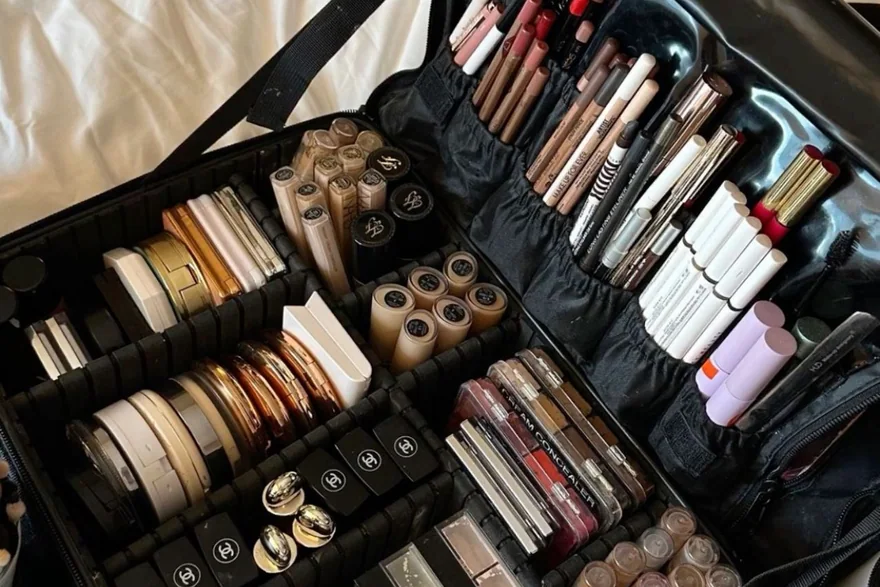
Why bridesmaid gifting is a different product problem
A bridesmaid gift bag is bought once, by someone who will not use it, for a date that cannot move, in a colourway chosen by someone else's dress. Those four facts drive the whole specification. Unlike a retail pouch, which is bought on impulse and judged on price, a bridal bag is judged on whether it arrives before the wedding, whether the name is spelled correctly, and whether the colour is close enough to the bridesmaid dress to survive being photographed next to it.
Group size shapes the economics. A typical party runs three to eight recipients, occasionally more, and the order may include role variants rather than only names: Maid of Honour, Matron of Honour, Bridesmaid, Flower Girl, Mother of the Bride. At one or two units per text variant, setting up a decoration run per name is expensive and slow. This is the structural reason bridal programmes work better when the decoration step is decoupled from the bag production step rather than built into it.
Demand also arrives in a compressed seasonal window. Custom makeup bag records 5,400 to 6,600 monthly searches across the year, and the bridal share of that demand clusters around engagement season and the spring-to-autumn wedding months. A buyer stocking for the category therefore needs inventory on the shelf before the enquiry arrives, because a bride who asks in April for a June wedding cannot wait for a production cycle. That is an inventory decision rather than a product decision, and it should be planned a season ahead.
Finally, the gift has to survive being given. Bridal pouches are filled on the morning of the wedding, carried for a day, photographed, and then expected to last in a bathroom for years. A bag that looks right for one photograph and frays at the seam by the first wash fails the actual brief. Buyers should specify for the second life, not for the flat-lay, and should treat the post-wedding use as the measure of whether the gift worked.
Personalisation methods compared: what each one costs in time and risk
Every personalisation method makes a different trade between appearance, durability and how late in the process the name can be committed. The table below sets out the methods commonly specified on a bridal pouch. The decisive column for a buyer is not the look but the commitment point: the moment after which a spelling correction becomes impossible or expensive.
| Method | Appearance and hand feel | Durability through washing | Commitment point | Best use case |
|---|---|---|---|---|
| Flat embroidery, 8,000-14,000 stitches | Matte thread, slight relief, reads as quality | Excellent; thread outlasts the shell | Digitising approved before bulk | Names and roles on canvas, cotton and twill |
| 3D puff embroidery | Raised foam under thread, bold | Good; foam can crease if compressed | Digitising plus foam colour approval | Single initial or short monogram |
| Heat transfer vinyl | Smooth, slightly plastic, sharp edges | Fair; edges lift after repeated washing | Any time before pressing | Late changes, one-off names |
| DTF or digital film print | Full colour, photographic detail | Fair; depends on adhesive and wash temperature | Any time before pressing | Floral motifs matching an invitation suite |
| Screen print, 1-3 colours | Flat ink, soft on fabric | Good when cured correctly | Screen made and approved | Repeated motif across a whole order |
| Debossed PU patch | Leather-look, tonal, no colour | Excellent; patch outlasts the bag | Tool made; 12-15 day sampling | Premium gift sets and keepsake positioning |
| Woven label or name tape | Small, refined, reads as apparel | Excellent | Loom set-up approved | A role word inside the lining seam |
| Laser-engraved metal plate | Reflective, hard, gift-like | Excellent; can scratch | Plate ordered; adds component lead time | Keepsake sets sold at the top of the range |
| Rhinestone or stud motif | High sparkle, novelty | Poor; stones detach in washing | Template approved | Proposal boxes, not long-term use |
Thread and film colour is where bridal orders go wrong more often than spelling. A name digitised in a thread colour that matches the dress in daylight can disappear under warm indoor lighting, and a metallic thread that looks elegant in a sample can read as grey in a photograph. The fix is a physical approval on the actual base fabric, viewed under the lighting the photographs will be taken in, rather than a digital proof on a screen.
Colour matching to the dress carries a second, more technical risk: dye transfer. A deep navy, burgundy or emerald shell placed against a pale dress in a warm car or a humid venue can crock. Colour fastness to rubbing and to perspiration is covered by the ISO 105 series, and a buyer can request a defined fastness rating on the lab dip before bulk is cut. It is a cheap test and it protects an expensive day.
Fabric choice also interacts with the decoration. Satin and other smooth filament fabrics show needle holes permanently, so an embroidery placement error on satin cannot be unpicked and re-sewn; canvas, cotton twill and coated polyester tolerate correction far better. Buyers who want the satin look should either choose a decoration method that does not perforate the shell or accept that the first placement is final.
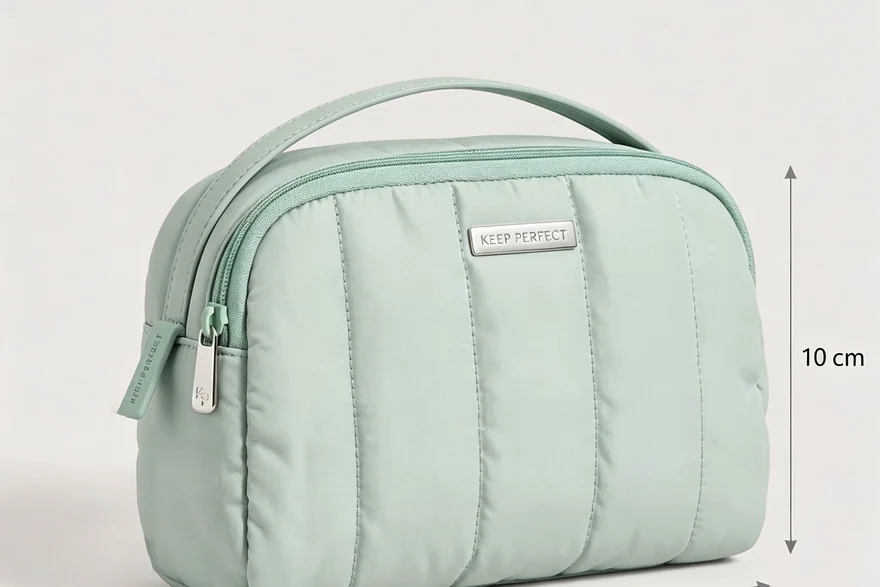
Wedding timeline maths: counting backwards from the date
Bridal programmes fail on calendar, not on craft. The wedding date is fixed, the gift is often presented at a rehearsal dinner or on the morning itself, and there is no partial credit for arriving close. The only reliable method is to plan backwards from the presentation date through every step that has a duration, using the slow end of each range rather than the fast end.
| Milestone | Working days before the wedding date | What must be true at this point | Buffer advice |
|---|---|---|---|
| Range selection and colourway decision | 120-150 | Base style, fabric and colourway agreed | Do not start later; colour approval is the long pole |
| Sample request issued | 110-130 | Tech pack, artwork and name file sent together | Send the name file late rather than early |
| Sample received and approved | 95-115 | Physical approval on the real base fabric | Approve under the lighting the photos will use |
| Bulk production starts | 90-110 | Deposit paid, materials booked | 35-50 days of production from here |
| Bulk finished and inspected | 45-60 | AQL 2.5 result accepted | Plan for a re-inspection day if the first fails |
| Goods shipped, FOB Xiamen | 40-55 | Balance paid against bill of lading | Add freight and clearance time on top |
| Goods at the buyer's decorator | 20-30 | Blanks available for late personalisation | Keep decoration local if names are still moving |
| Gifts packed and dispatched | 7-14 | Sets boxed, inserts added, addressed | Dispatch to arrive a week before the event |
The table uses the slow end of the published ranges deliberately. Sampling is 6 to 10 working days for a soft pouch and 12 to 15 working days for complex constructions, and bulk is 35 to 50 days after sample approval. Courier transit, internal sign-off, freight and customs clearance sit on top of both, and none of them are working days in the production sense. Counting only the production numbers is the single most common reason a bridal order lands after the wedding.
Where names are still changing late, the answer is structural: order the blanks early and decorate late. A base pouch ordered at 500 pieces per style and colourway gives the buyer inventory on hand, and the name can then be applied by a local decorator in the buyer's own market at one or two units per name. That removes the spelling risk from the factory step entirely, lets a late addition to the party be handled without reopening a production order, and means a colourway that sells out in one season can be re-ordered without re-quoting the decoration package.
Payment and inspection terms should be settled at the same time. Standard terms are FOB Xiamen with T/T 30 deposit and 70 against bill of lading, which means the balance falls before the goods are physically available to decorate, so cash flow should be planned around that. Inspection is AQL 2.5 under ISO 2859-1, and for a gift programme the defect classification should treat decorative faults as major, since a pouch with a misaligned motif cannot be given at all.
Gift presentation: packaging, inserts and the assortment around the bag
A bridesmaid bag is rarely sold alone. The commercial unit is the set, and the set is what the recipient photographs. That shifts part of the budget from the bag to the box, the tissue, the card and the fill, and it changes what has to be specified: a pouch that arrives folded in a polybag will not lie flat in a gift box without creasing, so packing method matters as much as the bag itself.
- Box and bag fit: specify the gift box inner dimension and require the pouch to be packed flat with tissue, never folded on a hard crease.
- Insert card: one card stating the role and the care instruction, printed on the same stock as the invitation where the buyer supplies the artwork.
- Fill: tissue or shredded paper rather than loose fill, which clings to satin and coated shells and looks poor in photographs.
- Care labelling: a washing instruction on the lining seam, since a personalised gift will be washed by someone who never saw the product page.
- Restricted substances: fabric, thread and trim certified to OEKO-TEX Standard 100, because the bag sits against clothing for a full day.
- Protection: an individual polybag inside the gift box protects a light-coloured shell from scuffing during packing and transit.
- Carton count: state pieces per carton so a buyer receiving 500 blanks can plan storage before the decoration step begins.
Restricted substances deserve a line of their own in a gifting brief because the bag is worn against a dress for a full day and often in warm conditions. Shell fabric, lining, thread, elastic, zipper tape and any printed label should be covered by OEKO-TEX Standard 100 certification held against the fabric roll, and the certificate should be requested at sampling rather than after bulk, when substitution is no longer possible at reasonable cost.
One more decision belongs in the presentation brief: whether the bag is sold as a single gift or as a coordinated set. A set that pairs a large pouch with a smaller one, or a pouch with a mirror or a brush roll, raises the gift value without changing the base pattern, because both items can be cut from the same fabric and trimmed with the same zipper and pull. The risk is inventory: a set doubles the stock-keeping units held against one style, and at 500 pieces per style and colourway that commitment should be modelled before the artwork is commissioned rather than after. Assortment planning then follows the same logic as the timeline. A buyer should hold one base pouch in two or three bridal colourways, plus one premium variant with a debossed patch or metal plate for the top of the range, and one proposal-box variant sold empty for the ask-them-first moment. Four stock-keeping units cover nearly the whole category, and each one starts at 500 pieces per style and colourway, so a focused assortment is not only easier to merchandise but materially cheaper to fund than a wide one.
The B2B Customisation View
Every programme for cosmetic bags begins with a written brief: target retail price, filling volume, closure type, print method and the compliance market the goods will be sold in.
Commercial parameters stay fixed across the range: MOQ 500 pieces per style and colourway, prototype turnaround 6–10 working days (extended to 12–15 for multi-panel or moulded builds), bulk lead time 35–50 days from approved sample, AQL 2.5 inspection to ISO 2859-1, FOB Xiamen, T/T 30 deposit and 70 against bill of lading.
Working as a sourcing partner rather than a single-line vendor means QUANZHOU JUNYUAN BAGS can move cosmetic bags between construction types — woven, coated, leather-look — without restarting the compliance conversation.
Which Brand Types Benefit Most
Bridal gifting rewards buyers who can hold stock and decorate late, and it penalises buyers who try to run every name through production. Start-up brands should build the range around one base pouch in two bridal colourways with an in-market decoration partner, which keeps the 500-piece minimum per colourway affordable while allowing any name to be added at the last moment. Established brands with a wedding or occasion division can carry the premium variant, because a debossed patch or engraved plate supports a higher gift price and does not require extra inventory depth. Retailers, including bridal boutiques and department stores, need the proposal-box variant on the shelf, since that is the item bought at the point of asking rather than at the point of giving, and it is bought weeks before the wedding date is even fixed. E-commerce sellers compete on accuracy and dispatch speed rather than on unit price, which suits the blank-plus-local-decoration model and makes a stated dispatch window the most valuable line in the listing. Gift and hospitality buyers, including venues and hotel wedding teams, should specify a single neutral colourway and a stated carton count, because their constraint is storage and re-ordering across a season rather than the look of one gift.
- Start-up brands: one base pouch, two colourways, 1,000 units, with names applied locally so the factory step never carries a spelling risk.
- Established brands: a premium variant with a debossed PU patch or metal plate at 500 units, positioned as a keepsake rather than as a pouch.
- Retailers and bridal boutiques: proposal boxes and empty pouches held in store, because the purchase happens weeks before the wedding date is fixed.
- E-commerce sellers: a personalised listing built on blank stock with a stated dispatch window, where the differentiator is accuracy and speed rather than unit price.
- Gift and hospitality buyers: neutral colourway sets for hotel wedding packages and venue amenity programmes, packed to a stated carton count for storage planning.
Frequently Asked Questions
Why are cosmetic bags a common bridesmaid gift?
They satisfy the four requirements of bridal gifting at once: useful after the wedding, photogenic in a proposal flat-lay, able to carry a name or a role, and available in one colourway that can be matched to a dress. Unlike a novelty gift, a pouch keeps being used, which is the measure most recipients actually apply to whether a gift worked. For a buyer, that combination also means the category supports a higher unit price than a plain pouch, because the value sits in presentation as much as in the bag.
Which personalisation method lasts longest on a bridesmaid pouch?
Flat embroidery, a woven name tape or a debossed PU patch. All three survive washing because the marking is structural rather than surface-applied, so the marking outlasts the shell rather than sitting on top of it. Heat transfer vinyl and DTF prints look sharp on day one but their edges lift after repeated washing, and rhinestone motifs are the least durable of all, since stones detach the first time the bag is laundered. Where the gift is intended as a keepsake, choose a structural method.
What minimum applies to a personalised bridesmaid bag programme?
The minimum is 500 pieces per style and colourway, and it applies to the base bag rather than to each name. Personalisation is handled separately, either in-factory against a consolidated name file or in the buyer's own market after the blanks arrive. Decoupling the two steps is what makes one or two units per name economically possible, and it is also what protects the order against a late change to the party list.
Can each bag in one order carry a different name?
Yes, provided the name file is supplied in the required format and the decoration method allows it. Embroidery needs a digitised file per name variant, and each digitising set-up carries its own cost, so a party of eight names means eight set-ups. Heat transfer and DTF can be changed freely until the moment of pressing, which is why they suit late changes. Buyers should confirm the accepted file format before sampling begins.
How is a spelling error in a personalised order handled?
Prevention is the only real control, because a personalised bag cannot be resold. Approve a physical sample with the actual name on the actual base fabric, require a written sign-off on the name file before bulk is released, and check the character count against the panel width rather than trusting the artwork file. Then keep a small quantity of undecorated blanks in reserve so a correction or a late addition can be decorated without reopening production.
How far ahead of a wedding should a bridal pouch order be placed?
Work backwards from the presentation date. Sampling is 6 to 10 working days for a soft pouch or 12 to 15 for complex builds, bulk is 35 to 50 days after approval, and freight and clearance sit on top. Starting four to five months ahead leaves room for a colour correction, which is the step most likely to need one.
Should the bag colour match the bridesmaid dresses exactly?
Close is usually enough, and exact is rarely achievable across two different supply chains, since a dress and a bag will never come from the same dye lot. The risk worth managing is dye transfer rather than shade: a deep navy, burgundy or emerald shell can crock onto a pale dress in warm conditions, so request a colour fastness rating on the lab dip under the ISO 105 series before bulk is cut.
Which fabrics suit an embroidered bridesmaid pouch?
Canvas, cotton twill and coated polyester tolerate embroidery well and hide needle holes if a placement has to be corrected, because the yarn closes back over the perforation. Satin and other smooth filament fabrics show every perforation permanently, so a placement error cannot be unpicked and re-sewn. Buyers wanting the satin look should choose a non-perforating method such as a debossed patch, a woven label or a correctly specified heat transfer.
How many stitches does a typical name take to embroider?
A single name of five to eight letters typically digitises at 8,000 to 14,000 stitches depending on font height and letterform. Stitch count drives both machine time and cost, so a script font at 12 mm cap height costs noticeably more than a block font at 8 mm. Buyers should fix the font and height before quoting.
Can role words replace names on some bags?
Yes, and many parties mix them: names for most of the party, then Maid of Honour, Matron of Honour or Mother of the Bride for the rest. Role words are longer than most names, so they change embroidery width and placement and can force a smaller font. A buyer should specify the maximum character count per line at the briefing stage so that no variant overflows the panel.
What packaging suits a bridesmaid gift set?
A rigid or semi-rigid gift box sized to the pouch packed flat, with tissue fill, a role card and a care instruction. Loose fill clings to satin and coated shells and looks poor in photographs, which matters more here than in any other category. The pouch should be individually polybagged inside the box so a pale shell does not scuff during packing, and the box inner dimension should be stated in the brief.
Should bridesmaid pouches be sold empty or filled?
Empty, in most programmes. Filled sets add shelf-life constraints, regulatory complexity and capital tied up in product that may not suit the buyer's market or the season. Leaving the pouch empty also lets the buyer or the recipient choose the contents, which is part of the appeal. The exception is a venue or hospitality package where the contents are specified by the venue and the bag is built around that contents list.
What inspection standard applies to a bridal gift shipment?
AQL 2.5 under ISO 2859-1, which sets sample size and accept and reject numbers for the lot. For a gift programme the defect classification matters more than the level: decorative faults such as a misaligned motif, a loose thread end or an uneven hem should be written into the brief as major defects, because a pouch with a visible fault cannot be presented as a gift at all.
How should light-coloured bridal bags be protected in transit?
Individually polybag each unit, pack flat with tissue rather than folded, and state pieces per carton in the brief so carton weight stays manageable and warehouse handling is predictable. Pale shells scuff against each other and against a plain carton interior, and a scuff on a gift item is a reject rather than a minor defect. A light-coloured carton liner is a cheap additional safeguard.
Is a care label needed on a personalised gift bag?
Yes. The recipient never saw the product page and will wash the bag according to habit, usually at a warmer setting than the decoration method tolerates. A small care instruction on the lining seam, printed on a satin tape or woven into a label, protects the decoration and reduces complaints. It costs a few cents per unit and prevents the most avoidable category of return in personalised gifting.
People Also Ask
What do bridesmaids usually receive as a gift?
Practical items that survive the wedding: a personalised pouch, a robe, jewellery or a keepsake. A cosmetic bag is popular because it takes a name, matches a colourway and stays in use afterwards, which is the test most recipients apply. Presentation matters as much as the item, so the box, the tissue and the card are part of the gift rather than packaging overhead. A buyer should specify the box inner dimension alongside the bag.
How much should a bridesmaid gift bag cost?
The typical unit band on marketplaces in Alibaba's 2026.10 data runs $0.45 to $12.00, and bridal pouches sit in the upper half once personalisation, a gift box and an insert card are added. The cost driver is usually the decoration step and the packaging rather than the bag itself, so buyers should model those separately and decide early which of the two carries the perceived value in their market.
Do bridesmaid bags have to match the dresses?
They have to sit comfortably beside them in a photograph, which is a lower bar than an exact match. Choose a shade family rather than chasing a dye lot, and manage the real risk, which is dye transfer onto a pale dress in warm conditions, by requesting a colour fastness rating on the lab dip before bulk production begins. That test is cheap and the day it protects is not.
Can a bridesmaid bag be personalised after it arrives?
Yes, and this is the safest route when names may still change or the party list is not final. Order blank pouches at the 500-piece minimum per colourway, hold them as inventory, then apply names locally by heat transfer or embroidery at one or two units per name. That removes spelling risk from the production step entirely and lets a late addition be decorated without reopening an order.
Request a Sample or a Written Quotation
Send the silhouette, dimensions, material preference and logo artwork, and the programme team will return a written quotation with MOQ, sampling window, bulk lead time and inspection standard.
Email: [email protected] · WhatsApp: +86 177 5002 0688