Sports Team Cosmetic Bags: Fan Merchandise & Event Gifting
Executive Summary
Sports team cosmetic bags are soft-sided makeup, toiletry and grooming pouches built in a club palette and sold or given away as fan merchandise at matches, tournaments and supporter events. They work in both roles when three conditions are met: the fabric colour is measured against the palette rather than judged by eye, the decoration survives seat abrasion and repeated laundering, and any crest or league device is cleared in writing by the rights holder before artwork enters sampling. Getting those three right is what separates a bag supporters keep from one that reaches a bin by autumn.
The practical build for this channel is a wipe-clean shell, typically 420D polyester with a PU face at roughly 240 to 320 g/m2, because the pouch goes through a turnstile, faces the weather and gets refilled for the next fixture. Clear TPU or PVC formats answer venue policies that require see-through carry. Programmes begin at 500 pieces per style and colourway, sampling takes 6-10 working days and 12-15 for complex constructions, and bulk runs 35-50 days after sample approval. Inspection follows AQL 2.5 under ISO 2859-1, with shipment FOB Xiamen and T/T 30 deposit, 70 against bill of lading.
What Sports Team Cosmetic Bags Are and Which Routes They Sell Through
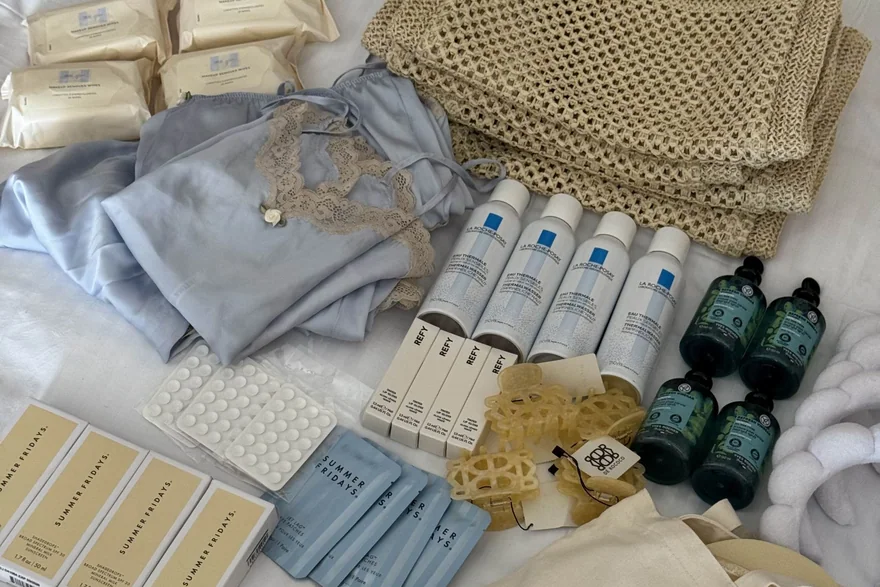
Sports team cosmetic bags are makeup, toiletry and grooming pouches decorated with club identity and distributed through three distinct routes. Club retail covers the stadium shop and the club online store, where the bag competes on shelf with licensed apparel. Event supply covers gate giveaways, hospitality suites and tournament packs for travelling squads, where unit cost dominates every decision. Third-party retail covers drugstores and department stores buying into fan merchandise, where barcodes, carton marking and country-of-origin labelling matter as much as the bag itself.
Demand data explains why the category keeps expanding. Toiletry bag draws roughly 74,810 searches a week on Amazon according to ASINSIGHT data from July 2026, while related phrases such as travel bag for toiletries reach about 110,000 searches a month. On the wholesale side, unit prices across the category run from about $0.45 to $12.00 per piece depending on construction (Alibaba, October 2026), with marketplace B2B minimums commonly sitting between 100 and 1,000 pieces. Fan programmes usually land in the middle-to-upper part of that band, because colour development, artwork approval and rights-holder compliance add cost before a single seam is sewn.
Three attributes separate a fan merchandise bag from a plain stock pouch. Colour authority comes first: the shade on the shell has to be the shade on the crest, and supporters notice a three-shade drift faster than a misaligned seam. Event durability comes second, because the bag will be dragged across a stadium seat, crushed into a rucksack and rained on before the second half. Documentation comes third, because crest artwork and wordmarks belong to someone else. For goods sold into the European Union, that documentation typically includes evidence that fabric, thread, print paste and lining sit inside the restricted-substance list behind OEKO-TEX Standard 100, requested per article rather than accepted as a generic brand-level claim.
- Club retail needs shelf presence: lining, a structured gusset, a hangtag and retail-ready packing add roughly 8-15% to unit cost but lift the achievable price point materially.
- Event supply needs cost discipline: a giveaway at 20,000 units cannot carry a $6 landed cost, so light shells and single-position decoration dominate.
- Third-party retail needs administrative lead time: barcodes, carton marking and labelling review settled weeks before the ship date.
- Hospitality supply needs perceived value: heavier denier, metal hardware and presentation boxing read better to a sponsor seated in a suite than an all-over print.
- Every route needs a stated numeric colour tolerance, because looking right on screen is not a specification and gives an inspector nothing to measure.
Matching Fabric Colour to a Team Palette Without Guesswork
Colour is the most common reason a fan merchandise sample gets rejected. A crest rendered three shades off the standard triggers the same reaction as a misspelled name, and rights holders review colour first because it is what supporters complain about afterwards. The remedy is to treat colour as a measured property of the construction rather than a matter of opinion, and to record it in the tech pack before a web is cut.
| Colour route | Accuracy against target | Typical cost addition | Behaviour under abrasion | Where it fits best |
|---|---|---|---|---|
| Piece-dyed 420D or 600D polyester | Lab dip agreed to a delta-E of about 1.5 in solid shades | Adds 6-10% over stock colours, plus a dyelot minimum | Excellent; colour runs through the yarn, so wear does not change the shade | Body fabric of retail merchandise pouches in large single-colour panels |
| Sublimation print onto white polyester | Pantone-guided to roughly delta-E 2.5 on print panels | Adds 8-14% for print plus one-off artwork setup | Very good; sits inside the fibre rather than on it | Gradient fades, photographic panels and all-over patterned shells |
| PU or PVC-coated solid-colour film | Delta-E around 1.0 between repeat production lots | Adds 10-18%; film minimums commonly 1,000-3,000 metres | Good, though surface scuffing shows on matte finishes | Wipe-clean shells carrying a printed or embossed crest |
| Spot screen print onto dyed fabric | Accurate for opaque spot colours; translucent inks shift over dark grounds | Adds 3-6% per colour per position | Fair; heavy ink deposits crack across fold lines if the film is too thick | Single-colour wordmarks and simplified flat crest devices |
| Woven label or woven patch applied separately | Very good yarn-to-reference match, limited by stitch-defined detail | Adds 4-9% with a loom setup fee | Excellent; the most abrasion-resistant option available | Founding dates, heritage marks and small secondary identifiers |
Every colour agreement should be recorded three ways. A signed-off lab dip or strike-off covers dyed solids. A Pantone or equivalent reference number appears in the tech pack for every element of the artwork, including trim and thread. A numeric tolerance expressed as delta-E under a stated illuminant gives both sides something measurable; D65 with a 10-degree observer is the usual textile convention. A purchase order that simply says match to crest artwork gives an inspector nothing to work from and gives the buyer no ground to stand on when a shipment looks wrong.
Metamerism causes most of the disputes that survive a good lab dip. One bag may combine a dyed polyester body, a printed panel, a PU trim, a woven label and a zip tape with dyed teeth. Those five materials can agree perfectly under a supplier's light booth and disagree badly under LED concourse lighting or flat winter daylight. Consolidating the construction to two material families solves the problem far more reliably than tightening tolerance from 1.5 to 1.0, and it usually costs less as well.
Dyelot behaviour becomes the controlling risk on repeat programmes. A polyester body dyed in one lot usually holds tolerance across several thousand metres, but a re-order placed four or five months later against the same reference number can drift outside it unless the original dye formula is retained and re-issued. The practical safeguard is straightforward: retain a physical reference swatch on both sides of the relationship, and state in the order that any repeat is dyed against that retained physical standard rather than against a digital file or a screen.
Expect to fund development twice: once for initial strike-offs and again for lab dips on each additional colourway. Budgets that treat six colourways of one fan range as a single development line have historically been the ones that slip.
Licensed Marks Require Written Permission Before Artwork Is Released
Licensed marks require written permission from the rights holder. This is the operational reality of the channel and not a formality that can be handled later. Club crests, league devices, tournament logos, player names and player numbers are registered intellectual property controlled by their owners. This guide deliberately names no professional or collegiate club, and it does not grant, imply or transfer any licence of any kind: whether a particular mark may be reproduced is a question only the rights holder can answer, in writing, for a defined territory and period.
- Written permission must sit in the file before artwork moves into sampling. Owning the artwork file is legally distinct from owning the mark depicted in it.
- Royalties are typically expressed as a percentage of wholesale or retail value, frequently with an annual minimum guarantee and a quarterly reporting cadence.
- Approval usually runs through three gates: concept artwork, a physical pre-production sample, then a sample pulled from the actual bulk production run.
- Licence agreements commonly restrict both the sales channels and the disposal route for obsolete stock; unapproved discount outlets generally void permission.
- Identification is normally mandated, whether as a hologram, a serialised hangtag or a sewn-in label carrying the licence year.
- Territory limits apply strictly. A licence covering one country does not extend to another, and e-commerce shipments cross borders by default.
The workflow carries a schedule impact that buyers routinely underestimate. Sampling a straightforward pouch takes 6-10 working days, rising to 12-15 working days for a complex construction involving moulded elements or tooled plates. Sitting on top of that is the rights holder's own approval cycle: concept submission, response, revision, then resubmission at sample stage. Any programme timed backwards from a fixture date should assume that the approval cycle is the longest line in the plan rather than the sampling itself. A pack arriving without Pantone references or positioning rules tends to trigger a second full review rather than a quick correction.
Decoration subcontracting is the second risk point. Screen printing, heat transfer, embroidery and sublimation are frequently carried out by separate specialist workshops, each with its own ink, film and thread inventory and each holding its own compliance records. Where a rights holder requires a named or pre-approved decorator, that constraint belongs in the original quotation request. Discovering it during scheduling usually costs several weeks and occasionally costs the season.
This article describes how licensed merchandise programmes operate. It does not authorise reproduction of any club, league, organisation or collegiate mark. The brand owner, agency or gift buyer placing the order carries sole responsibility for obtaining written permission from the rights holder before artwork is released for sampling or production.
There is a legitimate route for buyers who hold no licence: fan-inspired rather than fan-licensed design. Palettes that evoke a supporter colourway without reproducing a protected device, founding years rendered as original typography, stadium coordinates set in original artwork, and mascot-style marks drawn from scratch in-house all sit comfortably on the correct side of the line. Many buyers run such a generic gift range alongside a licensed one, which also provides a fallback if an approval cycle slips past a fixture date.
Construction Choices for Event-Day Carry and Turnstile Reality
Event-day carry imposes requirements that no retail buyer thinks to ask about. The bag passes through a turnstile, gets opened and inspected, gets set down on concrete or a plastic seat, gets rained on, and then gets shoved into a rucksack while still damp. A construction specified only for shelf appearance fails at least two of those four conditions. The table below sets out how five common builds in this channel compare on specification, route and the failure mode each one tends to show.
| Construction type | Typical specification | Where it is used | Failure mode to watch |
|---|---|---|---|
| Flat gate giveaway pouch | 20 x 13 cm, 190T or 210D polyester, unlined, single print position | Turnstile hand-outs and match-day programme packs | Print rubs off within a season and the silhouette collapses when empty |
| See-through venue pouch | 22 x 15 x 8 cm, 0.3-0.5 mm PVC or TPU film, welded seams | Venues requiring transparent carry or capping opaque bag size | PVC cold-cracks near -10 degrees Celsius and yellows without UV stabiliser |
| Retail merchandise trapezoid | 24 x 14 x 9 cm, 420D polyester with PU face, structured gusset | Club shop shelves and the club online store | Lighter shells let contents show through the face panel |
| Premium supporter vanity case | 26 x 16 x 10 cm, 600D polyester with EVA foam lamination, metal puller | Season-ticket renewals and hospitality suite gifts | Embossed EVA needs a tooled plate, adding tooling cost and lead time |
| Tournament travel organiser | 25 x 18 x 10 cm, two-layer build with hanging hook | Multi-day tournaments and travelling squads | Higher volumetric weight pushes freight cost above the unit saving |
Closures deserve more specification than they receive on a low-unit-cost pouch. A #3 nylon coil zip with a dyed-to-match or moulded puller is the usual answer for giveaway volumes: it is light, resists kinking when the bag is crushed inside a rucksack, and costs less than metal chain. A #5 zip with a reverse-mount slider suits retail better, because the pull lies flat and does not abrade neighbouring product on shelf. In both cases the chain type, gauge and slider pull strength should be written into the specification in measurable terms rather than described as good quality.
Weather protection does not need to mean waterproof. A PU face offering roughly 600 mm of hydrostatic head handles drizzle and a spilled drink adequately, and anything beyond that belongs to a dry bag rather than a toiletry pouch. What matters more after a wet event is how the interior behaves: polyester taffeta lining dries and does not delaminate, whereas PU-laminated nonwoven can blister. Binding rather than raw-cutting the internal seams also stops the frayed edges that supporters photograph and post.
Children's product rules are easy to overlook here, because a fan pouch frequently ends up in a teenager's or a child's hands. Where goods are marketed to or for children, lead content in coatings and substrates and phthalate content in plasticised materials fall under the Consumer Product Safety Improvement Act framework administered by the US Consumer Product Safety Commission, summarised at the CPSIA statute page. Buyers should request a third-party test report against the applicable clause rather than accepting a generic non-toxic statement, and should confirm which age grading the report was issued against.
Because gate giveaways ship in large volumes, the inspection plan carries real financial weight. A 5,000-piece lot inspected at general inspection level II draws roughly 200 units as a sample under the framework set out in the ISO 2859-1 sampling procedures, with acceptance and rejection numbers assigned by defect class. Buyers shipping directly to a venue should confirm how the lot is defined before inspection begins, since splitting a single shipment into multiple declared lots changes both sample sizes and outcome. Shipment terms are FOB Xiamen, with payment structured as T/T 30 deposit and 70 against bill of lading.
- Keep crest artwork at least 8 mm clear of the seam allowance so it does not fold into the stitch line during closing.
- Specify a moulded rather than cast metal puller, avoiding sharp flash on a bag that will be handled by children.
- Add a 15-20 cm webbing wrist loop for event carry, described as a carry loop rather than a load-rated strap.
- Print a short wipe-clean care note inside the pouch to pre-empt washing disputes over printed panels.
- Confirm carton count and carton dimensions at quotation, because venue deliveries are frequently priced on volume rather than weight.
The B2B Customisation View
Buyers who brief cosmetic bags with a physical reference sample always reach an approved prototype faster than buyers who brief with a photograph alone.
Standard terms: 500 pieces minimum per style and colourway, 6–10 working days for sampling (12–15 for complex builds), 35–50 days bulk production, AQL 2.5 inspection under ISO 2859-1, FOB Xiamen, T/T 30 deposit / 70 balance.
The arrangement suits brands that want factory-level pricing discipline without taking on factory-level vendor management for cosmetic bags.
Which Brand Types Benefit Most
Different buyer profiles extract different value from this category. Club retail buyers think in price architecture: a three-tier range made up of an entry flat pouch around 19 x 12 cm, a mid-tier lined trapezoid around 24 x 14 cm with a hangtag, and a premium case around 26 x 16 cm with metal hardware lets one shop cover impulse purchases through to season-ticket gifts. Holding shell fabric constant across all three tiers while varying structure and trim preserves colour consistency and stretches the price ladder at the same time. Sports marketing and activation agencies think in landed unit cost. At 20,000 pieces, freight and duty are frequently 15-25% of the total delivered figure, so shell weight, print coverage and carton efficiency decide the outcome: a pouch packing 250 units to a carton rather than 180 changes the freight line materially on any door-to-door comparison. Hospitality and corporate gift buyers using team-themed items think in presentation. A restrained debossed logo on a neutral outer sleeve reads better to a sponsor seated in a suite than a loud repeat print, and because these gifts go to adults rather than crowds at a turnstile, colour still has to be exact even though volumes run to a few hundred rather than tens of thousands. QUANZHOU JUNYUAN BAGS coordinates programmes across these profiles against SGS-verified production floor space of 4,950 square metres over 7 production lines and 149 machines, with monthly output capacity of 200,000 pieces and team experience in bag development and export since 2004.
- Start-up sports-lifestyle labels: use fan-inspired palettes on proven patterns to test demand before pursuing any licence.
- Established licensed apparel brands: extend an existing licence into soft accessories, subject to written rights-holder approval.
- Club and venue retailers: build a three-tier price ladder on one constant shell colour to protect dyelot consistency.
- Activation agencies: settle freight and carton efficiency at quotation stage rather than after production has started.
- Gift and hospitality buyers: prioritise presentation packaging and restrained decoration over print coverage.
Frequently Asked Questions
What fabric weight suits a sports team cosmetic bag sold in a club shop?
Club-shop bags generally use 420D to 600D polyester with a PU face, landing around 240 to 320 grams per square metre including coating, because the construction has to stand up on shelf and survive a full season. Giveaway volumes drop to 190T or 210D polyester with no lining, which cuts unit cost substantially but will not hold its shape when empty. Going above 600D adds bulk without adding perceived value at this size.
How many pieces must a team-colourway pouch programme start at?
Minimum order quantity is 500 pieces per style and colourway. A club range spanning three sizes and five colourways would therefore be fifteen separate commitments unless colourways are spread across sizes instead. Buyers commonly consolidate by producing all sizes in one palette and varying trim colour only, which both lowers the count and protects dyelot consistency, since splitting one colour across many small lots invites measurable variation.
Why does colour approval usually take longer than sampling on team palettes?
Sampling a pouch takes 6-10 working days, but colour development runs in parallel and often runs longer. A lab dip cycle involves dyeing, drying, conditioning and reading a spectrophotometer against the reference; each rejected dip restarts part of that loop. Add the rights holder's own concept-approval cycle plus any correction needed to crest files, and colour frequently becomes the critical path rather than construction.
What is the practical difference between a dyed-to-match body and a printed colour panel?
A dyed body carries colour through the yarn, so abrasion and laundering do not change the shade, which suits large solid areas. A printed panel puts a layer on the surface of white or pale polyester, enabling gradients and photographic treatments that dye cannot achieve, at the cost of an added wear layer. Where a design allows both, dye the large solid areas and print only the marked panels.
Who carries responsibility for clearing a crest for reproduction?
The brand owner, agency or gift buyer placing the order carries responsibility for obtaining written permission from the rights holder before artwork is released. A sourcing partner can help prepare artwork packs and physical samples for submission, but permission itself belongs to the party named against the licence. Submitting a well-prepared sample pack typically shortens review because fewer questions travel back and forth.
Can artwork containing a rights holder's mark be sampled before the licence is signed?
No. Reproducing a crest, league device or player number is controlled by the rights holder, and sampling counts as reproduction. The workable sequence is to draw concept artwork from publicly available brand guidance, obtain written permission, then release into sampling. Buyers who sample first routinely find that a shade, a wordmark proportion or a positioning rule fails review and that the whole sample cycle has to be repeated.
How can a fan gift bag be made to cope with a wet match day?
A PU-faced polyester shell at roughly 600 mm hydrostatic head handles drizzle and spilled drinks adequately, while a polyester taffeta lining dries afterwards without delaminating. Seam treatment matters more than the rating itself: unsealed needle holes along the top seam are how water enters. Binding or taping that seam, plus using a #3 nylon coil zip rather than metal chain, improves performance without materially raising unit cost.
What pouch size do most venue bag policies allow?
Policies are set by each venue or event operator, not by the bag, and they change between competition types. Some permit a small opaque pouch alongside a transparent one, others cap the transparent bag itself, and published dimensions appear in inches or centimetres depending on country. Before specifying, the buyer should obtain the operator's published policy in writing for that specific event series and build the pattern with margin inside it rather than matching it exactly.
Which closure type survives best on a giveaway pouch?
A #3 nylon coil zip with a moulded or dyed-to-match puller is the default for giveaway volumes: it is light, resists kinking when crushed inside a rucksack, and costs less than metal chain. A #5 zip reads better for retail shelf presence but adds weight and can abrade neighbouring stock. Whichever is chosen, specify chain type, gauge and slider pull strength explicitly rather than relying on descriptive language.
How long does bulk production take once the pre-production sample is approved?
Bulk production runs 35-50 days after sample approval. The spread reflects material lead times: stock colours in common polyester start the clock quickly, whereas custom dyelots, coated films, moulded EVA and purchased hardware extend it. Licensed programmes add time at both ends, for sample approval beforehand and licence-label application and royalty reporting afterwards, so plans should work backwards from the longest component rather than the average.
What does an AQL 2.5 inspection actually mean for a 5,000-piece run?
AQL 2.5 sets how many minor and major defects are acceptable against a statistically drawn sample. At general inspection level II, a 5,000-piece lot generally draws around 200 units under ISO 2859-1, with acceptance and rejection thresholds assigned by defect class. Buyers should agree in advance how cosmetic judgements such as print registration tolerance and colour evenness are assessed, since those disputes tend to cost more schedule than the defects themselves.
Are clear PVC and clear TPU interchangeable for venue-compliant bags?
Not fully. PVC is cheaper and welds easily, but plasticiser migration dulls the film, unstabilised grades yellow under UV, and stiffness increases noticeably in cold weather around minus ten degrees Celsius. TPU costs more per metre, resists abrasion and cold better and stays flexible across a season spanning months. For multi-year programmes TPU usually wins on failure rates; for a single-event giveaway, PVC usually wins on budget.
How should surplus event merchandise be handled after the season?
Disposal is normally governed by the licence agreement. Many permit continued sale through approved channels, some require destruction of obsolete stock once an approval period expires, and nearly all prohibit liquidation into unapproved discount outlets. Before setting quantities, read the disposal clause and size the order on the assumption that the strictest reading applies. Over-ordering 15% to reach a price break can cost more than the discount saved.
Do European buyers need restricted-substance documentation for dyed polyester pouches?
In practice yes. EU retail customers typically expect evidence that fabric, print paste, thread and lining sit inside a recognised restricted-substance list. Two documents usually satisfy the request: an OEKO-TEX Standard 100 certificate covering the specific article rather than the brand generally, and a REACH-related statement covering substances of very high concern within coatings or prints. Where goods may be used by children, ask additionally for evidence addressing lead and phthalate limits.
Which decoration method gives the cleanest crest result on a dark navy shell?
Embroidery, wherever the crest design permits it, because thread sits above the ground colour and does not depend on opaque coverage against a dark field; a compact crest typically runs 6,000 to 12,000 stitches. Where the design requires fine gradients, a heat-transfer film with an opaque barrier layer performs better, though it adds a distinct hand-feel panel that should be positioned away from fold lines and away from the base gusset.
People Also Ask
Are team-branded toiletry bags allowed inside stadiums?
Whether a branded toiletry bag may be carried in depends entirely on the individual venue or event operator's published bag policy, which usually sets either a size cap for opaque bags or a requirement for transparent construction. Several operators publish different figures for different competitions within the same season. Buyers supplying to a specific venue should request that policy in writing early, then specify dimensions that sit inside it with clearance rather than matching the stated figure exactly.
How much does a custom fan merchandise cosmetic bag cost per unit?
Landed unit cost depends on shell weight, decoration method, print coverage and carton efficiency, all sitting within the broad $0.45 to $12.00 category band reported on wholesale marketplaces in October 2026. A flat unlined giveaway pouch sits at the bottom of that band, a lined retail trapezoid in the middle, and a foam-laminated case with metal hardware near the top. Freight and duty can add a further 15-25% depending on destination and packing density.
Can a small supporters' group order branded makeup bags for a match-day event?
Yes, provided the group stays within the 500-piece minimum per style and colourway and holds written permission from the rights holder if any protected mark appears. Groups without a licence can use fan-inspired original artwork and evoke a palette without reproducing a crest. Timing matters: with sampling at 6-10 working days and bulk at 35-50 days, a match-day target should be planned roughly three to four months ahead.
What makes a sports team cosmetic bag worth keeping beyond one season?
Retention comes from three things rather than from print size: a closure that opens smoothly after hundreds of cycles, a lining that can be wiped clean rather than one that stains permanently, and colour that has been matched to a standard rather than approximated. Bags that survive the first wash and the first spilled drink become daily bathroom storage, which is where the supporter sees the mark repeatedly and where the gift delivers its real return.
Request a Sample or a Written Quotation
Send the silhouette, dimensions, material preference and logo artwork, and the programme team will return a written quotation with MOQ, sampling window, bulk lead time and inspection standard.
Email: [email protected] · WhatsApp: +86 177 5002 0688