Luxury Cosmetic Bags: Premium Market & Designer Collaboration
Executive Summary
The question brand owners ask about luxury cosmetic bags is whether premium is a material specification or a marketing position, and the answer is that premium is a specification first and a position second. A luxury cosmetic bag separates from a standard makeup pouch on four measurable points: metal hardware instead of a moulded slider, a lining with a stated colour-fastness result instead of ungraded dyed polyester, edge finishing that hides every raw cut edge, and a debossed or woven mark instead of a flat surface transfer. Those four decisions register as quality before a logo does.
The collaboration lesson for 2026 is that designer partnerships function as distribution events rather than product strategies. A capsule collection compresses demand into a short window and rewards a specification that can be produced twice, once for launch and once for replenishment, without reopening tooling. The commercial floor does not move for premium work: 500 pieces per style and colourway, 6-10 working days for sampling or 12-15 for complex constructions, 35-50 days bulk after approval, inspection to AQL 2.5 under ISO 2859-1, FOB Xiamen, and T/T 30 deposit with 70 against bill of lading.
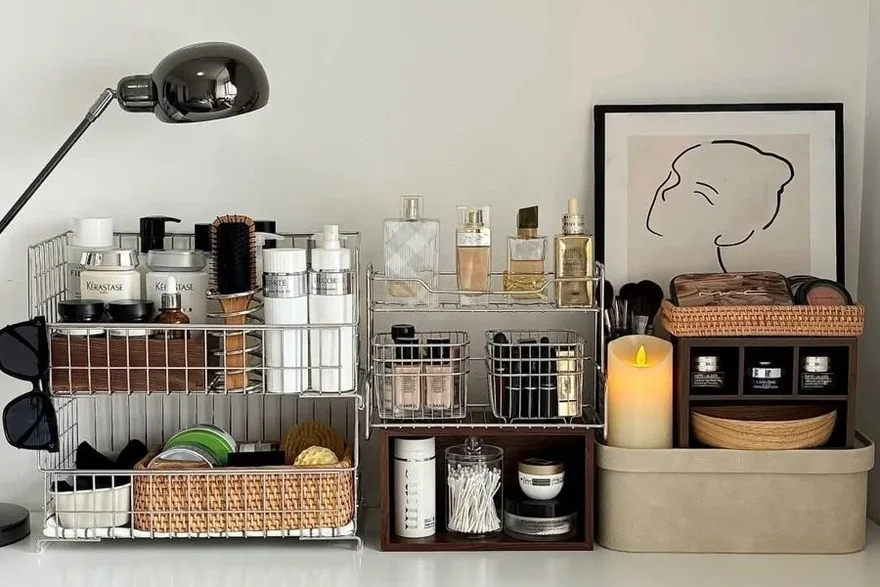
What premium actually means in a cosmetic bag brief
In a sourcing brief, luxury cosmetic bags are not defined by a retail price. They are defined by a set of tolerances and finishing decisions that a customer can register within two seconds of picking the product up. A premium makeup bag, vanity case or beauty organiser announces itself through weight distribution, the sound a slider makes when it closes, whether raw cut edges are visible anywhere in the interior, and whether the branding has depth. None of those are brand claims. They are manufacturing decisions that appear in the specification long before a logo, a dust bag or a name enters the programme.
This distinction matters because the premium segment attracts buyers whose first instinct is to spend on the visible surface and leave the structure alone. That instinct produces the most common premium failure in the category: an attractive outer shell over a lining that rubs off on a pale cloth, a slider that catches at the curve, and an interior seam allowance that frays after a month of use. The correction is unglamorous. Put the budget into lining grade, hardware metal, edge treatment and print method first, and treat external branding as the last line of the specification rather than the first.
There is context for the spend. The typical unit price band quoted across marketplaces runs $0.45-$12.00 (Alibaba, 2026.10), and a credible premium programme should be expected to sit in the upper part of that band rather than above it. The distance between a $3.00 bag and a $9.00 bag is rarely the fabric; it is hardware metal, lining grade, one or two extra finishing operations, and a tighter inspection regime. A buyer who understands where the cost sits can commission a deliberate premium tier instead of an expensive standard one, which is the difference between a defensible margin and a discount waiting to happen.
- Hand: the panel should return to shape after a fold rather than holding a crease.
- Sound: a metal slider closing is a quality cue a moulded slider cannot reproduce.
- Interior: no raw cut edge should be visible when the bag is opened fully.
- Depth: an embossed or debossed mark catches light; a flat transfer does not.
- Weight: premium reads as balanced mass, not simply as heaviness.
Material and hardware tiers: where premium cost actually sits
A premium tier is easiest to manage when it is written as a set of component decisions rather than as an aspiration. The table below separates the six lines where a cosmetic bag specification most often divides into a standard and a premium version. Reading it as a menu rather than a package lets a brand owner spend on the two or three lines the customer will actually touch and hold the rest at standard grade, which is how most successful premium programmes are built.
| Component | Standard tier | Premium tier | Why the difference is visible |
|---|---|---|---|
| Shell fabric | 300D polyester with PU coating | 900D recycled polyester or 0.6 mm PU leather with grain emboss | Hand feel and whether a panel holds a crease after folding |
| Lining | 190T ungraded dyed polyester | 210D solution-dyed polyester with a stated colour-fastness result | Whether colour transfers onto a pale cloth or washcloth |
| Zipper | #3 nylon coil with a moulded slider | #5 metal chain with a cast slider and an engraved puller | Closing sound, weight in the hand, and resistance at the curve |
| Edge treatment | Single-turn binding over a raw edge | Turned and topstitched seam with a piped edge | Whether interior seams fray after repeated opening |
| Branding | Heat transfer print | Debossed metal plate or a woven damask label | Depth of the mark and how it survives abrasion |
| Interior layout | One open slip pocket | Elasticated brush loops plus a removable divider tray | Perceived organisation at the moment the bag is first opened |
Hardware is the fastest quality read a customer makes, and it is also the line where zipper vocabulary most often goes wrong in a brief. Slider, puller, tape, chain, top stop and bottom stop are distinct parts with distinct failure modes, and a premium specification should name the right one. The ASTM D2053 zipper terminology standard gives buyers the shared vocabulary needed so that a request for a metal zipper describes the component rather than a general impression. A premium brief should state chain gauge, slider material, puller finish and an expected cycle count, because those four items are what the quotation will actually be priced against.
Lining is the second quality read and the one most frequently skipped. A dyed lining that has never been evaluated for colour transfer can mark a pale garment or a washcloth, and the complaint always arrives after the shipment has landed. The reference point is the ISO colour-fastness family; the ISO 105 series covers the rubbing, washing and light tests that a premium lining specification should name explicitly rather than leaving to a supplier's discretion. Naming the test and the required result in the brief costs nothing and removes the single most common premium-grade complaint from the programme.
Certification then underpins the claims a premium product makes on its hangtag. Where a bag is described as free from harmful substances, the claim should rest on a certificate rather than on an adjective. The OEKO-TEX Standard 100 framework is the most widely recognised route for a textile article claim of that kind, and a premium programme should ask for the certificate scope and validity dates to be stated on the quotation. A certificate that covers only the shell fabric does not cover the lining, the zipper tape or the print, and premium buyers are increasingly asked that question by retail partners.
- Request hardware as a separate line item so the premium delta is visible rather than buried in a single unit price.
- State the lining colour-fastness test and the minimum accepted result in the brief.
- Ask which components a substance certificate covers, not merely whether one exists.
- Fix the puller finish in writing; plating shade drifts between batches more often than buyers expect.
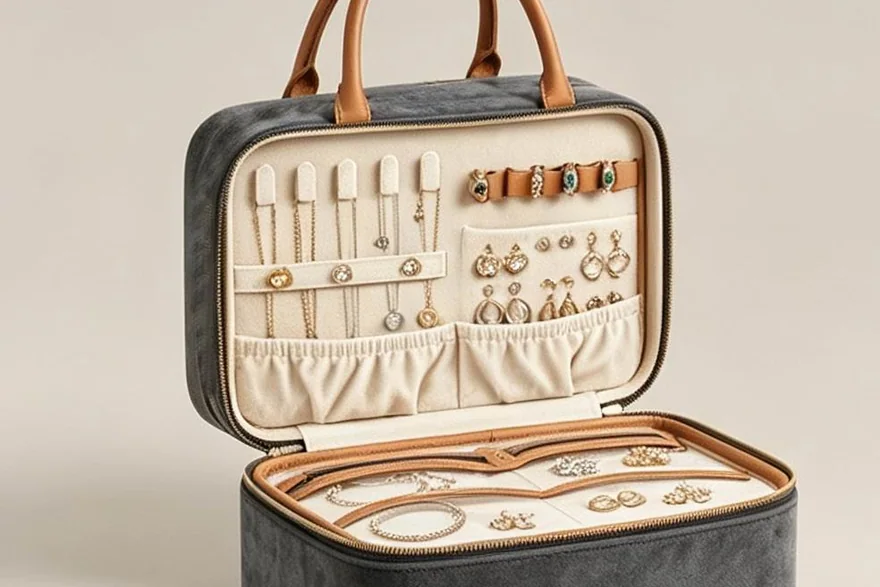
Designer collaboration as a strategy lesson
Designer collaborations in the beauty-accessory space are worth studying as a commercial mechanism rather than as a marketing story. The mechanism is straightforward: two audiences are introduced to one product for a limited window, the window creates urgency, and the urgency converts at a higher rate than either brand's standalone launch would. What the collaboration buys is attention and distribution reach. What it does not buy is product quality, and a capsule released on a weak specification simply fails faster and more publicly than a standard launch would have. For a brand owner without a partner, the transferable lesson is to build the urgency mechanics, not to chase the name.
- A collaboration is a distribution event: it borrows an audience, it does not create a product advantage.
- The scarce asset in a capsule is the calendar slot, not the design. Production capacity in a fixed window is the constraint.
- Capsule economics only work when the second run can be produced without renegotiating tooling or re-approving a new substrate.
- The specification must be frozen earlier than usual, because a launch date attached to a campaign cannot move.
- Scarcity claims must be honest. A run presented as limited should be limited, and the quantity should be documented internally.
The timetable is where most capsule programmes break. A launch date tied to a campaign, an event or a seasonal moment cannot move, so the specification has to be frozen earlier than a normal development cycle would require and the sampling allowance has to be realistic. Sampling runs 6-10 working days, and 12-15 working days for complex constructions such as a moulded vanity case, a multi-compartment organiser or a unit with an internal frame. Bulk production then runs 35-50 days after sample approval. Working backwards, a fixed launch date sits roughly three months out from the moment a finished sample is signed off, and anything that reopens the specification after approval pushes the date past the campaign.
A designer collaboration described in the trade press is a public case study in positioning, pricing and calendar management. It is not evidence of a relationship, and no brand owner should assume that a name seen on a capsule is available, approachable or relevant to a different programme. Study the structure: what was limited, what was replenished, what the price architecture was, and how long the window stayed open.
Brand owners can reproduce the useful half of a collaboration without a partner. The mechanics that drive the result are a defined window, a defined quantity, a clear price architecture, and a specification distinctive enough to be recognisable. A solo capsule can run the same play: one form, one colourway family, a stated run size, and a replenishment decision made before launch rather than after. The advantage of the solo route is control over the calendar. The disadvantage is that the borrowed audience is missing, which means the launch has to be carried by the brand's own list, its own retail partners or its own paid media, and the specification has to work harder to earn attention.
- Set the run size before launch and document it, so a scarcity claim can be defended.
- Decide replenishment policy at the point of approval, not after the first weekend.
- Freeze artwork earlier than a standard cycle; print and emboss approvals are the slowest sign-off in a capsule.
- Keep the shell and hardware constant and vary colourway only, so the second run is a repeat rather than a development.
Building a premium tier that survives cost review and inspection
Premium work fails at the second production run more often than at the first. The first run benefits from attention: the brand owner is watching closely, the sample is on the desk for comparison, and the approval is fresh. The second run is placed months later, often by a different person, frequently with a cost-reduction request attached, and the reference sample has been used, photographed and shipped. The defence is a specification that records not only what the product is but which operations are non-negotiable, so that a cost review removes cost from the right lines and not from the ones the customer feels.
| Finishing operation | What it adds | Risk if it is removed | Check at inspection |
|---|---|---|---|
| Edge turning and topstitching | One extra pass on every interior seam | Raw edges fray and the interior looks unfinished when opened | Open ten units fully and inspect every interior seam allowance |
| Piped or bound interior seam | A covered seam line and a cleaner corner | Corners pucker and the lining pulls away from the shell | Flex each corner and look for lining separation |
| Puller plating and lacquer | A consistent metal shade across the run | Batch-to-batch colour drift between colourways | Compare pullers against the approved reference under the same light |
| Deboss or emboss depth control | A legible mark that catches light | A shallow, patchy mark that reads as a misprint | Measure legibility at arm's length on a first-off unit |
| Lining colour-fastness testing | Documented resistance to rubbing and washing | Colour transfer complaints arriving after the goods land | Request the test report reference before shipment release |
Inspection is the other half of the defence. AQL 2.5 under ISO 2859-1 sets the sampling procedure and the accept and reject numbers for a given lot size, and it works equally well for a premium run provided the defect classification is written for premium. A standard defect list treats a scratch on a metal puller as a minor. On a premium product where the puller is the first thing a customer touches, that classification is wrong, and the defect list should be rewritten to promote cosmetic defects on visible metal and on the branded area.
- Promote cosmetic defects on visible metal and on the branded area from minor to major in the defect classification.
- Keep a sealed reference sample from the approved run and ship it with the inspection instruction for run two.
- Record the plating supplier and shade reference; changing it silently is the most common cause of premium drift.
- Inspect the interior as carefully as the exterior; the customer sees both at once when the bag is opened.
The commercial constants for a premium programme are the same as for any other, and they should be stated in the first conversation rather than discovered later: 500 pieces per style and colourway, sampling in 6-10 working days or 12-15 for complex constructions, bulk production of 35-50 days after sample approval, inspection to AQL 2.5 under ISO 2859-1, shipment FOB Xiamen, and payment by T/T with 30 per cent deposit and 70 per cent against bill of lading. A premium specification does not shorten any of those; it lengthens sampling, because a deboss, a plated puller and a tested lining each add an approval step before bulk can be released.
The B2B Customisation View
The first technical conversation about cosmetic bags normally resolves three things: dimensions, material laminate and the surface that will carry the logo.
The numbers a buyer can plan around: 500 pieces minimum per style and colourway, 6–10 working days to a first sample (12–15 where tooling or moulding is involved), 35–50 days to bulk completion, AQL 2.5 under ISO 2859-1 at final inspection, FOB Xiamen terms, T/T 30/70 payment.
QUANZHOU JUNYUAN BAGS acts as the sourcing and programme-management layer between the brand owner and the SGS-verified production floor, coordinating specification, sampling, inspection and shipment paperwork on the buyer's behalf.
Which Brand Types Benefit Most
A premium cosmetic bag tier is not the right move for every buyer, and the decision should be made against the channel rather than against ambition. The specification upgrades described here, from metal hardware and a tested lining to turned interior seams and a debossed mark, add cost that only some channels can recover. The five buyer types below differ in whether the upgrade pays for itself, and the honest answer is that two of them should usually stay at mid grade while three can carry a premium tier comfortably. Where a channel cannot recover the premium, the specification should still borrow two elements from it: a tested lining and a clean interior.
- Start-up brands: usually better served by one excellent mid-grade hero format than by a premium tier. Spend the first budget on a distinctive shape and a tested lining, then move to metal hardware at run two once the format has proven sell-through.
- Established beauty brands: the natural home of the premium tier. A vanity case or beauty organiser priced alongside a prestige skincare range has to feel as though it belongs there, and hardware plus interior finishing is what closes that gap.
- Fashion and apparel retailers: premium works when the bag is merchandised as an accessory rather than as a utility item. A woven damask label and a consistent plated puller matter more here than the shell denier does.
- E-commerce and marketplace sellers: premium is viable only where the listing can defend the price with photography and review evidence. Where it can, a metal zipper and a clean interior are the two upgrades that generate the strongest review language.
- Gift, hotel and hospitality buyers: the premium case is strongest here, because the item is received rather than bought. A debossed plate, a dust bag and a structured shell turn an amenity into a keepsake, and the recipient never sees the price.
Frequently Asked Questions
What separates a luxury cosmetic bag from a premium-priced standard one?
Four measurable points: metal hardware rather than a moulded slider, a lining with a stated colour-fastness result rather than ungraded dyed polyester, interior seams turned and topstitched so no raw edge shows, and a debossed or woven mark rather than a flat transfer. A bag marketed at a premium price without those four is a standard bag with a higher margin, which customers detect on first handling and which shows up in returns and in review language.
Which hardware specification should a premium makeup bag brief state?
Name the chain gauge, the slider material, the puller finish and an expected cycle count. Zinc alloy, brass and moulded plastic sliders differ in weight, sound and durability, and a plated finish can drift in shade between batches. Naming the component correctly matters as much as naming the material, which is why the shared zipper vocabulary in the ASTM D2053 terminology standard is worth using in a brief.
How does a designer collaboration change the production timetable?
It does not shorten it; it makes the deadlines fixed. A launch date attached to a campaign cannot move, so the specification must be frozen earlier than a normal cycle and the sampling allowance must be realistic: 6-10 working days, or 12-15 for complex constructions, followed by 35-50 days bulk after approval. Print and emboss artwork approvals are usually the slowest sign-off and should be started first.
Does a capsule collection have to meet the 500-piece minimum per colourway?
Yes. The 500-piece minimum applies per style and per colourway, so a three-colourway capsule is three production units rather than one. This is why capsule planning should settle the colourway count early: it is the single variable that most directly multiplies both the inventory commitment and the number of set-ups the line has to absorb. A two-colourway capsule at the full minimum usually beats a three-colourway capsule placed below it.
Which lining grade suits a high-end vanity case?
A 210D solution-dyed polyester with a stated colour-fastness result is the usual premium answer. Solution dyeing puts the colour into the filament rather than onto the surface, which improves resistance to rubbing and washing. For a vanity case that will hold liquids and creams, a lining that resists staining and can be wiped clean matters more than a heavy hand, so a coated finish is often worth specifying alongside the dye method.
How should a brand owner evaluate colour transfer risk on a dyed lining?
By naming the test and the required result in the brief rather than accepting a general assurance. The ISO 105 series covers rubbing, washing and light fastness, and a premium specification should state which tests apply and what result is acceptable. Requesting the test report reference before shipment release converts an assurance into a document, and it is the cheapest insurance available in a premium programme.
What print or emboss method lasts longest on a premium cosmetic pouch?
A debossed or embossed mark in the substrate, or a woven damask label, outlasts a surface transfer because there is no layer to abrade away. Where the shell is a coated fabric or PU leather, a deboss reads well and catches light. Where the shell is a woven textile, a woven label sewn into a seam is more durable than any print applied to the face of the fabric.
How should hardware cost be handled in a premium cosmetic bag quotation?
Ask for it as a separate line item. When hardware is buried inside a single unit price, a later cost review cannot tell whether a reduction came from the metal or from the fabric, and premium products are quietly downgraded that way. A separate line also makes it possible to request an alternative slider specification and see the exact delta before committing to a run.
When should a brand choose a moulded EVA case over a soft luxury pouch?
Choose a moulded case when the contents need impact protection, when the product is merchandised standing upright, or when the brand wants a rigid silhouette that photographs consistently. Choose a soft pouch when packability and freight volume matter more, because a structured case ships air. Moulded constructions also move sampling into the 12-15 working day complex window, which has to be built into the calendar.
How does AQL 2.5 under ISO 2859-1 apply to premium finishes?
The standard sets the sampling procedure and the accept and reject numbers for a lot size; it does not set the defect classification. That is the buyer's job, and premium work needs a rewritten list that promotes cosmetic defects on visible metal and on the branded area from minor to major. Without that change, a scratched puller passes inspection on a product whose entire premium claim rests on how that puller looks.
What packaging does a luxury cosmetic bag tier need beyond the dust bag?
A rigid or semi-rigid inner support so the bag does not arrive creased, a tissue wrap that will not shed fibre onto a coated shell, and a carton that survives the inbound journey without crushing corners. The dust bag is the visible part; the structural protection is what stops the first impression from being a dented panel. Carton specification should be reviewed alongside the unit specification, not after it.
Can a premium cosmetic bag programme use recycled materials without losing the premium feel?
Yes, provided the recycled content sits in the shell and the finish is specified to compensate. A 900D recycled polyester can feel better than a virgin 300D fabric simply because of the weight and the weave, and the recycled claim then becomes an additional premium argument rather than a compromise. The claim should be backed by a recognised standard so that it survives a retail partner's question.
How do brand owners protect a premium cosmetic bag design from being copied?
Partly through registered rights where they are available, and partly through specification. A design that depends on a custom moulded shell, a bespoke plated puller or a proprietary woven label is materially harder and slower to reproduce than one that depends on a printed pattern, because the imitator has to commission tooling rather than download artwork. Tooling is both a cost and a moat.
What sampling window applies to a multi-compartment vanity case?
A multi-compartment vanity case with an internal frame, a removable tray or a moulded shell falls into the complex construction window of 12-15 working days rather than the standard 6-10. The extra time goes into pattern work and into the fit of the internal components against each other. Bulk then runs 35-50 days after the sample is approved, so the development-to-delivery horizon should be planned as roughly three months.
How should a premium programme plan replenishment around 35-50 day bulk production?
By deciding the replenishment quantity at the point of sample approval rather than after launch. Keeping the shell, hardware and print constant and varying only colourway means the second run is a repeat rather than a development, which removes most of the lead-time risk. A sealed reference sample from the approved run should be held and shipped with the inspection instruction for run two.
People Also Ask
What makes a makeup bag look expensive?
Four things register before a logo does: metal hardware with weight and a clean closing sound, an interior with no visible raw edges, a lining that does not transfer colour, and a branded mark with physical depth. Fabric weight contributes less than buyers expect. A heavy shell over a poor lining still reads as cheap the moment the bag is opened, which is the first thing a customer does.
Are designer cosmetic bag collaborations worth studying as a model?
Worth studying as a commercial mechanism, yes. A capsule borrows an audience for a short window and converts at a higher rate than a standalone launch. The transferable parts for a brand without a partner are the defined run size, the defined window and a frozen specification. The non-transferable part is the borrowed audience, which has to be replaced by the brand's own list, retail partners or paid media.
How long does a luxury cosmetic bag sample take?
Six to ten working days for a standard construction, and twelve to fifteen working days for a complex one such as a moulded case, a framed organiser or a unit with a removable tray. Print and emboss artwork approvals run in parallel and are frequently the slowest item. Bulk production then takes 35-50 days after the sample is signed off, which puts a launch roughly three months from approval.
Do luxury cosmetic bags need certification?
Any claim on a hangtag needs a document behind it. A substance claim should rest on the OEKO-TEX Standard 100 framework with the certificate scope checked, because a certificate covering only the shell fabric does not cover the lining, the zipper tape or the print. A colour-fastness claim should rest on a named ISO 105 test with a stated result. Inspection runs to AQL 2.5 under ISO 2859-1.
Request a Sample or a Written Quotation
Send the silhouette, dimensions, material preference and logo artwork, and the programme team will return a written quotation with MOQ, sampling window, bulk lead time and inspection standard.
Email: [email protected] · WhatsApp: +86 177 5002 0688