Lululemon vs Athleta Cosmetic Bags: Athleisure Brand Extension
Executive Summary
Lululemon vs Athleta cosmetic bags is a comparison of two athleisure brands applying apparel-fabric competence to a small accessory, and the direct answer is that the extension works because the raw material expertise already exists. A brand that has spent years specifying four-way stretch knits, bonded seams and sweat-tolerant coatings can apply that knowledge to a pouch without learning a new supply base. The pouch then carries the logo into daily use — the gym locker, the aeroplane cabin, the hotel bathroom — in places where apparel branding rarely shows.
Three lessons transfer to any buyer building a bag programme. First, specify the use case before the fabric: a locker-room pouch needs a wipe-clean lining and a hanging hook, while a travel pouch needs structure and a leak-resistant base. Second, test the weakest component — zipper cycling, coating adhesion, print rubbing — on production fabric rather than on a submission piece. Third, plan the calendar: sampling runs 6-10 working days, or 12-15 for complex constructions, bulk 35-50 days after approval, inspection to AQL 2.5 under ISO 2859-1, FOB Xiamen, T/T 30 deposit and 70 against bill of lading.
Why athleisure brands extend into bags, and what transfers
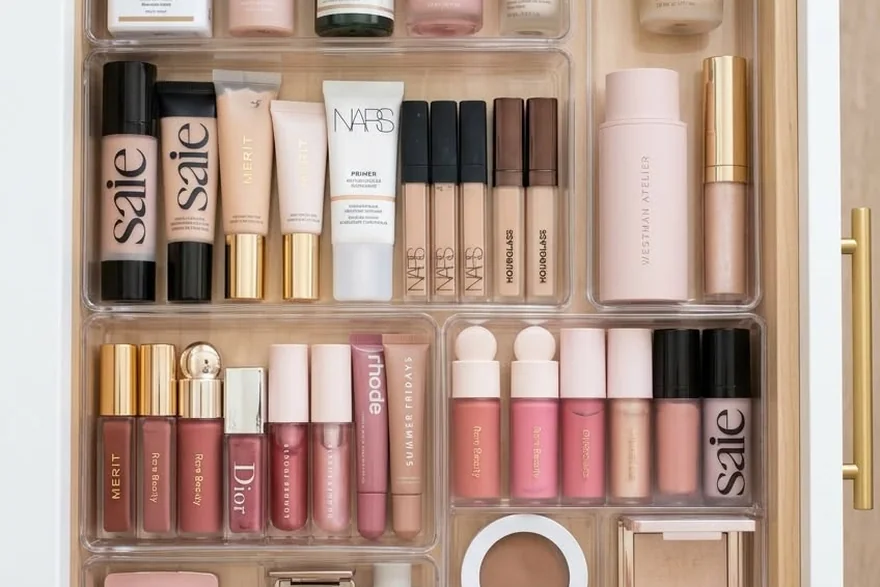
Brand extension into bags is one of the lower-risk moves an apparel brand can make, and athleisure is the clearest example. The competence already exists: a brand that has spent years specifying four-way stretch knits, bonded seams, sweat-tolerant coatings and colour-fast dyeing already knows the mills, the test methods and the failure modes. The pouch then becomes a small, comparatively cheap object that carries the logo into daily use, in places where an apparel label rarely shows. The commercial logic is adjacency rather than diversification. It cuts both ways, though: a pouch priced alongside premium apparel is judged against premium apparel, so the accessory inherits durability expectations it would never face at a commodity price point.
The two brands compared here illustrate two emphases inside that logic, judged only from publicly visible material. Lululemon's accessories have generally read as a technical extension of the apparel line: performance fabrics in named shades, restrained external branding, hardware chosen for feel, and a price position consistent with the apparel. Athleta's accessories have generally leaned towards travel and transition, with softer constructions and a broader size range. Both are coherent with the host range, and both follow apparel conventions rather than the bag category's own.
What can be observed publicly is the same as for any retail assortment: the listed dimensions, the fabric description and care text, the hardware, the colourway names and count, the price position, and the use cases the copy describes. Internal margin, defect, return and sell-through figures are not public for either brand, and none is claimed here. The value of comparing the two is the pattern rather than the numbers.
Lululemon and Athleta are third-party apparel and accessory brands. They appear here only as public market comparisons used to illustrate brand-extension strategy. They are not suppliers, partners, clients or endorsers of any programme described, and no claim is made about their internal product data, specifications, costs or sourcing arrangements.
Fabric transfer: what a performance apparel specification looks like in a pouch
The transferable asset in an athleisure extension is fabric literacy. Apparel teams already think in grams per square metre, stretch and recovery, abrasion resistance and moisture transport, and the same variables decide whether a pouch survives life inside a kit bag. The mistake buyers make when copying the look is to specify the appearance — a matte, slightly rubbery surface, a soft hand, a subtle sheen — without specifying the performance behind it. Appearance is the outcome of a coating, a laminate and a fabric construction; specify those three and the appearance follows.
| Fabric or construction | Typical specification | Performance behaviour | Failure mode worth testing |
|---|---|---|---|
| Four-way stretch knit laminate | Nylon-spandex face, 190-260 g/m2, bonded to a light tricot | Soft hand, recovers from compression, resists creasing | Delamination at the bond line after repeated flexing and cleaning |
| Coated ripstop nylon | 40D-70D ripstop with PU coating, roughly 60-90 g/m2 | Light, tear resistant, wipes clean, packs flat | Coating cracking at fold lines; evaluate against ASTM D751 methods |
| Neoprene or SBR foam | 3-5 mm closed-cell foam faced with knit on both sides | Cushions contents, holds shape, insulates | Compression set and odour retention after damp storage |
| TPU-laminated knit | Knit base with 0.1-0.3 mm TPU film | Water resistant, structured, modern surface | Film yellowing and edge peeling at bound seams |
| Recycled polyester pongee | 75D-150D recycled polyester, 70-110 g/m2 | Standard pouch hand, low cost, recyclable positioning | Shade drift between lots; require transaction certificates |
Coated and laminated fabrics deserve particular attention, because they are where an athleisure look is won and where it most often fails. A coating changes the hand, the water resistance, the cleanability and the care instruction simultaneously, and it is invisible on a specification that names only the base cloth. Buyers should state the coating type, the film thickness and the adhesion expectation, then test the finished article rather than the raw fabric. The common reference for coated fabrics is the ASTM D751 standard.
Hardware is the second transfer. Athleisure apparel has normalised soft, matte, rubberised and anodised finishes, and pouch hardware has followed: moulded pulls with a soft-touch coating, matte black or gunmetal sliders, carabiners and hanging hooks finished to match. The specification trap is identical to zips: finish and gauge both have to be written down. A matte black pull can be painted, anodised or coated, and those three wear very differently under abrasion. A pull attachment test plus an abrasion check on the finish is worth more than a colour reference.
- Specify coating type, film thickness and adhesion expectation, not merely the base cloth.
- State slider gauge, tape material and pull type: finish and gauge both need writing down.
- A matte finish can be painted, anodised or coated, and the three abrade very differently.
- Hardware is the first thing a customer touches, so finish durability is a perceived-quality decision.
The third transfer is colour. Apparel brands run named, tightly controlled palettes that persist across seasons, and a pouch programme inherits that discipline whether the buyer planned for it or not. The operational consequence is shade continuity: a named core colour has to match across fabric lots, print inks and hardware finishes, which makes lab-dip approval and a retained reference swatch non-negotiable. A pouch launched in a brand's core neutral is a commitment to repeat that neutral accurately for as long as the bag stays in the range.
Use-case architecture, wet-dry separation and the carry interface
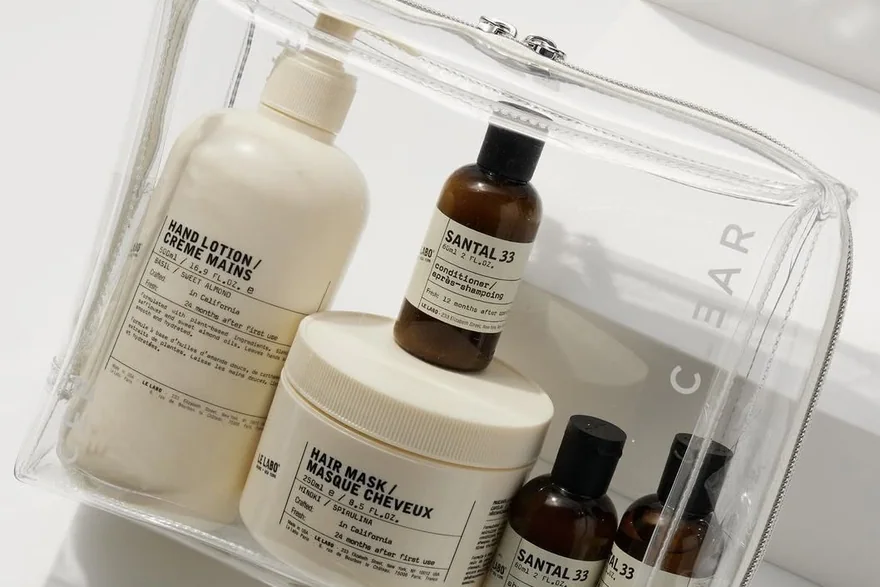
Athleisure pouches tend to be organised by use case rather than by size, and that is the most useful structural lesson in the category. A locker-room pouch needs a wipe-clean lining, a hanging hook and a shape that survives being stuffed into a kit bag. A travel pouch needs structure, a leak-resistant base and a size that satisfies screening rules for liquids. An everyday pouch needs to sit open on a counter without collapsing. Three use cases, three different specifications, and only one of them is primarily about dimensions.
- Locker-room pouch: wipe-clean lining, hanging hook, recovers from compression.
- Travel pouch: structure, leak-resistant base, dimensioned against the liquids rule.
- Everyday pouch: sits open on a counter without collapsing under its own weight.
- Organise the range by use case first, then let dimensions follow from it.
Wet and dry separation is the feature that most often distinguishes a credible athleisure pouch from a generic one. A lined internal pocket or a separate base compartment lets a damp swimsuit or a used gym kit sit apart from cosmetics. The specification implications are concrete: the separating panel needs a welded or taped seam rather than a stitched one, the lining needs to be genuinely water resistant rather than merely coated, and the closure needs to seal without trapping moisture. A stitched seam inside a wet compartment is a leak waiting to be found. Drying behaviour matters as much as containment: a compartment that seals perfectly but cannot be left open to dry will hold moisture, and the resulting complaint arrives after the return window has closed.
Odour retention is the complaint that follows from getting that wrong, and it is a material problem rather than a construction one. Closed-cell foam, some coated fabrics and certain adhesives hold odour after damp storage, and the smell is noticed on opening, which is the worst possible moment. The defences are straightforward: choose materials with low odour retention, state that the bag should be dried before storage, and test by storing a damp sample in a closed container for a defined period before assessing it. That test costs almost nothing.
The carry interface is the last structural decision. A wrist strap, a carabiner clip, a hanging hook or a simple grab handle each changes the pattern, the reinforcement required and the load paths that must be tested. A strap sewn to a light shell without reinforcement will tear out in the field. The fix is a bar-tack or a reinforced patch at the attachment point, specified on the drawing rather than left to the sewing floor. Where a hanging hook is included, the hook and its webbing anchor need the same treatment.
What ties the three decisions together is that none of them is visible in a photograph. Fabric coating, hardware finish and strap reinforcement are felt rather than seen, and they are exactly the details that determine whether a pouch survives its first month. Buyers who specify only the visible attributes — colour, print, silhouette — end up with a bag that photographs well and reviews badly. The transferable lesson from athleisure is to spend the specification effort on the invisible parts.
Test plan, durability expectations and programme economics
A performance positioning makes a durability promise whether or not anybody writes it down. A pouch sold alongside technical apparel is expected to survive sweat, water, abrasion and repeated cleaning, so the test plan has to cover those four exposures rather than stopping at visual inspection. The useful discipline is to write the test plan at the same time as the specification, because a test added after sampling has already begun either delays the launch or gets quietly skipped.
| Exposure | Test family to specify | What the specification should state | Cost of skipping it |
|---|---|---|---|
| Sweat and product contact | Colour fastness to rubbing and to cleaning | Method numbers from one vocabulary, run on production fabric | Print transfer onto clothing and returns for staining |
| Water and damp storage | Water resistance and coating adhesion | Coating type, film thickness, adhesion expectation, seam type | Delamination and odour complaints after first use |
| Abrasion inside a kit bag | Abrasion resistance and hardware finish durability | Cycle count and acceptable appearance change after test | Scuffed pulls and worn corners within weeks |
| Repeated cleaning | Colour fastness to the stated cleaning method | Care instruction derived from the weakest component | Care-label non-conformance and shrinkage complaints |
| Closure cycling | Zipper cycling and pull attachment | Gauge, tape, slider, pull and attachment method | Field failures that read as general quality problems |
Method vocabulary matters more than most buyers expect. Two laboratories asked for colour fastness testing may run different methods and report incompatible numbers, which makes comparison across re-orders meaningless. Choosing one vocabulary — the AATCC test methods or the ISO 105 series — and naming the method numbers in the written specification removes that ambiguity. Inspection is then carried out to AQL 2.5 under ISO 2859-1, with critical, major and minor defect classes agreed before the goods are finished.
Programme economics for this positioning are unusual, because the specification is heavier than the price band usually implies. A coated shell, a welded wet compartment, reinforced strap attachment and matte-finished hardware all add cost per unit, and the buyer has to decide whether the positioning justifies them. The test is simple. If the bag is sold on performance, the invisible specification is the product, and cutting it destroys the claim. If the bag is sold on artwork, the same money buys more perceived value in print quality and lining.
Timing interacts with the heavier specification. Standard sampling runs 6-10 working days, which covers a simple pouch made from stock fabric. The moment a welded wet compartment, a bonded seam or a custom hardware finish enters the specification, sampling moves to 12-15 working days, because tooling and trials are added. Bulk then runs 35-50 days after sample approval. A buyer working to a fixed launch date should therefore settle the feature set before the calendar is fixed rather than after.
Standard commercial terms for these programmes are shipment FOB Xiamen with payment by T/T, 30 deposit and 70 against bill of lading, alongside a 500-piece minimum per style and colourway. The deposit releases fabric and trim procurement, which is the practical reason a specification change after that point carries a cost even before cutting begins. For a first athleisure-style pouch, one colourway at the minimum with the full performance specification beats three colourways with the specification cut.
Lululemon and Athleta are third-party apparel brands named only as public market comparisons. They are not suppliers, partners, clients or endorsers of any programme discussed here, and no internal product data, cost or defect figure for those companies is claimed or implied.
The B2B Customisation View
Brand owners approaching cosmetic pouches, vanity cases and beauty organisers usually arrive with a mood board, a target landed cost and a launch date; the technical pack is what turns those three inputs into a repeatable specification.
Programme data for this category: minimum order quantity 500 pieces per style and colourway, sampling in 6–10 working days (12–15 working days for complex constructions), bulk production 35–50 days after sample approval, final random inspection at AQL 2.5 under ISO 2859-1, FOB Xiamen, T/T 30/70.
Engaging a sourcing partner gives the brand owner one channel for the awkward questions — shade drift, component substitution, carton marking — that otherwise bounce between three vendors.
Which Brand Types Benefit Most
Start-up brands copying an athleisure aesthetic should resist the obvious mistake of buying the look without the specification. A matte coated shell and soft-finished hardware are available at almost any price point; what makes them survive is the coating adhesion expectation, the seam construction and the reinforcement at load points, all of which have to be written into the specification. Established apparel brands extending into pouches have the opposite advantage and the opposite risk: the fabric competence is already there, but the category's failure modes are not, so the test plan has to be built from scratch rather than inherited. Retailers and importers should treat performance positioning as a claim that needs evidence — a wipe-clean expectation, an abrasion cycle count, a closure cycle count — because a claim printed on a hangtag without a test behind it becomes a returns problem. E-commerce sellers benefit most from the use-case architecture, because online listings convert on the description of a specific problem solved: a wet compartment for the gym kit, a leak-resistant base for travel, a pouch that stays open on the counter. Gift and hospitality buyers should note that a performance-positioned amenity or welcome pouch signals durability and repeat use, which is exactly what a hotel or subscription programme wants from an item the recipient did not choose. Across all five, the transferable discipline is identical: fix the use case, write the invisible specification, then confirm it with a test before bulk.
- Start-up brands: write coating adhesion, seam type and reinforcement into the spec, not just the surface finish.
- Established apparel brands: fabric literacy transfers, but build the pouch test plan from scratch.
- Retailers and importers: treat wipe-clean, abrasion and closure cycles as claims needing test evidence.
- E-commerce sellers: sell the use case — wet kit, travel base, counter-stable pouch — not the dimensions.
- Gift and hospitality buyers: a performance pouch signals durability and repeat use to an unchosen recipient.
Frequently Asked Questions
Why do athleisure brands extend into cosmetic bags rather than other categories?
Because the competence already exists. A brand that specifies stretch knits, bonded seams and sweat-tolerant coatings already knows the mills, the test methods and the failure modes, so the pouch is adjacency rather than diversification. The object is also small, comparatively cheap, and carries the logo into daily use in places where apparel branding rarely shows, which makes it efficient marketing as well as a product.
Which fabric specification suits a gym-bag makeup pouch best?
A coated ripstop nylon at 40D-70D, roughly 60-90 g/m2, is the usual answer: light, tear resistant, wipe-clean and flat-packing. Where a softer hand is wanted, a four-way stretch knit laminate at 190-260 g/m2 bonded to a light tricot recovers well from compression. The coating type, film thickness and adhesion expectation should all be written down, because they decide cleanability and the care instruction.
How should a wet and dry separation compartment be constructed?
With a welded or taped seam rather than a stitched one, because needle holes leak. The separating panel needs a genuinely water-resistant lining, not merely a coated face fabric, and the closure should seal without trapping moisture inside the compartment. Where a hanging hook is added, the hook and its webbing anchor need a bar-tack or reinforced patch specified on the drawing rather than left to the sewing floor.
What causes odour retention in a closed toiletry pouch?
Material choice, most often. Closed-cell foam, some coated fabrics and certain adhesives hold odour after damp storage, and the smell is noticed on opening, which is the worst moment. The defences are choosing low-odour-retention materials, stating that the bag should be dried before storage, and testing by storing a damp sample sealed in a container for a defined period before assessment. That test is cheap and prevents a hard-to-recover review pattern.
Which hardware finish holds up best on a performance-style pouch?
Anodised and hard-coated finishes generally outlast painted ones under abrasion, because the colour sits in a converted surface layer rather than on top of it. Soft-touch rubberised coatings feel right for the positioning but scuff, so they need an abrasion check against a stated cycle count. Whichever is chosen, both the gauge and the finish process belong in the specification, since the same visual reference can be produced three different ways.
How should strap and hook attachment points be reinforced on a pouch?
With a bar-tack or a reinforced patch at the attachment point, drawn and dimensioned on the specification sheet rather than left to the sewing floor. A strap sewn directly into a light shell will tear out under load, and the failure is usually blamed on overall quality rather than on one unreinforced detail. The same treatment applies to hanging hooks and carabiner anchors, since each creates its own load path.
What test plan should accompany a performance-positioned cosmetic bag?
One covering the four exposures the positioning implies: colour fastness to rubbing and cleaning for sweat and product contact, water resistance and coating adhesion for damp storage, abrasion resistance and hardware finish durability for life inside a kit bag, and zipper cycling plus pull attachment for the closure. The plan should be written at the same time as the specification, because tests added after sampling begins either slip or get skipped.
Why do two laboratories report different colour fastness results for the same fabric?
Usually because they were asked for colour fastness without a method number and each applied its own preferred procedure, producing numbers that cannot be compared. The fix is to name the method numbers from a single vocabulary, use the same method on every re-order, and test the finished article on production fabric rather than a laboratory submission. Consistency of method is worth more than the apparent precision of any single result.
How does the 500-piece minimum affect a first athleisure pouch run?
It applies per style and per colourway, so a heavier specification does not change the arithmetic but a wider palette does. One colourway at the minimum with the full performance specification is usually the better first test, because it preserves working capital and gives clean sell-through data. Adding colourways before demand is known multiplies exposure without improving the product.
When does a pouch specification move sampling from 6-10 to 12-15 working days?
When tooling or trials are introduced. A flat pouch or simple gusseted makeup bag from stock fabric and a stock zipper samples in 6-10 working days. A welded wet compartment, a bonded seam, a moulded EVA body or a custom hardware finish pushes it to 12-15 working days. Deciding the feature set before the launch calendar is fixed avoids discovering the longer window too late.
How long does bulk production take after sample approval for a welded-seam pouch?
Bulk runs 35-50 days after sample approval for these programmes, and a welded or bonded construction sits at the longer end because welding parameters, jigs and operator setup have to be settled before volume output begins. Inspection is carried out to AQL 2.5 under ISO 2859-1, with defect classes agreed in advance. Shipment is FOB Xiamen, payment T/T 30 deposit and 70 against bill of lading.
How should a buyer decide between performance and artwork as the spend priority?
By the claim the bag is sold on. If the positioning is performance — wipe-clean, water resistant, built for the gym — then coating, seam construction and hardware finish are the product, and cutting them destroys the claim. If the positioning is artwork or collaboration, the same money buys more perceived value in print sharpness, colour accuracy and a printed lining. Trying to fund both usually produces neither.
What care instruction should a coated cosmetic pouch carry?
One derived from the weakest component in the finished article, not the strongest. A coated shell with a printed lining and a metal pull may tolerate only wipe-clean, even where the base fabric would survive machine washing. The cleaning expectation should be fixed at the same time as the substrate and print method, then verified by testing the finished article on production fabric rather than a submission piece.
How should defect classes be defined for a pouch with a welded wet compartment?
In three written tiers agreed before inspection. Critical defects make the item unusable or unsafe — a broken zipper, a needle fragment, a weld that has not fused. Major defects affect saleability, such as visible print misregistration or a crooked seam. Minor defects are cosmetic and inside tolerance. For welded seams specifically, the specification should state the acceptable appearance and the test used to confirm fusion.
What should a buyer include in a brief for an athleisure-style pouch programme?
The use case first, then the numbers: dimensions in centimetres, shell fabric with weight in g/m2 and coating type, lining specification, zipper gauge and type, pull and finish, print method, reinforcement at load points, label and hangtag content, carton count, the inspection standard, target landed cost and destination market. A brief that fixes the use case and the specification lets a sourcing partner quote accurately on the first pass.
People Also Ask
Are branded cosmetic bags worth the price premium?
They are worth it when the premium buys specification rather than logo alone: a coating that wipes clean, a seam that does not leak, hardware that resists abrasion and a lining that survives contact with cosmetics. Where the premium buys only artwork, the perceived value rarely survives first use. A buyer sourcing a comparable pouch should check which parts of the specification the extra cost is actually funding.
What should I look for in a gym toiletry bag?
A wipe-clean lining, a wet compartment with welded rather than stitched seams, a hanging hook with a reinforced anchor, and a closure that survives repeated cycling. Dimensions matter less than construction: a bag that leaks into the kit bag fails regardless of how well it was sized. Checking the seam type and the strap reinforcement tells a buyer more than the listed measurements, and both are usually visible on a production sample.
Why does my toiletry bag smell damp even when it is empty?
Usually because a closed-cell foam, a coated fabric or an adhesive has retained odour after damp storage, and the smell is released when the bag is opened. Drying the bag fully before storing it helps, but if the material itself retains odour the only durable fix is a different substrate. Testing a damp sample in a sealed container before bulk production catches this cheaply.
How do you clean a coated makeup bag without damaging the print?
Follow the care instruction on the label, which should have been derived from the weakest component in the article. Where the print is a heat transfer on a flexible coated shell, aggressive machine washing can cause cracking, so wipe-clean with a mild solution is usually safer. Testing colour fastness to the intended cleaning method on production fabric confirms the right instruction.
Request a Sample or a Written Quotation
Send the silhouette, dimensions, material preference and logo artwork, and the programme team will return a written quotation with MOQ, sampling window, bulk lead time and inspection standard.
Email: [email protected] · WhatsApp: +86 177 5002 0688