Hotel Amenity Toiletry Bags: Custom Branding for Hospitality
Executive Summary
A hotel amenity toiletry bag is specified less by capacity than by unit cost, logo durability and replenishment rhythm. It is a branded bag supplied to guests as part of a stay, either as a giveaway filled with amenities or as a retail item in a spa or lobby shop. The working answer is a guest-amenity pouch of 18 x 12 x 6 cm with roughly 1.0 litre of usable volume, in 210D to 420D polyester or cotton, carrying a one or two colour logo.
Three decisions shape the programme. The property tier sets the fabric and the branding method: a limited-service property needs a bag at the bottom of the $0.45-$12.00 band with a single screen-printed mark, while a spa retail item can carry a woven label and an embroidery. The compliance file matters because a guest amenity touches skin and holds cosmetics. And replenishment has to be planned against occupancy, not against a one-off order, at 500 pieces per style and colourway.
What an Amenity Toiletry Bag Is, and What It Is Not
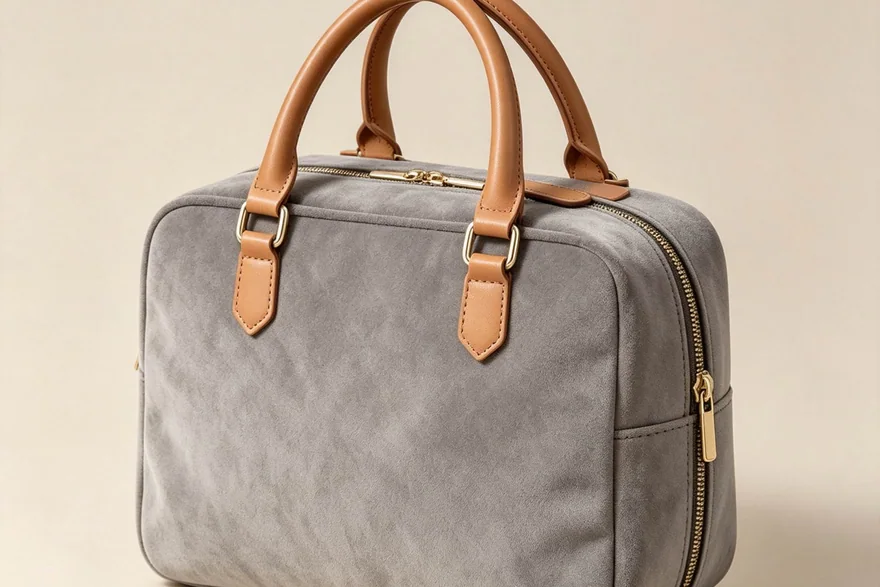
In hospitality the term covers three different objects, and confusing them is the most common sourcing error in the category. A guest amenity bag is handed to the guest, usually pre-filled with soap, shampoo, a dental kit and a shower cap, and is expected to leave the property with the guest. A spa or retail amenity bag is sold at the till beside the treatment rooms. A back-of-house bag is used by housekeeping or by the spa team and never reaches a guest. Each has a different cost ceiling, a different branding quality bar and a different reorder pattern.
- Guest amenity: given away, filled at the property, priced as a consumable, typically $0.45-$2.50 per unit.
- Retail or spa amenity: sold at a margin, priced as product, typically $4.00-$12.00 per unit, with a higher finish bar.
- Back-of-house: unbranded or minimally marked, bought for durability and for a low unit cost.
- Welcome kit: a variant of the guest amenity bag, presented on the bed or in the bathroom on arrival.
- Long-stay or serviced-apartment kit: larger, darker, and expected to survive months rather than nights.
The economics are driven by occupancy rather than by retail margin. A 200-room property running at 70% occupancy with 1.4 guests per occupied room hands out roughly 196 amenity bags a week, or about 10,200 a year, which is comfortably above any reasonable minimum but is also a recurring cost line rather than a one-off purchase. That is why amenity specifications are usually written around cost per occupied room, and why a saving of $0.20 per unit is worth more to the buyer than an extra feature that costs $0.20.
Rooms x occupancy rate x guests per occupied room x nights stayed per bag gives annual bag volume. A 200-room property at 70% occupancy with 1.4 guests per room and one bag per stay issues about 5,100 bags per turn of the house if stays average two nights, or about 10,200 if stays average one. Plan the first order at 500 pieces per style and colourway, then set a reorder point against booked occupancy.
Specifying an Amenity Bag Against the Property Tier
A bag that suits a limited-service airport hotel reads as cheap on a resort spa shelf, and a bag built for a spa shelf destroys the cost per occupied room at an economy property. The tier sets four variables together: shell fabric, size, branding method and finish detail. Writing these four into one table at the start of a programme prevents the most common failure, which is a mid-tier bag with a luxury branding method, or a luxury bag with an economy closure.
| Property tier | Size and volume | Shell and lining | Branding method | Indicative unit band (USD) | Expected life |
|---|---|---|---|---|---|
| Limited service, 2-3 star | 18 x 12 x 6 cm, 1.0 L | 210D polyester, unlined or PEVA wipe-clean | One colour screen print, 60 x 30 mm | $0.45-$1.20 | One stay, then discarded |
| Midscale, 3-4 star | 20 x 13 x 7 cm, 1.4 L | 420D polyester or 8 oz cotton, 210D lining | Two colour screen print or a woven label | $1.10-$2.60 | Several trips as a gym or shoe bag |
| Boutique, 4 star | 22 x 14 x 8 cm, 1.8 L | 10-12 oz cotton canvas or RPET canvas, cotton lining | Woven damask label plus a screen-printed mark | $2.20-$4.80 | Kept and reused by the guest |
| Luxury, 5 star | 24 x 15 x 9 cm, 2.2 L | Cotton canvas or PU-coated woven, satin or 210D lining | Embroidery at 7,000-9,000 stitches, or a debossed PU patch | $4.20-$9.60 | Long-term reuse, brand recall |
| Resort and spa retail | 26 x 16 x 10 cm, 3.0 L | Woven jacquard, faux leather trim, water-resistant lining | Embroidery plus a woven label and a hangtag | $6.80-$12.00 | Sold as retail product |
| Serviced apartment, long stay | 28 x 18 x 11 cm, 3.6 L | 600D polyester, welded lining, hanging loop | Tonal embroidery or a rubber patch | $3.40-$7.20 | Months of daily use |
Two sizing rules help keep the tier honest. First, a giveaway bag should be sized to the amenity set, not to a traveller's kit: a dental kit, a 30 ml shampoo, a 30 ml shower gel, a soap bar and a shower cap occupy about 0.75 litres, so a 1.0 litre pouch holds the set with room to close. Second, a retail spa bag should be sized one step above the amenity pouch, because a shopper compares it with bags sold elsewhere and a bag that looks like a free gift will not sell.
- Size the giveaway bag to the amenity set, about 0.75 litres of contents, not to a travel kit.
- Size the retail spa bag one step above it, or it reads as a free gift and will not sell.
- Match branding method to tier: screen print for economy, embroidery or a patch for luxury.
- A giveaway bag is a consumable cost line; a retail bag is a margin line, and the specs differ accordingly.
Closure choice also tracks the tier and is often overlooked. A giveaway pouch usually closes with a simple No. 3 coil and no puller branding, which keeps the unit at the bottom of the band. A boutique bag benefits from a No. 4 or No. 5 coil with a branded puller, because the puller is the part a guest touches first and it is a cheap place to put a mark. A spa retail bag justifies a metal-look puller and a lined interior, where the extra $0.40-$0.90 is recovered in margin.
Colour is the third tier variable and it is decided by housekeeping as much as by marketing. A white or very light amenity bag shows handling marks before it reaches the guest, so economy and midscale properties do better with a mid-tone or a dark shell and a light logo. A boutique or spa property can run a light shell because the bags are handled less and presented individually. Whichever is chosen, the shell should be tested for rubbing fastness at grade 4 dry, because amenity bags sit against white towels.
Branding Methods: Which Marks Survive Laundry, Handling and Sunlight
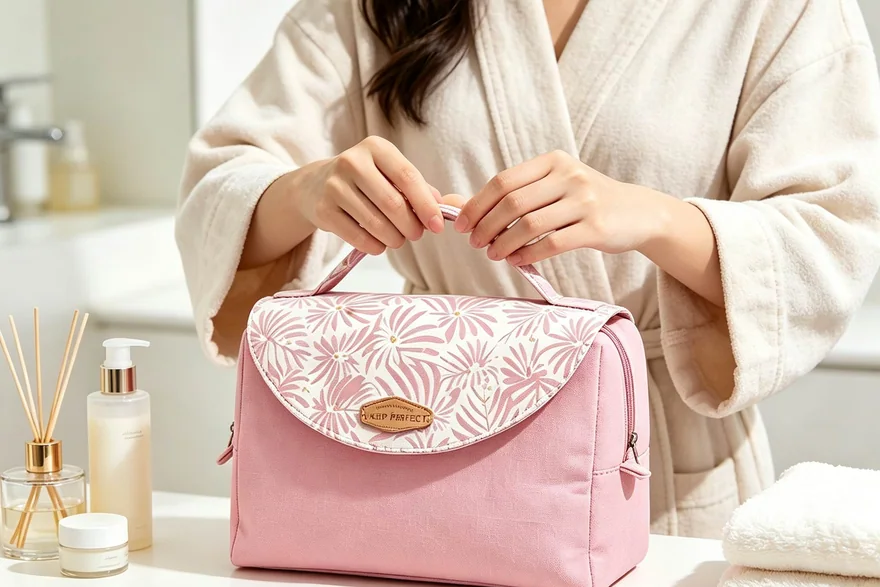
An amenity logo has a harder life than a retail logo. It is handled by housekeeping, filled at speed, carried in a suitcase against wet swimwear and, if the guest keeps the bag, washed. The choice of method therefore has to be made against the intended life of the bag rather than against the artwork. A screen print is cheap and colour-accurate but sits on the surface; a woven label is durable but limited in colour count; embroidery reads premium but adds cost and can pucker a lightweight shell.
| Method | Best mark size | Durability through handling and washing | Colour capability | Added unit cost | Best tier |
|---|---|---|---|---|---|
| One or two colour screen print | 50-90 mm wide | Good for 20-30 washes; cracks on a coated shell first | Spot colours only, one or two | $0.05-$0.15 | Limited service and midscale |
| Heat transfer, digital | 40-120 mm wide | Fair; edges lift on a curved or coated surface | Full colour and gradients | $0.15-$0.35 | Boutique welcome kits, short campaigns |
| Woven damask label | 25-60 mm wide | Excellent; outlasts the bag itself | Up to four thread colours | $0.12-$0.30 | Boutique and luxury |
| Embroidery | 35-70 mm wide | Excellent; the thread is part of the shell | Up to six thread colours | $0.45-$1.10 | Luxury and spa retail |
| Debossed PU patch | 35-55 mm wide | Excellent; needs a stitch margin check | Single tone, tonal | $0.35-$0.85 | Luxury, spa, serviced apartment |
| Woven label plus printed inner lining | Full-panel inner print | Good; protected from abrasion inside the bag | Full colour | $0.30-$0.70 | Boutique, where the open bag is part of the experience |
Placement matters as much as method. A giveaway bag is usually seen in two positions: flat in a housekeeping trolley and open on a bathroom counter, so the mark belongs on the front panel at roughly 40% height and ideally repeated on the inner lining or on the zipper pull. A retail bag is seen on a shelf, so the mark belongs centred and level, with the hangtag carrying the care and compliance text. In both cases the artwork should be supplied as a vector file with the Pantone references named, and the tech pack should state a 3 mm stitch margin and a pull test on any applied patch.
Two artwork decisions cause most of the rework in hospitality programmes. The first is a mark with fine detail below about 1 mm, which does not survive screen printing or embroidery at amenity-bag scale and has to be simplified before sampling, not after. The second is a mark supplied as a raster file without Pantone references, which forces a colour guess at sampling and a mismatch at reorder. Supplying vector artwork with named references and a simplified one-colour variant costs nothing and removes both problems.
- Simplify any detail below 1 mm before sampling; screen print and embroidery will not hold it at this scale.
- Supply vector artwork with named Pantone references, plus a one-colour variant for the economy tier.
- Approve a physical branded sample rather than a digital mock-up, and keep it as the reorder reference.
- State the mark position as a measurement from a seam, not as 'centred', so bulk repeats it consistently.
Colour matching across a reorder is the detail that trips up hospitality programmes. A screen-printed logo is mixed from spot colours and will drift slightly between runs, while a Pantone-referenced woven label is dyed to a standard and repeats more reliably. For a property that reorders twice a year for five years, the artwork, the Pantone references and the label specification should be archived against the style number at first order, and a retained reference sample should be kept so the second and tenth orders can be matched against it.
Compliance, Replenishment and Reorder Planning
An amenity bag touches skin and holds cosmetics, so the compliance file is not optional. The face fabric, the lining, the print and any metal hardware should be screened against restricted substances, and the certificate should name the article rather than the mill. Buyers in this channel usually ask for OEKO-TEX Standard 100 on the finished bag, with soft pouches handled daily assessed under Product Class II. Where the property markets the amenity as sustainable, a recycled-content claim needs a chain-of-custody document such as the Global Recycled Standard, because an unverified percentage claim is the fastest route to a complaint.
| Programme element | What to specify | Why it matters for hospitality |
|---|---|---|
| Restricted substances | OEKO-TEX Standard 100 certificate naming the finished bag, Class II for soft pouches | Amenity bags hold cosmetics and are handled daily by guests and staff |
| Recycled content claim | GRS transaction certificate matched to the fabric lot | A percentage on a hangtag without a certificate is an unverified claim |
| Colour fastness to rubbing | Grade 4 dry and grade 3-4 wet on dark shells | A dark amenity bag rubs against light towels and bathrobes |
| Carton configuration | 200-300 pieces per export carton for an 18 x 12 x 6 cm pouch | Housekeeping stores cartons; an oversized carton does not fit the linen room shelf |
| Inspection | AQL 2.5 under ISO 2859-1 with logo defects classified as major | A misprinted crest on a giveaway bag is visible to every guest |
| Reorder reference | Archived artwork, Pantone references and a retained sealed sample | Properties reorder for years; without a reference the tenth order drifts |
Logistics for amenity programmes run on a different clock from retail seasons. Sampling takes 6-10 working days, or 12-15 for a bag with a lining, a woven label and an applied patch, and bulk runs 35-50 days after sample approval. A property that reorders quarterly should therefore place the next order roughly 60-70 days before the reorder point, which means the reorder decision is made against forecast occupancy two months out. Inspection is applied at AQL 2.5 under ISO 2859-1, and for a branded amenity bag a logo defect belongs in the major classification rather than the minor one, because a crest with a broken edge is visible to every guest who picks the bag up. Payment is normally T/T 30 deposit and 70 against bill of lading, and shipments leave on FOB Xiamen terms, so the freight leg should be booked against the property's delivery window rather than against the production date alone.
Hotel groups often run one bag specification across several properties with only the logo changing. That is 500 pieces per style and colourway for each property variant, so a group with six properties and one shared specification places six orders of 500 pieces. Consolidating the shell fabric and the lining across all six helps cost and colour consistency. QUANZHOU JUNYUAN BAGS coordinates bag programmes of this type through SGS-verified production floor space of 4,950 square metres across 7 production lines and 149 machines, with monthly output capacity of 200,000 pieces; enquiries go to [email protected].
The B2B Customisation View
Brand owners approaching cosmetic pouches, vanity cases and beauty organisers usually arrive with a mood board, a target landed cost and a launch date; the technical pack is what turns those three inputs into a repeatable specification.
Programme data for this category: minimum order quantity 500 pieces per style and colourway, sampling in 6–10 working days (12–15 working days for complex constructions), bulk production 35–50 days after sample approval, final random inspection at AQL 2.5 under ISO 2859-1, FOB Xiamen, T/T 30/70.
Engaging a sourcing partner gives the brand owner one channel for the awkward questions — shade drift, component substitution, carton marking — that otherwise bounce between three vendors.
Which Brand Types Benefit Most
Amenity programmes attract buyers who think in recurring volume rather than in single orders. A start-up hotel group or a new independent property uses the amenity bag as a brand touchpoint at low unit cost, and the 18 x 12 x 6 cm pouch at $0.45-$1.20 is usually the first branded item a new property buys. An established group with a brand standard runs one specification across dozens of properties and cares most about colour and logo repeatability across reorders, which is why the archived artwork and retained sample matter more than the unit price. Retailers rarely buy amenity bags, but spa and resort retail buyers do, and for them the bag is a margin line at $6.80-$12.00 rather than a consumable. E-commerce sellers use the same construction for a branded gift-with-purchase pouch. Gift and hospitality buyers are the core of the channel: the bag is filled at the property, handed over at check-in or placed in the bathroom, and its performance is measured in guest recall rather than in durability. The test that matters is simple: does the guest take the bag home? A bag sized to the amenity set, in a colour the guest will reuse, with a mark that survives washing, is the one that leaves the property and keeps working as advertising.
- New and independent properties: the amenity pouch is usually the first branded item bought, at the lowest unit band.
- Established hotel groups: one specification across many properties, with logo repeatability as the priority.
- Spa and resort retail buyers: the bag is a margin line, not a consumable, so the finish bar rises sharply.
- E-commerce sellers: the same pouch works as a gift-with-purchase item at a different price point.
- Hospitality gift buyers: performance is measured in guest recall, which favours a bag the guest actually keeps.
- Serviced-apartment operators: a larger welded-lining bag rated for months of daily use rather than one stay.
- Airline lounge and long-haul amenity kits: dark shells, one logo, high volume, tight delivery windows.
Frequently Asked Questions
What size should a hotel guest amenity toiletry bag be?
18 x 12 x 6 cm, giving about 1.0 litre of usable volume, is the standard for a giveaway amenity pouch. A typical amenity set of a dental kit, two 30 ml bottles, a soap bar and a shower cap occupies roughly 0.75 litres, so 1.0 litre holds the set and still closes cleanly. A boutique property usually steps up to 22 x 14 x 8 cm at 1.8 litres.
What is the difference between a guest amenity bag and a spa retail bag?
The guest amenity bag is a consumable cost line, typically $0.45-$2.50 per unit, filled at the property and given away. A spa retail bag is a margin line at $6.80-$12.00, sold at a till, with a higher finish bar: woven label, embroidery, water-resistant lining and a hangtag. Sizing them the same is the common error; the retail bag must be a step larger.
Which branding method lasts longest on an amenity pouch?
A woven damask label or embroidery, because the thread becomes part of the shell rather than sitting on it. A one or two colour screen print costs $0.05-$0.15 and survives 20-30 washes, which is enough for a giveaway bag, but it cracks first on a coated shell. Choose the method against the intended life of the bag, not against the artwork.
How many amenity bags does a 200-room hotel use in a year?
Roughly 10,200 at 70% occupancy with 1.4 guests per occupied room and one bag per stay averaging one night, or about 5,100 if stays average two nights. The formula is rooms x occupancy rate x guests per occupied room x stays per bag per period. Reorder points should be set against booked occupancy, not against room count.
What minimum applies when several properties share one bag specification?
500 pieces per style and colourway for each variant. A group with six properties sharing one shell and one lining but with six different logos places six orders of 500 pieces each. Sharing the fabric helps cost and colour consistency across the group but does not merge the minimums, because each logo variant is cut and printed separately.
Should an amenity bag carry OEKO-TEX certification?
Yes, if the bag holds cosmetics or is handled daily, which covers almost every amenity pouch. The certificate should name the finished article rather than the fabric mill, and soft pouches handled daily are normally assessed under Product Class II. Ask for the certificate number and check the expiry, because it is re-issued annually.
How is a recycled-content claim on an amenity bag verified?
Through a chain-of-custody document matched to the fabric lot, such as a Global Recycled Standard transaction certificate. A percentage on a hangtag without a certificate is an unverified claim and is the fastest route to a guest or retailer complaint. The certificate should match the lot actually used, not a generic mill certificate.
Why does colour fastness to rubbing matter for a dark amenity bag?
Because the bag sits against white towels, bathrobes and bedding in a guest bathroom and in a housekeeping trolley. A dark dyed shell with poor rubbing fastness transfers onto those textiles and the property absorbs the replacement cost. Specify grade 4 dry and grade 3-4 wet on the grey scale for dark colourways.
Where should the logo be placed on a giveaway amenity bag?
On the front panel at about 40% height, and repeated on the inner lining or on the zipper pull. The bag is seen flat in a housekeeping trolley and open on a bathroom counter, so a mark placed high on the panel is visible in both positions. Supply vector artwork with named Pantone references and state a 3 mm stitch margin.
How do hotels keep a logo consistent across reorders years apart?
Archive the vector artwork, the Pantone references, the label specification and a sealed retained reference sample against the style number at first order, then match each reorder against that sample. A screen print mixed from spot colours drifts slightly between runs; a Pantone-referenced woven label repeats more reliably, which matters for a five-year programme.
What carton configuration suits a hotel linen room?
200-300 pieces per export carton for an 18 x 12 x 6 cm pouch. Housekeeping stores cartons on standard linen-room shelving, so an oversized carton is a practical problem even when it is cheaper to ship. Buyers should state the carton count on the purchase order and check it against the shelf depth at the property.
How long does an amenity bag programme take from artwork to delivery?
Sampling runs 6-10 working days, or 12-15 for a bag with a lining, a woven label and an applied patch, and bulk runs 35-50 days after sample approval. A property reordering quarterly should place the next order roughly 60-70 days before the reorder point, which means ordering against forecast occupancy about two months ahead.
Should a hotel amenity bag be lined?
For a giveaway bag, an unlined 210D shell or a PEVA wipe-clean lining is usual, because the cost per occupied room dominates. For a boutique or luxury bag, a 210D or cotton lining lifts the perceived quality enough to matter, and for a serviced-apartment bag a welded lining is worth specifying because the bag sees months of daily use.
How should logo defects be classified at inspection?
As major rather than minor. A misprinted crest, a broken edge on an embroidered mark or a crooked label is visible to every guest who picks the bag up, and on a branded amenity item that is a brand problem rather than a cosmetic one. Set the classification before inspection under AQL 2.5 so the decision is not made at the bench.
What is the most common specification mistake on amenity bags?
Sizing the bag for a traveller's kit instead of for the amenity set. A 22 x 14 x 8 cm bag holding a five-item amenity set looks half empty and reads as wasteful to a guest, while costing more per unit. Match the volume to the contents, about 0.75 litres, and step up only for spa retail or long-stay use.
People Also Ask
What is a hotel amenity bag?
A branded bag supplied to guests as part of a stay, either pre-filled with toiletries as a giveaway or sold as a retail item in a spa or lobby shop. A standard giveaway pouch is 18 x 12 x 6 cm with about 1.0 litre of usable volume, in 210D to 420D polyester, carrying a one or two colour logo at $0.45-$2.50 per unit.
How do hotels brand toiletry bags with their logo?
Economy properties use a one or two colour screen print at $0.05-$0.15 per unit; boutique and luxury properties use a woven damask label, embroidery at 7,000-9,000 stitches, or a debossed PU patch. The method should be chosen against the intended life of the bag, and the artwork should be archived with Pantone references for reorders.
How many amenity bags should a hotel order at once?
Enough to cover the reorder point plus safety stock. A 200-room property at 70% occupancy uses roughly 5,100-10,200 bags a year, so a quarterly order of about 1,500-2,500 pieces is typical. The minimum is 500 pieces per style and colourway, and bulk takes 35-50 days, so order about two months ahead of the reorder point.
Are hotel amenity bags reusable or single use?
Economy giveaway pouches are effectively single-stay items, while a boutique or luxury bag is designed to be kept and reused, which is what gives the property brand recall. If reuse is the goal, specify a better shell, a woven label rather than a print, and a size the guest can actually use afterwards, around 22 x 14 x 8 cm.
Request a Sample or a Written Quotation
Send the silhouette, dimensions, material preference and logo artwork, and the programme team will return a written quotation with MOQ, sampling window, bulk lead time and inspection standard.
Email: [email protected] · WhatsApp: +86 177 5002 0688