Graduation Cosmetic Bags: Commencement Gift Market
Executive Summary
How should a graduation cosmetic bag programme be specified? It should be specified as a keepsake with a dated life, which means the colour decision and the dating decision carry more commercial weight than any other part of the brief. Institution colours are the reason the category sells, but an unlicensed programme must treat them as a generic decorative palette supplied by the buyer rather than as institutional identification, and no crest, name or mark may appear.
Dating follows the same logic as colour. A year numeral printed on the shell makes the pouch unsellable once the season passes, while the same numeral on a woven side-seam label or a printed insert card delivers the keepsake value and leaves the bag evergreen. On timing, sampling takes 6-10 working days, or 12-15 working days for complex constructions, and bulk runs 35-50 days after sample approval, so the programme is briefed two production windows ahead. Inspection runs to AQL 2.5 under ISO 2859-1, with defect classes agreed at sampling rather than argued at release.

What the commencement gift market actually buys
A graduation cosmetic bag is a cosmetic bag, makeup pouch, toiletry bag or small vanity case bought to mark a commencement and to carry something useful into the next stage of the recipient's life. It sits in a curious commercial position: it is bought once by a giver, kept for years by a receiver, and priced somewhere between a gift and a practical item. That combination is what makes it profitable, and it is also what makes it easy to get wrong.
Three features distinguish it from general gifting. The occasion is dated, so the item's commercial life is short even though its useful life is long. The giver is frequently not the user, and often not the buyer either, because family members, alumni groups and campus retailers all place orders. And the design signal is institutional colour, which is the single strongest purchase driver in the category and the single largest legal risk if it is handled carelessly.
The underlying format needs no introduction to buyers or recipients. Toiletry bags draw roughly 74,810 weekly Amazon searches according to ASINSIGHT 2026.07, and the phrase travel bag for toiletries draws about 110,000 monthly searches, so the object is understood before it is personalised. Typical unit price bands run $0.45 to $12.00 on Alibaba as of 2026.10, and typical marketplace minimums run 100 to 1,000 pieces against a programme minimum of 500 pieces per style and colourway.
The practical consequence is that the brief has to separate three things that are usually conflated: the keepsake value, which comes from colour and personalisation; the useful life, which comes from fabric, lining and closure; and the commercial life, which is set by the date and therefore by the production calendar. Designing for keepsake value alone produces a bag that is unsellable in month four. Designing for useful life alone produces a bag that does not sell in week one.
The buying structure is worth stating plainly, because it changes who the specification has to satisfy. A family member buying one bag cares about the recipient's reaction. A campus retailer buying for a shop floor cares about margin, fixture fit and sell-through. An alumni association or scholarship programme ordering for a cohort cares about appropriateness and durability, because the item will be seen for years. Each of those buyers is placing the same object into a different commercial frame.
Working with an institutional palette without a licence
Institutional colour is the reason a graduation cosmetic bag sells. A generic pouch in a neutral colour is a travel accessory; the same pouch in a school's palette is a keepsake. That value is real, and it is also the reason the category carries legal exposure, because institutional names, crests, seals and marks are protected, and the appearance of official association is itself a claim.
The workable position for an unlicensed programme is to treat the school colours as a generic decorative palette that the buyer supplies for a specific programme. In practice that means the specification records colour references as buyer-supplied decorative colours, the artwork carries no institution name, crest, seal, mascot or abbreviation, and no statement implies official endorsement. Where a buyer does hold a licence, the documentation travels with the order and the licence scope governs what may appear.
| Palette handling | What it means | Risk level | Recommended specification wording |
|---|---|---|---|
| Buyer-supplied reference | The buyer provides colour references to be matched for the programme only | Low, where used decoratively | Record colours as buyer-supplied decorative references for this programme |
| Generic commencement palette | Standard commencement-friendly colour families with no institutional reference | Very low | Use documented generic colour names in the specification |
| Two-colour application | Shell in one colour, lining in a second | Low | State both colours as decorative, not as institutional identification |
| Contrast trim | Binding, puller and stitch in an accent colour | Low | Cheapest route to a second colour without a second fabric commitment |
| Institutional name, crest or mark | Official branding requiring authorisation | High; outside an unlicensed programme | Do not specify; confirm a licence exists and check its scope before artwork approval |
Two-colour application is where most of the perceived value sits, and it is also where the minimum bites. If the shell is one institutional colour and the lining another, that is one production run with two fabric choices, which is manageable. If the buyer wants two shell colourways so that one style covers two different institutions, that becomes two runs of 500 pieces each. The cheaper solution is a neutral or single-colour shell with the second colour carried in the lining, binding and puller.
Colour approval needs the same discipline as any seasonal programme, with one extra step. Because the palette is supplied by the buyer rather than chosen from a standard shade card, the approved physical reference has to be retained and named in the purchase order, and the tolerance has to be stated. Where the institution's palette includes a metallic accent, the plating reference for the puller should be approved at the same time, because warm-toned plating varies between batches more than dye does.
The safest way to handle colour is to separate the palette decision from the identification decision. Colours can be matched to a buyer-supplied reference for a specific programme and used decoratively. What cannot appear is anything that identifies the institution: the name, the crest, the seal, the mascot, an official abbreviation, or wording that implies the bag is an official or licensed product. The artwork should be reviewed against that list before approval, not after printing.
Where an institution's colour scheme is close to a colour the brand already uses, the programme should document that the palette was selected for decorative reasons and supplied by the buyer. That documentation does not replace legal advice, and it does not create permission where none exists, but it does record the decision at the time it was made rather than after a question is raised. Buyers with any doubt should confirm their position with the institution before placing the order.
Personalisation: year numerals, initials and the decoration plan
Personalisation is what turns a cosmetic bag into a commencement keepsake, and it is also what destroys the resale value of leftover stock. The year numeral is the clearest example: it is the element that makes the item feel specific and dated, and it is the same element that makes it unsellable once the season closes. The design task is to keep the specificity and move it somewhere cheap.
| Personalisation element | Decoration method | Effect on production lead time | Cost character (illustrative planning range) | Best use |
|---|---|---|---|---|
| Year numeral on the front panel | Screen print or heat-transfer in the main run | None, provided the numeral is locked at artwork stage | Minimal incremental cost | Only where the run is expected to sell through in the season |
| Year numeral embroidered | Embroidery, one digitising file per year | None, but a slower decoration route | Higher unit cost; upper third of the $0.45-$12.00 band | Premium keepsake tiers |
| Year numeral on a woven label | Woven label sewn to the side seam | Label loom set-up only | Small add-on per unit | Best carryover option; the bag itself stays undated |
| Initials as variable data | Per-unit variable printing | Adds a per-unit step and slows the decoration line | Moderate to high incremental cost | Small VIP or family orders |
| Initials on a debossed badge | Badge applied during packing | Minimal effect on bag production | Small add-on per unit | Gift sets assembled late in the schedule |
| Named message on an insert card | Card printed separately, inserted last | No effect on bag production | Minimal incremental cost | Cheapest way to carry any dated or named message |
The pattern across that table is consistent: the further personalisation sits from the shell print, the lower the obsolescence cost. A dated insert card can be reprinted cheaply or discarded. A dated shell cannot. Where a buyer wants a strongly dated product and is willing to accept the inventory risk, printing the numeral is reasonable, but the overrun should then be planned very tightly, because there is no second route to market for surplus.
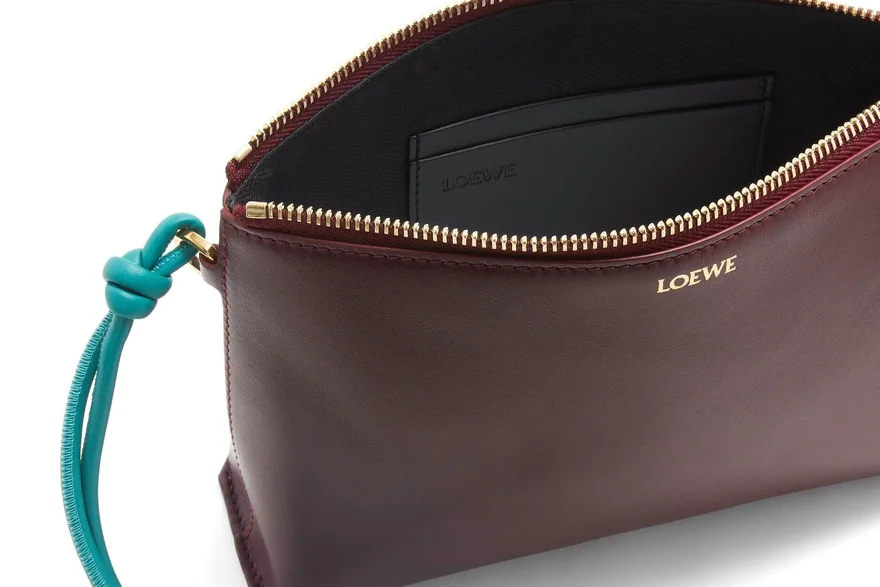
Keepsake quality is the other half of the specification. A commencement bag that falls apart in a year does the opposite of what was intended, so the fabric, lining and closure should be specified to year-round travel standard rather than to novelty standard: a 300D to 600D shell with a PU backing in the 200 to 300 g/m² range, a wipe-clean PEVA or TPU lining, bound internal seams, and a #5 nylon coil zipper with a moulded metal-look puller. Zipper terminology and construction are defined in ASTM D2053, which is a useful reference when writing the purchase order.
Where the programme includes a second smaller pouch, an internal slip pocket or a removable wrist strap, those additions should be specified at sampling rather than added later. Each one changes the seam path and can push the programme from the 6-10 working day sampling route into the 12-15 working day complex-construction route, which matters when the whole schedule is built backwards from a fixed date.
Decoration durability is the companion to personalisation. A keepsake that loses its print in six months stops being a keepsake, so the print method should be chosen for the surface it sits on and for how the bag will be handled. Dye-sublimation works on polyester and puts colour inside the fibre. Screen print suits flat panels and spot colours. Embroidery and woven labels last, but embroidery stiffens light shells and should be matched to the fabric weight.
Timing the commencement window and planning carryover
Commencement programmes have the hardest timing profile of any seasonal bag programme, because the selling window is short, the date moves between institutions, and the buyer may be placing orders on behalf of a group whose own deadline is not the buyer's. The reliable method is arithmetic rather than intuition: fix the date stock must be live, then subtract every dependent step in the chain.
- Start from the date stock must be live on shelf or listed, not from the date it must leave the factory.
- Subtract receipt, quality release and allocation: plan 10-15 working days before the live date.
- Subtract ocean transit, clearance and inland delivery, using the buyer's own forwarder figures.
- Subtract bulk production at 35-50 days after sample approval, using the upper figure for a first season.
- Subtract sampling at 6-10 working days, or 12-15 working days for complex constructions.
- Subtract artwork development and revision rounds, and fix the artwork lock date as a contractual milestone.
- Whatever date remains is the latest possible brief date; anything later is a compressed schedule with no recovery path.
The reason for planning to the upper figure is asymmetry. A programme that finishes early holds stock for a few weeks, which costs warehouse space. A programme that finishes late misses the window, which costs the season. Because the theme expires, late stock is not merely delayed revenue; it is a write-off with a date on it, which is why the upper end of the 35-50 day window is the correct planning assumption for any first-season commencement programme.
Carryover planning is the other side of the same decision, and it is decided at design stage. The question to ask of every element is whether it still sells once the ceremonies are over. A neutral shell with a solid brand-colour lining does. A pouch printed with a year numeral and a themed motif does not. Where the programme must carry both a strongly dated version and a safer one, the cheaper structure is one shared shell with two different secondary components.
Documentation runs alongside production rather than after it. For the textile components, a current OEKO-TEX Standard 100 certificate covering the finished printed article is the usual buyer requirement, and a REACH declaration is expected for the EU market. Where a commencement set is marketed to younger buyers in the United States, CPSIA requirements apply to the set as a whole.
The inspection gate is the last step before release, and it is where the defect classes agreed at sampling are actually applied. Inspection runs to AQL 2.5 under ISO 2859-1, which governs how many units are drawn from a shipment. It does not define what counts as a defect, so the buyer has to supply that: print registration tolerance, colour match against the retained reference, puller attachment strength, lining cleanliness and coating appearance at folds, each with a threshold and a method.
Commercial terms sit underneath the schedule. Shipment is FOB Xiamen, which places freight, insurance, clearance and inland delivery with the buyer, and payment is T/T 30 deposit and 70 against bill of lading. For a commencement programme the deposit falls when the production slot is confirmed and the balance before the goods arrive, so the full cash outlay precedes the selling window. That timing is a further argument for keeping the dated, theme-specific commitment as small as the design allows.
The B2B Customisation View
For buyers building a range of cosmetic bags, the specification sheet doubles as the costing sheet, which is why it is worth getting right in week one.
Programme data for this category: minimum order quantity 500 pieces per style and colourway, sampling in 6–10 working days (12–15 working days for complex constructions), bulk production 35–50 days after sample approval, final random inspection at AQL 2.5 under ISO 2859-1, FOB Xiamen, T/T 30/70.
Because the entity is a sourcing and programme-management company, the buyer deals with one accountable counterpart for specification, sampling, inspection and consolidation.
Which Brand Types Benefit Most
The commencement gift market attracts a wider range of buyer types than most seasonal occasions, and each faces a different constraint. Campus and alumni retailers work to a ceremony calendar and need stock live well before the first event, which makes the lead-time arithmetic above the binding constraint. Family and group buyers place one-off orders and care most about personalisation, so the useful specification move is to put initials and year numerals on labels and cards rather than on the shell. Corporate buyers running scholarship or milestone programmes need a keepsake that still looks appropriate years later, which argues for restraint in the decoration. Start-up brands entering the commencement market usually find the evergreen shell with custom secondary packaging the most efficient structure, because the selling window is short and the minimum does not flex. Established brands with a wider seasonal programme can commit to a themed shell, since surplus has other routes. Retailers and e-commerce sellers sit in between and should decide from allocation arithmetic rather than from the strength of the concept.
- Start-up brands: test the commencement concept on a stock shell with a custom woven label before committing a 500-piece colourway run.
- Established beauty brands: run the graduation pouch as a gift-with-purchase tier so the cost sits in the promotion budget.
- Retailers: design to the allocated shelf footprint first, then to the price point, then to the design, in that order.
- E-commerce sellers: list the dated version and the undated version together, so post-season traffic still converts.
- Gift, alumni and hospitality buyers: keep the lining neutral and the hardware standard so surplus stock works for other occasions.
- Any programme using school colours: record them in the specification as buyer-supplied decorative references and keep institution names, crests and marks out of the artwork.
- Buyers supplying school colours: record the palette in the specification as buyer-supplied decorative references and keep all identifying marks out of the artwork.
- Cohort buyers: plan the overrun on undated components, since surplus printed with a specific year has almost no second route to market.
Frequently Asked Questions
Can a graduation cosmetic bag use a specific institution's colours?
Colours can be matched where the buyer supplies the references for a specific programme and the colours are used decoratively. Institution names, crests, seals, mascots and marks cannot be used, and no wording may imply official association or endorsement. Where a licence exists, its scope governs what may appear, and the documentation should travel with the order. Where a programme does hold a licence, its scope governs what may appear and the documentation should travel with the order.
What is an institutional palette and how is it specified without a licence?
An institutional palette is the set of colours an institution uses for identification. An unlicensed programme treats those colours as a generic decorative palette supplied by the buyer for that programme, records them as buyer-supplied decorative references in the specification, and keeps all identifying marks out of the artwork. The specification should describe the colours as decorative rather than as institutional identification.
How close to an institution's colours can a generic graduation bag go?
Colour matching alone is generally lower risk than combining colour with identifying marks. The combination is what creates the appearance of official association. Buyers should keep artwork free of names, crests and abbreviations, and should seek their own legal advice on the specific palette and market before approval. Buyers should confirm their own position with the institution before approval rather than after printing.
Should the year numeral be printed or embroidered on a graduation pouch?
Embroidery reads as keepsake quality but costs more and stiffens light shells. Printing is cheap and adds no lead time if locked at artwork. The safest commercial option is the numeral on a woven side-seam label or an insert card, which delivers the dated keepsake value while leaving the bag sellable afterwards. A woven label keeps the bag undated while still delivering the keepsake signal at the point of gift.
Which personalisation method handles variable initials best?
A debossed or printed badge applied at the packing stage, or a woven label, both avoid adding a variable step to the shell decoration. Per-unit variable printing directly on the shell is possible but slows the line and raises the reject rate, which matters most on small VIP or family orders where every unit counts. Keeping variable data off the shell protects the decoration lead time and the inspection reject rate.
What size works best for a graduation cosmetic bag?
A medium pouch around 22 x 14 cm with a 7 cm gusset suits most recipients, because it holds full-size products and packs flat in luggage. A smaller 18 x 12 cm flat pouch works as an add-on or a card-holder alternative, while a structured 24 x 16 x 10 cm case suits a premium keepsake tier. Around 22 x 14 cm with a 7 cm gusset suits most recipients and packs flat in luggage.
Which fabric and lining combination suits a keepsake graduation pouch?
A 300D to 600D polyester shell with a PU backing in the 200 to 300 g/m² range, bound internal seams, and a wipe-clean PEVA or TPU lining. The lining colour is the most efficient place to carry a second institutional colour, because it adds perceived value without creating a second fabric commitment. Bound internal seams and a wipe-clean lining matter more to longevity than the shell weight alone.
How is a keepsake-quality closure specified?
Specify chain type, tape width and puller separately rather than accepting a generic zipper description. A #5 nylon coil with a moulded metal-look puller gives quiet, weighted operation. Zipper terminology and construction are defined in ASTM D2053, which is a useful reference when writing the purchase order. Specify chain type, tape width and puller separately rather than accepting a generic description.
Who buys graduation cosmetic bag programmes?
Campus and alumni retailers working to a ceremony calendar, family and group buyers placing one-off personalised orders, corporate buyers running scholarship or milestone programmes, and e-commerce sellers listing dated and undated versions together. Each has a different binding constraint: timing, personalisation, appropriateness and sell-through respectively. Each group has a different binding constraint: timing, personalisation, appropriateness or sell-through.
How should a graduation range be priced across tiers?
Three tiers work well: a flat pouch impulse tier, a structured pouch core tier, and a premium keepsake case tier. Set the unit cost target for each tier before selecting fabric, because shell weight and hardware finish break the target fastest. Plan costs against the $0.45 to $12.00 band common in the category. Set the unit cost target per tier before selecting fabric, because shell weight breaks it fastest.
Which compliance documents apply to graduation gift bags?
A current OEKO-TEX Standard 100 certificate covering the finished printed article, a REACH declaration for the EU market, and, where a set is marketed to children in the United States, CPSIA documentation for the set as a whole. Certificate scope matters: a certificate for base cloth does not cover dyeing, coating and printing. A certificate for base cloth does not cover the substances introduced by dyeing, coating and printing.
How is the commencement window timed against the 35-50 day bulk window?
Fix the live date, subtract 10-15 working days for receipt, release and allocation, subtract transit and clearance from the buyer's forwarder, subtract 35-50 days for bulk, subtract 6-10 working days for sampling or 12-15 for complex constructions, then subtract artwork time. The remaining date is the latest possible brief date. Use the upper figure for a first season, because late stock in a short window is a write-off.
How much overrun should be planned on a graduation programme?
Plan overrun by element rather than by SKU. A neutral shell can be over-ordered because it sells after the season; a pouch printed with a year numeral cannot. Where the programme must hold safety stock, hold it in the undated components, which retain value regardless of how the season performs. Hold safety stock in undated components, which retain value regardless of how the season performs.
What happens to unsold graduation stock once the season closes?
Undated components re-enter the year-round range, move into welcome kits or bundles, or sell as multi-packs. Dated and theme-specific pouches have almost no second route. The outcome is decided months earlier, at the point where the brief chose which components would carry the year. The outcome is decided at the point the brief chose which components would carry the year.
People Also Ask
Are cosmetic bags good graduation gifts?
They work because the recipient is about to travel or relocate and will use the item immediately, which is unusual for a keepsake. The risk is over-theming: a bag covered in commencement motifs gets stored after a week. The better build is a year-round quality pouch with the occasion carried on the lining, label and card. The item has to survive travel and daily use, because a keepsake that fails does the opposite of what was intended.
Can graduation bags be personalised with initials and a year?
Yes, and the most robust route is a woven side-seam label for the year plus a debossed badge for initials. Both keep the main print run uniform, which protects the decoration lead time and keeps the reject rate low at inspection. Printing a year numeral on the shell is possible but removes the second route to market. Keeping the dated element on a label or card preserves the resale value of anything left after the season.
When should graduation gift bag orders be placed?
Early enough that sampling and bulk both complete before the freight cutoff serving the live date. Sampling runs 6-10 working days, or 12-15 for complex constructions, and bulk runs 35-50 days after sample approval. Because ceremony dates differ by institution, work backwards from the required live date rather than from a fixed month. Add receipt, release and allocation on top of the production windows, since those steps are easy to forget.
What makes a graduation gift feel like a keepsake?
Material quality plus restraint. A quiet weighted zipper, a lining chosen to contrast with the shell, bound internal seams, and one small personal element carry more sentimental weight than a large printed motif. The item has to still feel appropriate when the recipient looks at it five years later. Material quality and restraint carry more weight than a large printed motif, which dates quickly.
Request a Sample or a Written Quotation
Send the silhouette, dimensions, material preference and logo artwork, and the programme team will return a written quotation with MOQ, sampling window, bulk lead time and inspection standard.
Email: [email protected] · WhatsApp: +86 177 5002 0688