DTC Brand vs Wholesale Cosmetic Bags: Business Model Comparison
Executive Summary
DTC brand and wholesale buying are two different economic models applied to the same cosmetic bag, and the direct answer is that direct-to-consumer fits a buyer who owns a brand, sets a retail price and needs differentiation, while wholesale fits a buyer who moves volume through other people's shelves and competes on landed cost and availability. The product can be physically identical; the margin, cash cycle and specification are not. A DTC seller keeps the full retail margin and pays for demand generation; a wholesale seller keeps a smaller margin and pays with inventory and payment terms.
The decision hinges on three numbers a buyer can write down today: landed cost per unit, the price the end customer will pay, and the number of units expected to clear in 90 days. Below roughly 2.5 times landed cost, wholesale is the only structure that works. Above four times, direct-to-consumer pays for its own marketing and the brand captures the difference. Between those marks, most buyers run wholesale for volume and a small branded capsule for margin.
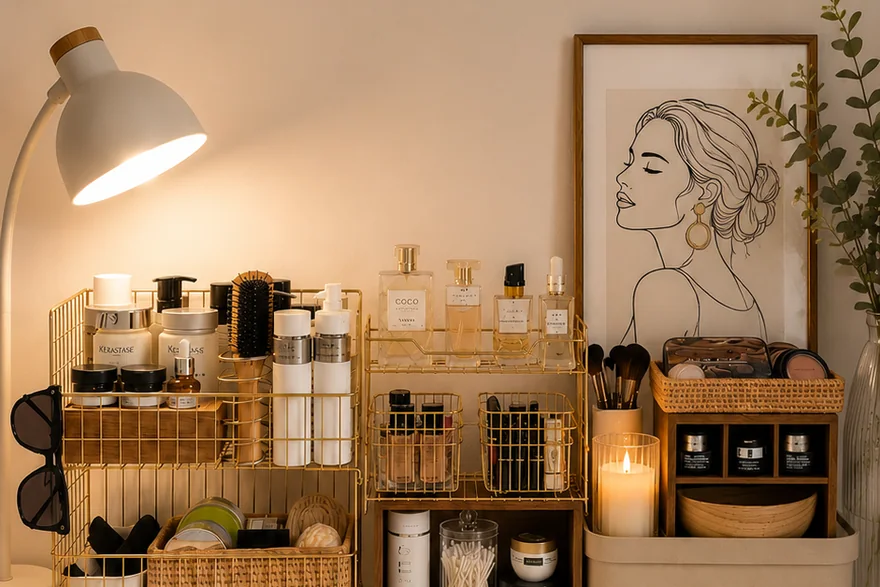
Two buying models on one supply chain
Both models buy the same object - a shell, a lining, a closure, a label and a carton - from the same production base. What differs is who owns the price. A direct-to-consumer brand buys at landed cost, sets the retail price, owns the customer relationship and carries the marketing spend. A wholesale buyer buys at landed cost, sells to a retailer or distributor at a multiple of that cost, and hands the customer relationship to someone else. The bag can be identical; the economics around it are not remotely the same.
Scale makes the choice worth getting right. "Make up bags for women" draws roughly 80,000 monthly searches, "travel bag for toiletries" around 110,000, and "custom makeup bag" between 5,400 and 6,600. That demand supports both a branded seller charging a retail price and a distributor filling shelves at a wholesale price, and plenty of businesses do both from the same warehouse.
- Price setter: the brand owner publishes retail; the wholesale buyer negotiates cost-plus or keystone pricing
- Order pattern: one large branded run versus rolling repeat orders across several accounts
- Packaging: retail-ready presentation versus carton-packed bulk with barcodes and case packs
- Cash: in direct-to-consumer, marketing spend precedes revenue; in wholesale, inventory itself is the spend
- Risk: direct-to-consumer carries demand and return risk; wholesale carries markdown and payment-term risk
Neither model is better in the abstract. Direct-to-consumer rewards a buyer with a name customers already search for, a story to tell and the patience to fund advertising before revenue arrives. Wholesale rewards a buyer with relationships, distribution discipline and the working capital to hold stock that someone else will sell. Buyers who pick the wrong one usually discover it in month four, when the constraint turns out to be cash rather than product.
A short test helps: does the buyer own a name that end customers type into a search box? If yes, direct-to-consumer is available and probably worth taking, because the retail margin funds everything else. If no - if the product will sit on someone else's shelf or inside someone else's box - then wholesale is the honest model, and the job becomes landed cost, carton compliance and fill rate rather than storytelling.
Margin, cash and inventory arithmetic
The two models produce very different numbers from the same purchase order. Take a specified 600-denier pouch at 500 pieces per style and colourway. A direct-to-consumer brand might land it at $4.20 per unit including a printed mailer and sell it at $32. A wholesale buyer might land a simplified version at $3.10 and sell it to a retailer at $9.50, who retails it at $24. Both are healthy businesses; only one of them needs to be good at advertising.
| Line item | DTC brand programme | Wholesale programme |
|---|---|---|
| Order unit | 500 pcs per style and colourway, one or two colourways at launch | 500 pcs per style and colourway, often 4-6 colourways to fill a planogram |
| Typical landed cost | $2.60-$6.80 for a specified 600-denier pouch with retail packaging | $1.90-$5.40 for a simplified spec at higher total count |
| Selling price | $28-$45 to the end customer | $6.50-$14.00 to the retailer, who retails at 2.2-2.6 times |
| Margin per unit | $21-$38 before marketing spend | $3.50-$8.00 after freight and agreed terms |
| Marketing load | Charged against the brand; a plan budgeting $6-$15 per unit must clear it | None; the retailer funds presentation and staff |
| Packaging spend | $0.80-$2.60 per unit for printed box, tissue and insert card | $0.10-$0.40 per unit for polybag and barcode |
| Cash cycle | 30% deposit up front, revenue only after listing and advertising | 30% deposit, 70% against bill of lading, retailer pays 30-90 days later |
| Primary risk | Unsold inventory and returns handling | Markdown pressure and delayed retailer payment |
Order quantity behaves differently too. Because the minimum is 500 pieces per style and colourway, a wholesale programme filling a six-colourway planogram is 3,000 pieces, not 500, and the deposit on that is a serious cheque. A direct-to-consumer launch can stay at one colourway and 500 pieces, which is why the branded route is often the cheaper first order even though it is the more expensive unit. Cash, not unit cost, decides which model a first-time buyer can actually execute.
Payment mechanics reinforce the split. Both routes run on T/T terms of 30% deposit and 70% against bill of lading, shipped FOB Xiamen, so the same 70% of value stays with the buyer until documents exist. The difference is what happens after that: the wholesale buyer waits another 30-90 days for the retailer's terms, while the direct-to-consumer seller waits on advertising performance. Both need a cash buffer; they need it in different places.
Inventory holding is the hidden line in both. Five hundred pouches in cartons of 60-120 occupy roughly two to four pallet spaces depending on construction; holding them for six months costs storage, insurance and the opportunity cost of the cash. Wholesale programmes reduce that risk by shipping against orders already written; direct-to-consumer programmes reduce it by launching small and re-ordering. Buyers who launch six colourways at once on speculation are the ones who end up discounting.
Timeline is shared but felt differently. Sampling takes 6-10 working days for a standard pouch and 12-15 working days for complex constructions; bulk production takes 35-50 days after sample approval. A wholesale buyer works to the retailer's delivery window and books production against it. A direct-to-consumer brand works to a campaign date and discovers that sampling revisions, not production, are what push a launch past its planned week.
What each model forces into the specification
The model a buyer chooses writes itself into the specification sheet before a single quote is requested. A bag that will be photographed, unboxed and reviewed has different requirements from a bag that will be scanned at a distribution centre, hung on a peg and priced by someone else. Buyers who specify one and sell the other pay for it twice - once in packaging they did not need, and once in listings or shelf presentations that underperform.
- Direct-to-consumer: the unboxing is part of the product - printed mailer, tissue, insert card and a bag that photographs cleanly at 1,000 pixels without creasing.
- Direct-to-consumer: product copy must be defensible, so a water-resistant claim needs a stated coating and, ideally, a named test method behind it.
- Wholesale: the barcode and carton are part of the product - scannable EAN or UPC, case pack counts and carton dimensions the retailer's system accepts.
- Wholesale: colour consistency across a planogram matters more than any single unit's finishing detail, because six units hang side by side.
- Both: the 500-piece minimum applies per style and colourway, so a six-colourway wholesale programme commits to 3,000 pieces.
Compliance documentation diverges in the same way. A direct-to-consumer brand selling into the EU should hold evidence that coated fabrics and metal hardware meet EU REACH restrictions, because the brand is the first point of contact for any consumer question. A wholesale buyer needs the same evidence plus whatever the retailer's own compliance portal demands - often an OEKO-TEX Standard 100 certificate naming the legal entity, as published by OEKO-TEX - and it has to arrive before the delivery window, not after it.
Claims and labelling follow the audience. A travel toiletry bag sold direct can, and should, reference the cabin liquids rule published by the TSA, because a buyer standing in a security queue is the customer. A bag marketed to children needs tracking-label and testing attention under the Consumer Product Safety Improvement Act, which a wholesale account will ask about before it will list. Neither requirement appears spontaneously; both belong on the specification.
Physical specification differs as well. A direct-to-consumer pouch benefits from structure that survives photography and shipping: 600-denier shell at roughly 210 g/m², light interlining, a #5 zipper with a puller worth photographing, and an interior lining dark enough to hide makeup marks. A wholesale pouch optimises for pack density and price point: 300-420 denier, a flat construction that nests, and a carton count that divides evenly into the retailer's case pack requirements.
One more specification belongs to both: inspection. Whatever the model, goods should be offered for inspection against AQL 2.5 under ISO 2859-1 before the 70% balance is released. In wholesale, a retailer chargeback for defects costs more than the defect; in direct-to-consumer, a wave of one-star reviews about split zippers costs the listing. The sampling plan is the cheapest insurance either model can buy.
Choosing, sequencing and combining the two models
Most established beauty businesses run both models and keep them deliberately separate, because the failure mode of mixing them is channel conflict: a retailer discovers the brand selling the same pouch direct at a lower price and drops the line. The usual fix is separation by product rather than by promise - a wholesale range at one specification and price point, and a branded capsule at a different specification that never appears in the wholesale price list.
| Buyer profile | Recommended model | First order shape | Watch-out |
|---|---|---|---|
| Start-up brand with one hero product | Direct-to-consumer | 500 pcs, one colourway, printed mailer | Marketing load exceeds unit cost quickly |
| Established brand with retail accounts | Both, run separately | Wholesale 2,000+ across colourways; branded capsule 500 | Channel conflict on price |
| Retailer or catalogue own-brand | Wholesale | 500 pcs per colourway across 4-6 colourways | Carton and barcode compliance |
| E-commerce marketplace seller | Direct-to-consumer through the marketplace | 500 pcs across two colourways | Returns handling and repackaging |
| Gift and hospitality buyer | Wholesale-style one-off | 500-2,000 pcs of a single design | Drop date versus the 35-50 day bulk window |
Sequencing matters for smaller buyers. The least risky path is wholesale first and brand second: sell 500-1,000 pieces into accounts that already have customers, learn which size and colour actually move, then launch a branded capsule of the winner with better packaging and a higher price. The reverse order - brand first, wholesale later - works when the buyer already has an audience, and fails quietly when they do not.
Buyers should also decide how many styles to carry before quoting. A wholesale programme tends to need breadth: four to six colourways of one design, or three sizes of one family, because the shelf looks thin otherwise. A direct-to-consumer programme tends to need depth: one design, executed well, with packaging that carries the story. Breadth multiplies the 500-piece minimum; depth does not. That single difference explains most first-year cash problems.
The two models also fail for different reasons, and knowing which failure to watch for helps. A wholesale programme fails on fill rate and compliance: a late delivery against a retailer's window triggers chargebacks, and a missing certificate delays listing past the season. A direct-to-consumer programme fails on repeat purchase - if the bag does not generate a second order or a review, the acquisition cost was spent once. Both are measurable within 90 days, and both are cheaper to correct on the second run than to explain on the first.
One discipline applies whichever model is chosen: keep the two price lists separate and never let the direct price undercut a retail account on an identical item. Where a brand sells through both, the simplest protection is specification separation - different fabric weight, different hardware, different model name - so that the two products are genuinely comparable only in the customer's mind, not in the buyer's own range plan.
Write down landed cost per unit, the price the end customer will pay, and the number of units expected to clear in 90 days. Under 2.5 times landed cost, wholesale is the only workable structure. Over four times, direct-to-consumer funds its own marketing and the brand keeps the difference. In between, run wholesale for volume and a 500-piece branded capsule for margin.
The B2B Customisation View
Programmes for cosmetic pouches, vanity cases and beauty organisers move fastest when the artwork is supplied as vector files and the Pantone references are confirmed before sampling starts.
Budgeting and scheduling inputs: MOQ 500 per style and colourway; sampling 6–10 working days, extended to 12–15 for lined, moulded or hardware-heavy builds; bulk 35–50 days; pre-shipment inspection at AQL 2.5 per ISO 2859-1; FOB Xiamen; T/T 30/70.
QUANZHOU JUNYUAN BAGS is structured as a sourcing and programme-management company, which lets a buyer compare materials across several SGS-verified production lines inside one quotation.
Which Brand Types Benefit Most
Start-up brands are usually best served by the direct-to-consumer model at first, because a 500-piece run in one colourway is the smallest commitment that still produces a real product, and the retail margin funds the advertising that wholesale would otherwise require them to skip. Established brands with existing accounts run both and separate them by specification rather than by promise. Retailers and catalogue buyers operate wholesale by definition: their requirement is breadth across colourways, barcode and carton compliance, and a landed cost that survives a 2.2-2.6 times retail markup. E-commerce sellers sit closer to the branded model even when they sell through a marketplace, because they own the listing, the photography and the returns. Gift and hospitality buyers - hotel amenity programmes, subscription box fillers, corporate gifting - behave like wholesale buyers with a fixed drop date, which makes the 35-50 day bulk window and a named carton specification the two things they must plan around. Sourcing and programme-management companies such as QUANZHOU JUNYUAN BAGS coordinate specification, sampling and inspection for both models without taking a position on which one a buyer should run. The practical advantage of that arrangement is continuity: the technical pack written for a wholesale run becomes the baseline for a branded capsule later, so sampling does not begin again from zero. Both models then benefit from the same discipline: one written specification, retained and updated for every re-order.
- Start-up brand: direct-to-consumer, one colourway at 500 pieces, packaging budgeted at $0.80-$2.60 per unit
- Established brand: wholesale breadth for accounts plus a separate 500-piece branded capsule
- Retailer or catalogue: wholesale, four to six colourways, barcode and case pack specified up front
- E-commerce seller: branded listing on a marketplace, two colourways, returns process written before launch
- Gift and hospitality: single-design volume of 500-2,000 pieces booked against a fixed delivery window
Frequently Asked Questions
What gross margin does a direct-to-consumer cosmetic bag need to cover paid acquisition?
Work backwards from the advertising plan. If a plan budgets $6-$15 per unit for paid acquisition, a pouch landed at $4.20 and retailed at $32 leaves roughly $27.80 before marketing, which absorbs that spend and still clears a profit. The same pouch retailed at $18 does not. The margin requirement is set by the marketing channel rather than by the product, so it should be calculated before the specification is fixed.
What wholesale markup should a cosmetic bag carry for a retailer to accept it?
Most retailers expect to retail at 2.2-2.6 times their cost, so a bag they will price at $24 needs to land with them at roughly $9.20-$10.90. That leaves the wholesale buyer a margin of $3.50-$8.00 against a landed cost of $1.90-$5.40. Programmes that cannot hit the retailer's target retail price are usually rejected on the line sheet, not in the meeting.
Does the 500-piece minimum work for a wholesale programme with several colourways?
It compounds. Because the minimum is 500 pieces per style and colourway, four colourways of one design is 2,000 pieces and six is 3,000. Wholesale programmes should therefore quote breadth deliberately: either accept the larger total, or reduce to three colourways for the first drop and add the rest on the re-order once sell-through data exists and the slow shades are known.
How should a DTC brand handle a three-colourway launch at 500 pieces each?
Most first launches should not. Three colourways is 1,500 pieces and three times the inventory risk for one design. Launch the hero colourway at 500, collect 60-90 days of sell-through, then commit to the second and third colourways with real data. The unit cost penalty on a second 500-piece run is small compared with the cost of discounting 1,000 slow units.
What packaging does a wholesale buyer need that a direct-to-consumer seller does not?
A scannable EAN or UPC barcode on the polybag or hangtag, a carton count that divides into the retailer's case pack, carton dimensions and board grade for the distribution centre, and often a specified carton label format. Direct-to-consumer packaging spends its budget on the mailer and insert instead. Both should specify polybag gauge, whether it is vented, and any barcode verification requirement at goods-in.
Can one cosmetic bag programme serve both channels without conflict?
It can, but only if the products differ. The common structure is a wholesale range at one specification and price point, plus a branded capsule at a different specification, different packaging and a price that never appears on the wholesale line sheet. Selling the identical item direct below the retailer's retail price is the fastest way to lose an account.
Which model suits a buyer with limited working capital?
Wholesale against written orders, because revenue is contracted before production is booked. Direct-to-consumer requires funding inventory and advertising ahead of revenue. Both pay 30% deposit and 70% against bill of lading on FOB Xiamen terms, so the deposit is similar; the difference is whether a buyer waits on a retailer's payment terms or on campaign performance, and which of those they can survive.
How long does a wholesale first drop take compared with a DTC launch?
Production timing is identical: 6-10 working days for a standard sample, 12-15 for complex constructions, then 35-50 days of bulk after approval. The wholesale buyer adds the retailer's delivery window and compliance submission on top, which can add weeks. The direct-to-consumer buyer adds photography and listing preparation, which can run in parallel with production rather than after it.
Should a wholesale cosmetic bag carry a brand label at all?
Yes, but the value differs. A woven label sewn into the lining costs roughly $0.05-$0.25 per piece and signals that the item is part of a programme rather than generic stock. For a retailer's own-brand range the label carries their mark; for a distributor's range it carries theirs. Either way the label belongs on the specification so it is applied during assembly, not after import.
What compliance documents do retailers ask for before listing a cosmetic bag?
Commonly an OEKO-TEX Standard 100 certificate naming the legal entity, REACH evidence for coated fabrics and metal hardware, and - where the item is marketed to children - attention to Consumer Product Safety Improvement Act requirements. The documents must name the ordering entity and be inside their validity dates; a mill certificate issued to a third party is usually rejected by the compliance portal.
How should a buyer price a cosmetic bag sold through a marketplace rather than their own site?
Treat marketplace fees as marketing cost. Referral and fulfilment charges typically take a double-digit share of the retail price, so the landed cost plus fee load must still leave margin above the acquisition budget. Many brands price marketplace listings at or slightly above their own site to avoid undercutting themselves, and differentiate through bundles rather than through price.
When should a wholesale buyer move into a branded direct-to-consumer line?
After two or three repeat wholesale seasons, when there is hard evidence of which size, colour and price point sells. That data converts a guess into a 500-piece capsule with a known audience. Moving earlier is possible when the buyer already has an audience through social channels or a subscription base, since in that case the demand evidence exists independently of the wholesale accounts.
What inspection level should both models write into the purchase order?
A single defined plan - AQL 2.5 under ISO 2859-1 - inspected before the 70% balance is released. It gives both sides the same accept and reject numbers instead of an argument about appearance. Wholesale buyers benefit because retailer chargebacks exceed the defect cost; direct-to-consumer sellers benefit because a defect wave damages the listing more than the units themselves cost.
How much packaging budget should a DTC cosmetic bag carry?
A workable band is $0.80-$2.60 per unit for a printed mailer or box, tissue and an insert card, against a retail price of $28-$45. Packaging at the top of that band is justified when the item is gift-bought, which cosmetic bags frequently are. Spending more than $2.60 only makes sense if the unboxing is itself part of the marketing asset the brand is producing.
What order size makes a hospitality or gifting programme viable?
Between 500 and 2,000 pieces of a single design, booked against a fixed delivery date. These programmes behave like wholesale - one design, one size, a logo applied in production - but with a hard deadline rather than a rolling window. The 35-50 day bulk production runs plus transit should be reverse-scheduled from the drop date with two weeks of contingency.
People Also Ask
Is a DTC cosmetic bag brand more profitable than wholesale?
Per unit, yes: a pouch landed at $4.20 and retailed at $32 keeps roughly $27.80 before marketing, against $3.50-$8.00 wholesale. In aggregate it depends on acquisition cost. If the marketing plan spends $6-$15 per unit to make each sale, direct-to-consumer stays ahead; if it spends more than the margin, wholesale volume is the more profitable route. Both pay the same 30% deposit, so the real question is where the waiting risk sits.
What markup do retailers apply to cosmetic bags?
Typically 2.2-2.6 times their cost, so an item retailed at $24 implies a wholesale cost near $9.20-$10.90. Buyers should design the specification backwards from the target retail price rather than forwards from the factory cost, because a line that cannot hit the retailer's price point is dropped before it ever reaches the shelf. Markdown and allowance terms should be agreed at the same time, since they reduce the effective markup.
Can a small brand start wholesale with 500 pieces?
Yes for one colourway, but shelf presence is thin at that count and the minimum applies per style and colourway, so four colourways is 2,000 pieces. A practical compromise is 500 pieces in two colourways, presented as a capsule rather than a full range, with the remaining colours added once sell-through justifies a second production run and the fast shades are known.
Which business model needs more working capital for cosmetic bags?
Direct-to-consumer, because inventory and advertising are both funded before revenue arrives, while wholesale ships against orders already written. Both pay 30% deposit and 70% against bill of lading on FOB Xiamen terms, but the wholesale buyer then waits 30-90 days for retailer terms and the direct-to-consumer seller waits on campaign performance. Thin working capital argues for contracted wholesale orders first.
Request a Sample or a Written Quotation
Send the silhouette, dimensions, material preference and logo artwork, and the programme team will return a written quotation with MOQ, sampling window, bulk lead time and inspection standard.
Email: [email protected] · WhatsApp: +86 177 5002 0688